 How to resolve AdBlock issue?
News
Many people have some firmly held – but incorrect – beliefs regarding estate planning concepts. These misconceptions can negatively affect how people choose to proceed.
Let’s debunk some common misconceptions.
If I have a will does that mean my estate avoids probate? No. Having a will is often a ticket to a probate.
When a California resident dies with a probate estate that has a gross value of $150,000 or more the will is submitted to court for probate. A trust could have been used to avoid probate.
If I have a trust does that mean I do not need a Will? No. Having a trust means that the assets transferred into the trust avoid probate.
Usually people keep some assets outside their trust (e.g., vehicles and day to day checking account). A pour over will accompanies a trust and directs that these assets be transferred to the trust. So long as under $150,000 in assets pass under the will no probate is required.
In addition, a will may be used to make certain smaller gifts to friends outside of the trust in order. That way, these minor beneficiaries, unless they are also heirs, do not then have to receive a copy of the trust.
If I am named as the executor in a decedent’s will doesn’t that make me the executor? No. The will has to be admitted by court order to probate and letters testamentary have to be issued. Only then does the nominee become the executor.
Isn’t a will notarized? No. Unlike trusts and deeds wills are not notarized. Wills are witnessed by two disinterested persons who sign an attestation clause. By disinterested I mean that the witnesses receive no personal benefit to themselves or to their family under the will.
If I have a trust doesn’t that mean no administration is needed once I die? No. A trust still requires administration to settle the trust estate. That said, settling a trust estate generally involves less expense, less time, and less aggravation than settling the same estate (assets) inside a court probate.
If I don’t have a will or a trust then won’t my assets simply go to the State? No. Not having a will or a trust invites an intestate probate without a will, unless the estate is under $150,000 in which case small estate procedures can be used.
The decedent’s heirs stand to inherit the decedent’s estate, subject to creditor claims. If the heirs don’t claim their inheritance, then the estate of a deceased resident of California may “escheat” to the state of California.
If I want to disinherit one or my heirs then don’t I leave him or her $1 in my will? No. If you want to disinherit someone expressly say so in your will and trust using a disinheritance clause. Leaving a $1 bequest is unnecessary and offensive.
If I get married doesn’t that mean that my assets become community property assets? No. Certain assets can remain your separate property even during marriage. Any premarital assets, any inheritances and gifts received during marriage are all your separate property, provided you keep them in your name and don’t otherwise transmute (change) them into community property by signing a written transmutation instrument.
If I live with someone as though we were married for seven years in California doesn’t that create a Common Law marriage? No. But while Common Law marriages are not created in California, they are still recognized here if one was validly created elsewhere in a Common Law state.
If one or more of the foregoing misconceptions apply to you, then what other misconceptions do you also have? How are these misconceptions affecting your choices and actions? What are you going to do about it?
Dennis A. Fordham, Attorney, is a State Bar-Certified Specialist in estate planning, probate and trust law. His office is at 870 S. Main St., Lakeport, Calif. He can be reached at
Cool brown dwarfs are a hot topic in astronomy right now. Smaller than stars and bigger than giant planets, they hold promise for helping us understand both stellar evolution and planet formation.
New work from a team including Carnegie's Jonathan Gagné has discovered several ultracool brown dwarfs in our own solar neighborhood. Their findings are published in The Astrophysical Journal.
Brown dwarfs are sometimes called failed stars. They are too small to sustain the hydrogen fusion process that powers stars, so after forming they slowly cool, contract, and dim over time.
Their temperatures can range from nearly as hot as a star to as cool as a planet and their masses also range between star-like and giant-planet-like.
They're fascinating to astronomers for a variety of reasons, mostly because they can serve as a bridge between stars and planets and how the former influences the latter, particular when it comes to composition and atmospheric properties. But much about them remains unknown.
“Everyone will benefit from the study of brown dwarfs, because they can often be found in isolation, which means that we can more easily gather precise data on their properties without a bright star blinding our instruments,” Gagné said, who is also a collaborator of the Institute for Research on Exoplanets (iREx) at Université de Montréal.
Discovering new brown dwarfs will help scientists to better quantify the frequency at which they occur both in our solar neighborhood and beyond. Knowing the abundance and distribution of brown dwarfs provides key information on the distribution of mass in the universe, and on the mechanism of brown dwarf formation, for example, whether they form in isolation or instead are ejected from larger planetary systems.
To that end, the team, led by Jasmin Robert of Université de Montréal, believed that although hundreds of ultracool brown dwarfs have already been discovered, the techniques used to identify them were overlooking those with more-unusual compositions, which would not show up in the color-based surveys generally used.
So they surveyed 28 percent of the sky and discovered 165 ultracool brown dwarfs, about a third of which have unusual compositions or other peculiarities. When talking about brown dwarfs, ultracool means temperatures under about 3,500 Fahrenheit or 2,200 kelvin
“The search for ultracool brown dwarfs in the neighborhood of our own Solar System is far from over,” said Gagné. “Our findings indicate that many more are hiding in existing surveys.”
The 2016-17 general upland game bird hunting season will open in mid-September for several species in specific zones around the state, providing hunters with many opportunities to bring home some delicious table fare for the upcoming holiday season.
September openers include quail (Zone Q1 opens for mountain quail from Sept. 10 through Oct. 14, and Zone Q2 will be open for all quail from Sept. 24 through Jan. 29); sooty and ruffed grouse (general season will be open in various northern and eastern counties from Sept. 10 through Oct. 10); white-tailed ptarmigan (general and archery seasons will be open from Sept. 10-18); and band-tailed pigeon (the northern hunt zone only will be open from Sept. 17-25).
Please note that nonlead ammunition is now required when hunting on California Department of Fish and Wildlife (CDFW) Wildlife Areas and Ecological Reserves.
As of July 1, 2016, the nonlead shot requirement is extended to include the take game birds with a shotgun elsewhere in California, with the exceptions of dove, quail and snipe, or any game bird taken on a licensed game bird club. Please plan accordingly. For more information please see the CDFW nonlead ammunition page.
Specific information about each game bird species, including zone maps and information about daily bag limits and possession limits for each species can be found on the CDFW Upland Game Bird Hunting Web page. Additional information about each species can be found below.
Quail
Quail are some of the state’s most popular native game birds. There are three species of quail found in California: California quail, mountain quail and Gambel’s quail.
California quail (the state bird) are common and widespread throughout the state in low to mid-elevation brushy habitats with good cover and abundant food. Mountain quail are also widespread in higher elevation habitats.
Gambel’s quail are California’s most desert-adapted species and can be found in the very arid lands of southeastern California.
The early mountain quail season starts on Sept. 10 and continues through Oct. 14 and covers much of the mountainous region of northern and eastern California (the Q1 zone map can be found on the CDFW Web site).
On Sept. 24, the early general quail season opens in Zone Q2 for several coastal counties between Marin and Mendocino counties. The remainder of the state will open to quail hunting on Oct. 15.
Finally, an additional two-day early hunt season will be open on Oct. 1-2 in Mojave National Preserve for young hunters with junior hunting licenses.
For all quail species, the daily bag limit is 10 and the possession limit is triple the daily bag. Hunters can still use lead shot for quail until 2019 unless hunting on CDFW Wildlife Areas or Ecological Reserves.
Quail currently are exempted from the new nonlead requirement because lighter shot sizes used on these smaller birds is not as widely available as larger shot that has been used for many years on waterfowl.
All three native species of quail are characterized by high reproductive potential that can only be realized through adequate and well-timed winter and early spring precipitation.
Despite the ongoing drought, conditions were good for in 2015-16 for quail, resulting in good hatches in most part of the state.
Quail are most active in the early morning and later afternoon and move in large coveys throughout the day. Quail have distinctive calls that can provide clues to the birds’ location. Hunting dogs can be useful for both locating and retrieving birds in the field.
Quail can be successfully hunted with 20, 16 or 12 gauge shotguns. A modified or improved cylinder choke is recommended to avoid damage to the bird. Because of the dense brush habitats where they are usually hunted, downed quail can be hard to find. Despite this challenge, CDFW reminds hunters that wasting game is both unethical and illegal.
CDFW estimates that in the 2014-15 season, approximately 470,000 quail were bagged across all three species by 69,000 hunters over the course of 550,000 hunter-days. Not surprisingly, California quail is the most frequently bagged of the three species. (Data is not yet available for the 2015-16 season.)
Grouse
California has two species of native forest-dwelling grouse: the sooty (or blue) grouse and the ruffed grouse. Sooty grouse occur in the Sierra Nevada, Cascade and northern Coast ranges while the ruffed grouse is restricted to the northwestern part of the state.
The general hunting season for both species extends from Sept. 10 to Oct. 10 this year. For sooty and ruffed grouse, the daily bag limit is two (all of one species or mixed) and possession limit is triple the daily bag. A third species, the greater sage-grouse, can be hunted by permit only.
Although they are fairly large birds, grouse camouflage themselves very well and will flush quickly when frightened, flying in a zigzag pattern away from the hunter.
Dogs are useful companions to help hunters find and retrieve bagged grouse. A light gun is helpful because a fast swing is often necessary. Nonlead shot is required for all grouse statewide.
Ptarmigan
The white-tailed ptarmigan is a non-native grouse that was introduced by CDFW to the Sierra Nevada in the early 1970s. This is the smallest species of ptarmigan and the only one found in California. They live in high elevation alpine habitats at low densities from the area around Sonora Pass in Tuolumne County to the area surrounding Kings Canyon National Park.
Hunting these birds can be challenging because of the high elevation, steep terrain. Hunting is permitted from Sept. 10-18. The daily bag limit is two per day and the possession limit is two per season. Many hunters prefer using a 20-gauge shotgun and a hunting dog to pursue ptarmigan. Nonlead shot is required for ptarmigan.
Band-tailed pigeon
The band-tailed pigeon is California’s only native pigeon and is a close relative of the extinct passenger pigeon. They look similar to domestic (feral) pigeons that are common in urban areas. Band-tailed pigeons are found in mountainous terrain throughout the state, using coniferous forests as well as oak woodlands.
The band-tailed pigeon is locally abundant at times but populations are migratory and movements can be unpredictable. The federal Harvest Information Program (HIP) estimates that in 2014, 10,700 pigeons were harvested in California, comprising nearly 90 percent of the total Pacific Flyway harvest.
The northern California hunt zone season runs from Sept 17-25. The daily bag limit is two and the possession limit is triple the daily bag. The southern hunt zone does not open until December.
Nonlead shot is required for band-tailed pigeons statewide.
CDFW reminds hunters that an upland game bird stamp is required for licensed adult hunters (18 years and older) but not hunters with a valid junior hunting license. A HIP validation is also required to hunt band-tailed pigeons.
CLEARLAKE, Calif. – The Highlands Senior Service Center's annual benefit dinner and dance will take place on Saturday, Sept. 10.
Doors open at 5 p.m.
Lou Derr & Bootleg, with special guest David Neft, will provide the evening's musical entertainment.
Dinner by Chatterbox Catering will be served at 6 p.m. The Lakeshore Lions Club will offer a no-host bar.
There also will be a silent auction and door prize.
Tickets cost $35 per person; credit cards are accepted. Seating is limited.
Tickets are available at the senior center, 3245 Bowers Ave., or call 707-994-3051 for more information.
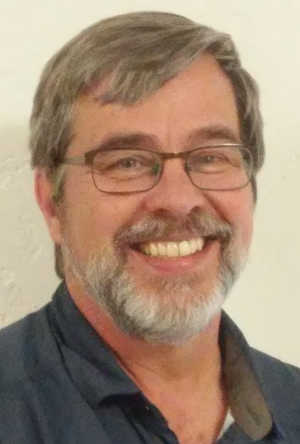
KELSEYVILLE, Calif. – If you have not been to a Sunday church service for a while, you are invited to join with Kelseyville United Methodists for the second Sunday in the Season of Creation on Sept. 11 at 9 a.m.
Davis Palmer will offer the message, “Uncreation and Reclamation.”
Ecumenical prayers lifted for Albania, Bosnia-Herzegovina, Croatia, Slovenia, Former Yugoslav Republic of Macedonia, Kosovo, Montenegro, Serbia the United States and the Middle East, and they pray for all who are separated from the goodness of God through fire, flood, hurricane, tornado, earthquake, human and nonhuman disasters.
Mike Heintz will provide music for congregational singing.
A second informal spirit connection service will be offered at 5 p.m. in the Fellowship Hall that includes a soup supper.
Samaya Epstein and Wally Gafvert III will offer music and songs while Pastor Voris Brumfield will lead the service.
All are welcome to join the church in honoring the healing power of God.
The Kelseyville United Methodist Church is located at First and Main Streets in Kelseyville, across the street from the Saw Shop.
Visit the church's Facebook page or call 707-295-7174 for more information.
United Methodists practice “Open Hearts, Open Minds and Open Doors” following Christ Jesus.
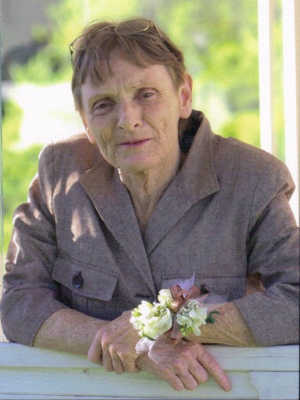
LAKE COUNTY, Calif. – Stephanie Lynn Nichols passed away peacefully at her home, on the morning of Sept. 3, 2016, after a six-year battle with cancer. Stephanie was 69 years old.
She was born in Napa, Calif., on Nov. 11, 1946. She was the first born child of Dorothy Mae and Julius Franklin Baracco.
Stephanie graduated from Napa High School and spent many years as a chef in the Napa Valley before relocating up north where she continued her passion for food and the culinary world.
In her free time she enjoyed driving her Jeep to the coast, gathering driftwood and beautiful gems, bird watching, and working in her yard. She adored all her animals, and she was a lifelong fan of the 49ers.
She was loved, admired, and cherished for her incredible strength and determination throughout her illness and medical battle.
Stephanie was preceded in death by her father, Julius F. Baracco. She is survived by her mother, Dorothy (Armstrong) Grooms; her brother, Michael Baracco; her daughter, Christine (Nichols) Parks; her three grandchildren, Tayla Nichols, Hunter Robinson and Vincent Parks; and her great-granddaughter Nayelli Zavala.
She will be greatly loved and missed.
There will be no services, as her ashes and those of her beloved pets will be scattered by family.
Stephanie’s family wishes to send a huge thank you to her in-home care aide, Diane, and Dr. Mark Turrill and his remarkable staff, for without you all, we never would have had these last six years.