 How to resolve AdBlock issue?
News
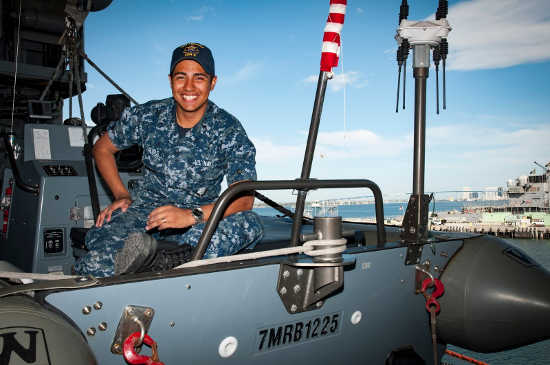
SAN DIEGO – A 2015 Lower Lake High School graduate and Clearlake native is playing a key role in supporting the newest and largest amphibious warship in the Navy.
Petty Officer 3rd Class Edgar Cuevas is a seaman serving aboard USS America (LHA 6), based in San Diego.
America is the fourth warship to be named for the United States.
As a seaman, Cuevas is responsible for upkeep of the ship conditions with maintenance and driving it as well as all of the vehicles on board.
“My job is very unique because I get to work with fellow sailors which makes my job enjoyable, we are like one big family," said Cuevas. "It's easier to work with people you get along with."
America is equipped with a fuel-efficient hybrid electric propulsion system, which is an energy initiative designed to increase range, endurance and longer deployments enhancing America's combat capability.
It’s 844 feet long and 106 feet wide and weighs nearly 45,000 tons, with two gas turbine engines that push the ship through water at more than 22 knots.
Her mission is to support a wide spectrum of military operations and missions, including putting Marines ashore for combat operations, launching air strikes, keeping sea lanes free and open for the movement of global commerce, and delivering humanitarian aid following a disaster like the typhoon that devastated the Philippines in 2013.
As a member of the U.S. Navy’s finest warships, Cuevas said he and other sailors are proud to be part of most capable amphibious force in the world
“It means a lot because I know this ship is held to a high standard and it motivates me to uphold those standards and be the best sailor I can be supporting my country,” said Cuevas.
Sailors’ jobs are highly varied on America, according to Navy officials. Their job includes keeping all parts of the ship running smoothly – this includes everything from maintaining aircrafts and engines, processing paperwork, to handling weapons and flying the aircraft.
Serving in the Navy, Cuevas is learning about being a more responsible leader, sailor and person through handling numerous responsibilities.
"I've learned self-discipline from my time in the Navy," said Cuevas. "It gives me a sense of pride of honor knowing that I am a part of something that is bigger than myself.”
Petty Officer Jamal McNeill works for the Navy Office of Community Outreach Public Affairs.
LAKE COUNTY, Calif. – The California Highway Patrol recognizes Red Ribbon Week, Oct. 23 to 31, as an excellent opportunity for families to have lifesaving conversations with their children about drug use.
The Red Ribbon Campaign, organized by the National Family Partnership, is the oldest and largest drug prevention program in the nation.
The Red Ribbon Campaign was created after drug traffickers in Mexico City murdered a Drug Enforcement Administration agent from Southern California in 1985.
Displaying the Red Ribbon became the symbol of intolerance toward the use of drugs.
The CHP will be supporting efforts in California schools during Red Ribbon Week to discourage illegal drug use.
Driving under the influence of any drug that acts on the central nervous system can impair motor skills, reaction time and judgment.
Drugged driving is a public health concern because it puts not only the driver at risk but also passengers and others who share the road.
“Children whose parents talked to them regularly about the dangers of illegal drugs are far less likely to use drugs than those who do not, yet only about a quarter of teens report having these conversations,” CHP Commissioner Joe Farrow said. “Despite all the outside influences on our young people today, their families’ messages are still crucial.”
The three most widely used drugs by youth and adults are alcohol, prescription drugs, and marijuana. A driver impaired by marijuana or drugs, either prescription or illegal, can be just as deadly as a drunk driver.
Motor vehicle collisions are the leading cause of death among young people between the ages of 16-19. It is generally accepted that because teens are the least experienced drivers as a group, they have a higher risk of being involved in a collision compared with more experienced drivers.
When this lack of experience is combined with the use of marijuana or other substances that impact cognitive and motor abilities, the results can be tragic.
The mission of the CHP is to provide the highest level of safety, service and security to the people of California.
LAKE COUNTY, Calif. – A wide range of dogs is once again available at Lake County Animal Care and Control this week.
The available dogs include mixes of Chihuahua, German Shepherd, Labrador Retriever, Rottweiler, pit bull and terrier.
Dogs that are adopted from Lake County Animal Care and Control are either neutered or spayed, microchipped and, if old enough, given a rabies shot and county license before being released to their new owner. License fees do not apply to residents of the cities of Lakeport or Clearlake.
If you're looking for a new companion, visit the shelter. There are many great pets hoping you'll choose them.
The following dogs at the Lake County Animal Care and Control shelter have been cleared for adoption (additional dogs on the animal control Web site not listed are still “on hold”).
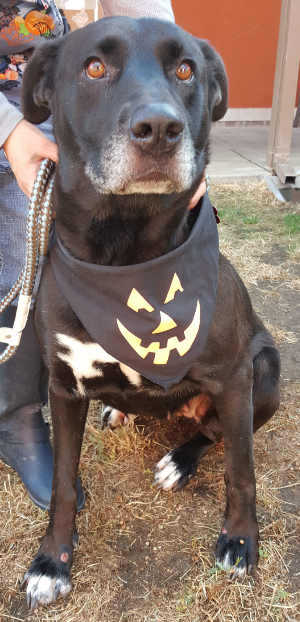
'Audi'
“Audi” is a female Labrador Retriever mix.
She has a short black coat with some white markings.
She's in kennel No. 2, ID No. 6188.
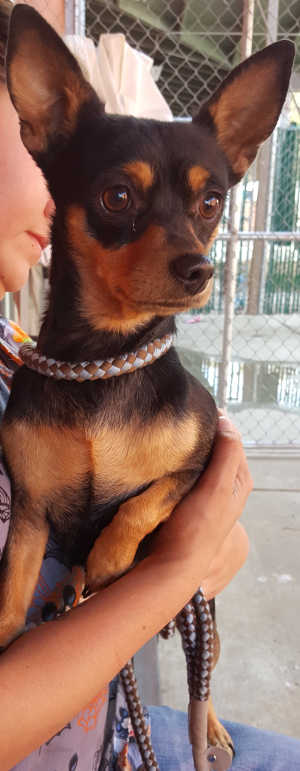
Male Chihuahua
This male Chihuahua has a short black and red coat.
He's in kennel No. 4, ID No. 6292.
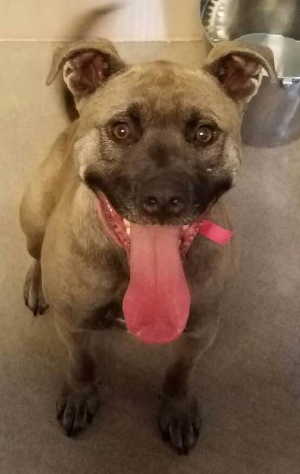
Pit bull terrier mix
This female pit bull terrier mix has a short sable coat.
She's in kennel No. 5, ID No. 6245.
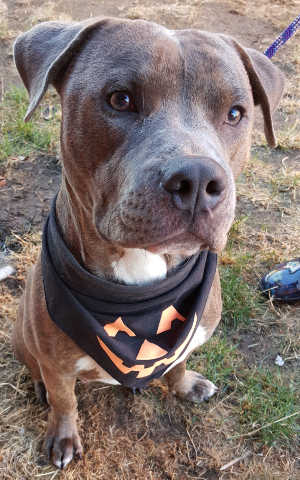
'Tank'
“Tank” is a male pit bull terrier mix with a short brindle and white coat.
He's in kennel No. 7, ID No. 6253.
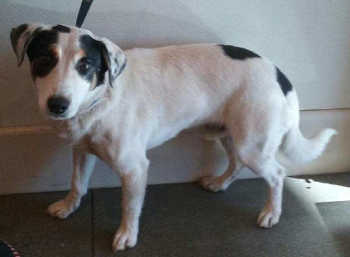
Male terrier mix
This small male terrier mix has a short white coat with black markings.
He's in kennel No. 10, ID No. 6348.
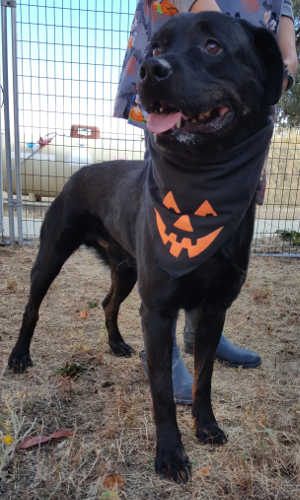
'Perchuan'
“Perchuan” is a male Rottweiler mix with a short black and tan coat.
He's in kennel No. 11, ID No. 3557.
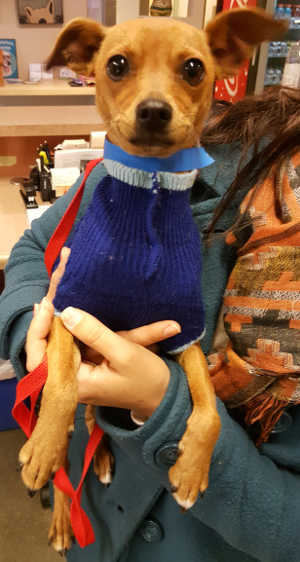
'Paco'
“Paco” is a male terrier and Chihuahua mix.
He has a short reddish-brown coat.
He's in kennel No. 15, ID No. 6298.
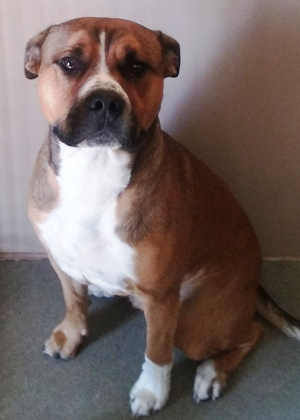
'Roman'
“Roman” is a male pit bull terrier and mastiff mix.
He has a short brown coat with black and white markings.
He's in kennel No. 17, ID No. 6331.
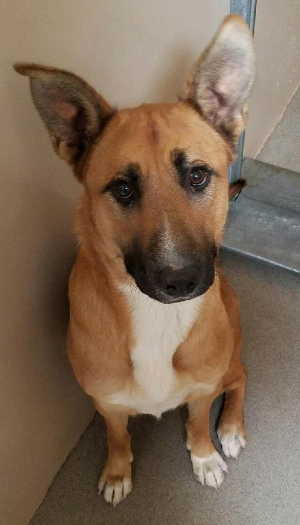
German Shepherd
This male German Shepherd mix has a short tricolor coat
He's in kennel No. 22, ID No. 6278.
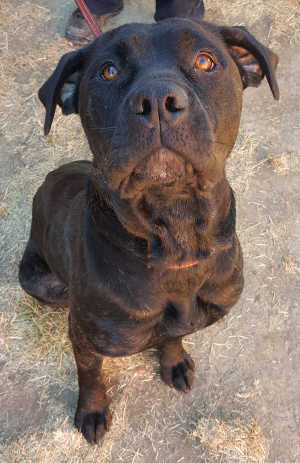
Rottweiler mix
This female Rottweiler mix has a black coat with some brindle markings.
Shelter staff said she need some training and is manageable on a leash. They said she is a very nice dog and knows not to jump when excited. After proper introductions, she has gotten along with other dogs she has met, including off-leash play. She would do best in a home with no cats.
She's in kennel No. 25, ID No. 5947.
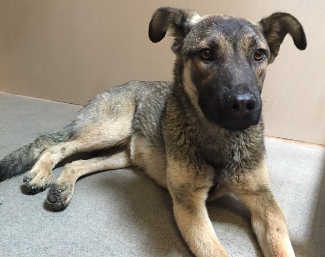
'Calie'
“Calie” is a female shepherd mix with a short black and tan coat.
She already has been spayed.
She's in kennel No. 34, ID No. 5065.
To fill out an adoption application online visit http://www.co.lake.ca.us/Government/Directory/Animal_Care_And_Control/Adopt/Dog___Cat_Adoption_Application.htm .
Lake County Animal Care and Control is located at 4949 Helbush in Lakeport, next to the Hill Road Correctional Facility.
Office hours are Monday through Friday, 11 a.m. to 5 p.m., and 11 a.m. to 3 p.m., Saturday. The shelter is open from 11 a.m. to 4 p.m. Monday through Friday and on Saturday from 11 a.m. to 3 p.m.
Visit the shelter online at http://www.co.lake.ca.us/Government/Directory/Animal_Care_And_Control.htm .
For more information call Lake County Animal Care and Control at 707-263-0278.
Email Elizabeth Larson at
Prior to the 1960s, the biggest storms on Earth could take people by surprise. Someone standing on a beach in Florida might not know if a distant bank of clouds was a routine squall or … the harbinger of a powerful hurricane.
The Space Age changed all that.
Satellites orbiting the Earth can image, probe, and track hurricanes, alerting forecasters and laypeople alike to storms in the offing.
In recent decades, the introduction of supercomputers and physics-based models of storm dynamics, combined with satellite, airborne, and surface data, have pushed the accuracy of forecasts issued by the National Oceanic and Atmospheric Administration (NOAA) to a new level of precision.
As forecasters have improved storm tracks, however, an area of forecasting has lagged behind: predicting the intensity of storms.
In other words, how strong will the winds be blowing when a hurricane makes landfall?
Scott Braun, hurricane expert at NASA’s Goddard Space Flight Center in Greenbelt, MD said, “From 1990 to around 2010, there wasn’t much improvement in the accuracy of hurricane intensity forecasts. In the last several years, we have started to see drops in intensity forecast errors. This can be credited to a number of factors, including better measurements from satellite and airborne platforms, improvements to the physics in numerical weather prediction models, and improved methods of ingesting NOAA and NASA data into models that describe the state of the atmosphere.”
An important part of predicting intensity is seeing what’s going on deep inside a storm. Evaporation of water from the warm ocean surface powers hurricanes and causes them to intensify.
Hotter sea surface temperatures at the base of a storm, therefore, can load a hurricane with more energy. On the other hand, wind shear can tear a storm apart, causing it to weaken.
So, how do you collect data from inside a giant storm?
First, you can fly right into it.
In recent years NASA has sent research aircraft directly into or over storms as part of the Genesis and Rapid Intensification (GRIP) experiment in 2010 and the Hurricane and Severe Storm Sentinel (HS3) mission from 2012-2014. These aircraft were flown to investigate the formation and intensification of storms.
Operational airplanes such as NOAA’s P-3s and the Air Force’s C-130s are hurricane hunters, and fly missions into the heart of storms to collect valuable airborne data sets.
Additionally, NOAA’s Sensing Hazards with Operational Unmanned Technology (SHOUT) program utilizes a NASA unmanned Global Hawk aircraft to observe and predict high impact oceanic weather.
You can also get a view from an eye in the sky. The Global Precipitation Measurement (GPM) Core Observatory, a joint mission between NASA and the Japan Aerospace Exploration Agency (JAXA), launched in February 2014 and carries instruments that show precipitation location and intensity at higher resolutions than were previously available.
Microwave imagers such as the one onboard GPM can look through the cloud tops to observe where and how much precipitation occurs. Additionally, GPM’s Dual-frequency Precipitation Radar provides a 3D view of precipitation structure.
Dalia Kirschbaum, a deputy project scientist for GPM says, “Images from GPM and similar sensors are posted on the internet in near real-time so forecasters can immediately see the latest data.”
An upcoming NASA mission aims to improve storm intensity forecasting even more. The Cyclone Global Navigation Satellite System (CYGNSS) is scheduled to launch in 2016.
CYGNSS’s eight micro-satellites will utilize Global Positioning System (GPS) signals to make surface wind measurements.
Direct GPS signals will pinpoint CYGNSS observatory positions, while GPS signals reflected off of the ocean surface will indicate wind speed based on how much the winds rough up that surface (the stronger the winds, the rougher the ocean surface).
CYGNSS will be able to measure winds in heavy rain regions inside the storm where current wind-sensing satellites have problems, and will provide much more frequent observations compared to the once- or twice-a-day measurements from current sensors.
Earth-orbiting satellites: helping take the surprise out of hurricane season since the 1960s.
The Lakeport Employees Association is pleased to join several community groups and concerned citizens in support of Measure Z.
Lakeport is the center of our community, with services, businesses and recreation opportunities that draw 30,000 people every day.
Measure Z will provide locally-controlled funds to help address local community priorities, such as:
• Paving and repairing streets and roads;
• Maintaining police responses to violent crimes;
• Maintaining police responses to property crimes, such as burglaries;
• Attracting and retaining quality police officers;
• Retaining existing companies and businesses in the city.
There are several economic challenges facing small communities across the state. Measure Z will ensure that vital services will not be lost or severely cut in Lakeport.
Manuel Martinez is president of the Lakeport Employees Association in Lakeport, Calif.
Can a turkey’s age be determined by beard and spur?
Question: I am fairly new to turkey hunting and hear everyone always referring to their birds by their beards and spurs. Can wild turkeys be aged based on these trophy characteristics? (Jim C., Modesto)
Answer: Yes and no. There is no absolute standard for identifying a wild turkey’s age, but there are some general guidelines that can be used to provide fairly reliable estimates.
While precisely determining a turkey’s age in years may be difficult, there is a surefire method for distinguishing between adults and juveniles using the last two primary flight feathers.
In juvenile birds the feathers will be sharp at the ends. By the time the bird reaches maturity at one year of age, it will molt and the two sharp feathers will be replaced by more rounded ones.
Beyond this, beard and spur length can be used to estimate a bird’s age, but unfortunately, it’s not an exact method. Variables such as subspecies, environmental conditions, and possibly nutrition can alter the length of both the beard and the spur, resulting in a misrepresentation of the bird’s age.
In terms of beards, the general rule of thumb is the longer the beard, the older the bird. But, while a jake (juvenile) will not have a 10-inch beard, a four-year-old turkey may have a short beard due to any number of conditions.
If the turkey is in “rough” vegetation, the beard may wear away on the ground more easily when it grows long. If a turkey has long legs, the beard will be able to grow longer before it reaches the ground, where it will naturally face wear and tear.
The fact that the beard may have been altered at any time by environmental or circumstantial conditions prevents biologists from using this method as an accurate way of measuring a turkey’s age.
Spur length can also be used to estimate a bird’s age although, like beards, spurs can also wear down. Spur length does tend to be slightly more reliable than beard length, however, because they do not wear as easily.
While both of these methods are not entirely precise, they can provide an approximate age range. These estimates are not reliable for turkeys older than about three or four years though.
Freediving for horseneck (gaper) clams?
Question: I'm an avid free diver and spear fisherman, as well as a frequent clammer. While diving for crabs recently, I noticed a number of enormous clam siphons in the silty mud bottom in 4-8 feet of water.
Having previously dug for horseneck clams (Tresus capax) on a number of occasions, it was clear to me that these were horseneck siphons, or "shows."
These clams are all well below the low tide line and would thus be impossible to dig in the traditional way. Would it be legal for me to harvest these clams using a homemade PVC "clam gun" to excavate the mud in which they are encased?
Looking at the regulations pertaining to horseneck clams, underwater harvest is neither specifically permitted nor forbidden. (Carter J.)
Answer: Yes, you can take clams underwater using a "clam gun" as long as you are free diving. The use of SCUBA is prohibited for the take of clams north of Yankee Point in Monterey County.
SCUBA can be used south of Yankee Point. You don’t say where you plan to dive for clams, but you may like to know that there are gaper clams south of Yankee Point.
Here’s what the regulations say:
Invertebrates
29.05. GENERAL.
(d) In all ocean waters skin and Self Contained Underwater Breathing Apparatus (SCUBA) divers may take invertebrates as provided in this article except that in all ocean waters north of Yankee Point (Monterey Co.), SCUBA may be used only to take sea urchins, rock scallops and crabs of the genus Cancer. For the purpose of this section, breathing tubes (snorkels) are not SCUBA.
29.20. CLAMS GENERAL.
(a) Except as provided in this article, there are no closed seasons, bag limits or size limits on saltwater clams.
(b) Fishing hours: One-half hour before sunrise to one-half hour after sunset.
(c) Special gear provisions: Spades, shovels, hoes, rakes or other appliances operated by hand, except spears or gaff hooks, may be used to take clams. No instrument capable of being used to dig clams may be possessed between one-half hour after sunset and one-half hour before sunrise, on any beach of this state, except tools and implements used in the work of cleaning, repairing or maintaining such beach when possessed by a person authorized by appropriate authority to perform such work.
Motorized decoys for doves and upland game
Question: Can motorized decoys, such as Mojo be used on doves or other upland game birds?
Answer: Yes.
Fishing with live shad? Cast net?
Question: I live in San Joaquin County and have two fishing questions. First, is it legal to fish with live shad? Second, is it legal to use a cast net/bait net to catch shad and minnows? (Justin)
Answer: A casting net or throw net is unlawful to use or possess in inland waters, but dip nets are authorized for taking certain species of fin fish that can be used as bait (see California Code of Regulations Title 14, sections 4.00 – 4.30 in the Freshwater Sport Fishing Regulations available online or wherever licenses are sold).
Live shad may be used in the Valley and South Central Districts (CCR Title 14, section 4.10) in waters where taken, but they must be taken with a legal dip net under certain provisions.
Carrie Wilson is a marine environmental scientist with the California Department of Fish and Wildlife. While she cannot personally answer everyone’s questions, she will select a few to answer each week in this column. Please contact her at