 How to resolve AdBlock issue?
News
A thrilling ride is about to begin for NASA's Cassini spacecraft. Engineers have been pumping up the spacecraft's orbit around Saturn this year to increase its tilt with respect to the planet's equator and rings.
And on Nov. 30, following a gravitational nudge from Saturn's moon Titan, Cassini will enter the first phase of the mission's dramatic endgame.
Launched in 1997, Cassini has been touring the Saturn system since arriving there in 2004 for an up-close study of the planet, its rings and moons.
During its journey, Cassini has made numerous dramatic discoveries, including a global ocean within Enceladus and liquid methane seas on Titan.
Between Nov. 30 and April 22, Cassini will circle high over and under the poles of Saturn, diving every seven days – a total of 20 times – through the unexplored region at the outer edge of the main rings.
"We're calling this phase of the mission Cassini's Ring-Grazing Orbits, because we'll be skimming past the outer edge of the rings," said Linda Spilker, Cassini project scientist at NASA's Jet Propulsion Laboratory, Pasadena, California. "In addition, we have two instruments that can sample particles and gases as we cross the ringplane, so in a sense Cassini is also 'grazing' on the rings."
On many of these passes, Cassini's instruments will attempt to directly sample ring particles and molecules of faint gases that are found close to the rings.
During the first two orbits, the spacecraft will pass directly through an extremely faint ring produced by tiny meteors striking the two small moons Janus and Epimetheus. Ring crossings in March and April will send the spacecraft through the dusty outer reaches of the F ring.
"Even though we're flying closer to the F ring than we ever have, we'll still be more than 4,850 miles distant. There’s very little concern over dust hazard at that range," said Earl Maize, Cassini project manager at JPL.
The F ring marks the outer boundary of the main ring system; Saturn has several other, much fainter rings that lie farther from the planet.
The F ring is complex and constantly changing: Cassini images have shown structures like bright streamers, wispy filaments and dark channels that appear and develop over mere hours. The ring is also quite narrow – only about 500 miles wide. At its core is a denser region about 30 miles wide.
So many sights to see
Cassini's ring-grazing orbits offer unprecedented opportunities to observe the menagerie of small moons that orbit in or near the edges of the rings, including best-ever looks at the moons Pandora, Atlas, Pan and Daphnis.
Grazing the edges of the rings also will provide some of the closest-ever studies of the outer portions of Saturn's main rings (the A, B and F rings).
Some of Cassini's views will have a level of detail not seen since the spacecraft glided just above them during its arrival in 2004.
The mission will begin imaging the rings in December along their entire width, resolving details smaller than 0.6 mile per pixel and building up Cassini's highest-quality complete scan of the rings' intricate structure.
The mission will continue investigating small-scale features in the A ring called "propellers," which reveal the presence of unseen moonlets. Because of their airplane propeller-like shapes, scientists have given some of the more persistent features informal names inspired by famous aviators, including "Earhart." Observing propellers at high resolution will likely reveal new details about their origin and structure.
And in March, while coasting through Saturn's shadow, Cassini will observe the rings backlit by the sun, in the hope of catching clouds of dust ejected by meteor impacts.
Preparing for the finale
During these orbits, Cassini will pass as close as about 56,000 miles above Saturn's cloud tops. But even with all their exciting science, these orbits are merely a prelude to the planet-grazing passes that lie ahead. In April 2017, the spacecraft will begin its Grand Finale phase.
After nearly 20 years in space, the mission is drawing near its end because the spacecraft is running low on fuel.
The Cassini team carefully designed the finale to conduct an extraordinary science investigation before sending the spacecraft into Saturn to protect its potentially habitable moons.
During its grand finale, Cassini will pass as close as 1,012 miles above the clouds as it dives repeatedly through the narrow gap between Saturn and its rings, before making its mission-ending plunge into the planet’s atmosphere on Sept. 15. But before the spacecraft can leap over the rings to begin its finale, some preparatory work remains.
To begin with, Cassini is scheduled to perform a brief burn of its main engine during the first super-close approach to the rings on Dec. 4. This maneuver is important for fine-tuning the orbit and setting the correct course to enable the remainder of the mission.
"This will be the 183rd and last currently planned firing of our main engine. Although we could still decide to use the engine again, the plan is to complete the remaining maneuvers using thrusters," said Maize.
To further prepare, Cassini will observe Saturn's atmosphere during the ring-grazing phase of the mission to more precisely determine how far it extends above the planet.
Scientists have observed Saturn's outermost atmosphere to expand and contract slightly with the seasons since Cassini's arrival.
Given this variability, the forthcoming data will be important for helping mission engineers determine how close they can safely fly the spacecraft.
For details about Cassini's Ring-Grazing Orbits, including timing, closest approach distances and highlights, visit https://saturn.jpl.nasa.gov/news/2966/ring-grazing-orbits .
The Cassini-Huygens mission is a cooperative project of NASA, ESA (European Space Agency) and the Italian Space Agency. NASA's Jet Propulsion Laboratory, a division of Caltech in Pasadena, manages the mission for NASA's Science Mission Directorate, Washington. JPL designed, developed and assembled the Cassini orbiter.
CLEARLAKE, Calif. – The annual Clearlake Christmas parade and tree lighting event will be held on Saturday, Dec. 3.
The lineup begins at 5 p.m. and the parade starts at 6 p.m. at Redbud Park.
Floats, marching bands, and choirs, will travel down Lakeshore Drive led by the Lake County Fire Protection District fire trucks.
This year's theme is “Santa’s Workshop,” with Santa and Mrs. Claus as the main feature.
This event grows larger each year and brings smiles and cheers from crowds along Lakeshore Drive who enjoy the colorful decorated floats and vintage cars.
Everyone is encouraged to enter their special creations in the parade with a float.
The celebration ends with songs, hot chocolate and the tree lighting in Austin Park where Santa will be at the gazebo to talk with children.
Those who just want to participate, register at City Hall or online at www.clear-lakechamberofcommerce.com . Click on Christmas Parade Entry Form and submit to Adeline Brown at
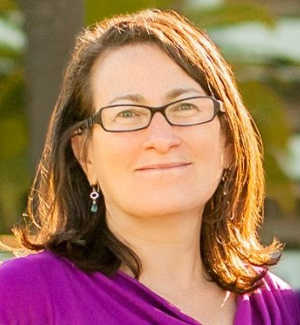
SACRAMENTO – Caltrans has announced the appointment of Ellen Greenberg as its new deputy director for sustainability
Greenberg will oversee Caltrans’ continued efforts to shift and align its policies and practices to improve the environment, the economy and social equity for all Californians.
“Ellen will be a valuable addition to the Caltrans Executive Team,” said Caltrans Director Malcolm Dougherty. “She will help Caltrans advance its sustainability commitment by applying those principles into the planning, design, maintenance and operation of California’s vast transportation system.”
Greenberg has more than 30 years’ experience working with cities, transportation agencies and non-governmental organizations to guide development, conservation and transportation decisions.
She comes to Caltrans from Arup, an independent design, planning and engineering firm, where she’s worked since 2010.
Greenberg served in the leadership of Arup’s planning and infrastructure groups in San Francisco. During her time at Arup, she worked with transportation agencies including LA Metro, the Maricopa County (Arizona) Association of Governments, Translink (Vancouver Region) and the SF Bay Area Metropolitan Transportation Commission.
She was lead author of Caltrans’ Smart Mobility Framework, which was initiated with support from the U.S. EPA Office of Sustainable Communities.
Other areas of work with the EPA office have included urban eco-districts, reuse of obsolete shopping malls and sustainable street design.
She also was appointed as the first visiting practitioner at the University of California, Davis National Center for Sustainable Transportation.
Learn more about the sustainability efforts underway by visiting Caltrans’ Sustainability page at http://www.dot.ca.gov/sustainability/ .
FANTASTIC BEASTS AND WHERE TO FIND THEM (Rated PG-13)
Never let an opportunity for a good franchise go to waste. That easily could be the motivation for “Harry Potter” author J.K. Rowling to team up with Warner Bros. for a new cinematic direction in the Wizarding World.
Unlike the “Harry Potter” films, “Fantastic Beasts and Where to Find Them” takes us to 1926 New York, where British magizoologist Newt Scamander (Eddie Redmayne) arrives in the big city near the end of a global excursion to research and rescue magical creatures.
A magizoologist is someone who studies magical creatures, and of course, this sort of profession only exists in the fantasy world created by J.K. Rowling, and Newt is a textbook example.
In fact, Newt is readying his research for a Hogwarts textbook that shares the name of this movie, a learning tool that would prove magical for the generation of students familiar to us from “Harry Potter.”
The good thing about “Fantastic Beasts” is that knowledge of the “Harry Potter” universe, which can prove confusing to more casual viewers, is not a necessary predicate to appreciating what could be considered the prequel to the Hogwarts School of Witchcraft and Wizardry.
Carrying an old leather case that is the portal to a world of magical creatures, Newt finds himself in a precarious position after an encounter with Jacob the baker (Dan Fogler), an unsuspecting No-Maj (American term for Muggle).
Inadvertently setting free some of Newt’s beasts, Jacob threatens to expose the wizarding community to security officers as well as a fanatical faction bent on eliminating the wizards targeted by groups wishing to revive the Salem witch trials.
Since the potential disaster of escaped beasts is a serious breach of the Statue of Secrecy, the former Auror Tina Goldstein (Katherine Waterston) jumps on the case, eager to reclaim her post as an investigator.
However, things take an ominous turn when Newt, as well as Tina, gains the unwanted attention of Percival Graves (Colin Farrell), the enigmatic Director of Security at the Magical Congress of the United States (MACUSA).
Joined by Tina’s sister Queenie (Alison Sudol), Newt, Jacob and Tina form an alliance to track down the menagerie of escaped strange creatures, from the mischievous Niffler (that looks a platypus) to the Thunderbird, a regal avian creature native to the arid climate of Arizona.
The hunt for the magical creatures is the most agreeable moment of the film, but larger issues loom with the appearance of Johnny Depp as the dark wizard Gellert Grindelwald, the epitome of evil.
Since four more movies are apparently planned, it’s likely many of the characters will be fleshed out over time. In the meantime, “Fantastic Beasts and Where to Find Them” satisfies an audience ready for the fantasy realm.
TV Corner: 'Good Behavior' on TNT cable network
Fans of the high-brow PBS series “Downton Abbey” may be curious about Michelle Dockery’s transition from upper class Brit to trailer park white trash from North Carolina in TNT’s new series “Good Behavior.”
Dockery’s Letty Raines has recently been released from prison for good behavior, which given her almost immediate recidivism to the life of con artist and thief seems like a gross error by the parole board.
Her attempts to go straight last only briefly as she is quickly fired from a waitress job at a greasy diner after having to fight back against a customer who apparently thought sexual assault was a menu item.
“Good Behavior” is a dark thriller about the conduct of a tortured soul who has no capacity to remain virtuous or to suppress her addictions to alcohol and drugs, even though she is devoted to listening to self-help tapes.
A consummate scammer, Letty is soon hooked up with a dishonest desk clerk at a posh resort to steal from hotel rooms. All goes well until she gets trapped in the closet of resort guest Javier (Juan Diego Botto) and overhears a criminal plot that crosses her minimal standards of propriety.
It turns out that Javier is a hired assassin who entertains a male client’s wish for the contract killing of his wife. Letty takes it upon herself to warn the woman of the immediate danger, knowing full well the details of the scheme.
Things get unnecessarily complicated and messy when Letty sets up an encounter with Javier in the hotel bar, only to turn around a day later to thwart the despicable strategy of killing a clueless housewife.
Other aspects of Letty’s muddled state of mind include a fervent desire to reconnect with her estranged son that is in the custody of her mother Estelle (Lusia Strus), who is resentful of her daughter’s wild ways.
Using guile and flattery, Letty evades the constant mandatory check-ins with her parole officer Christian (Terry Kinney), who is struggling with his own demons such that his emotional connection to his parolee threatens his ability to do his job.
The dark tone of “Good Behavior” settles in with Letty’s collision course with the killer, when both of them get entangled in a dangerous relationship that results in Letty’s entrapment by Javier’s compulsive acts.
Only a few episodes into TNT’s seductive thriller, one gets the sense the plot could take some weird twists given that show creators Chad Hodge and Blake Crouch also developed the strange TV series “Wayward Pines.”
For a show that could prove wayward in its direction, Michelle Dockery delivers a femme fatale sensibility reminiscent of the heyday of film noir.
Tim Riley writes film and television reviews for Lake County News.
When someone with Medicare finds his or her way to my office phone, it’s often because of a complicated and snarly issue that’s going to take time to fix.
However, it’s sometimes a Medicare beneficiary who found my number somewhere and called for some basic help in understanding their coverage. I LOVE those calls because I have a quick and easy answer for folks like that.
I refer them to the State Health Insurance Assistance Program, or SHIP. There’s a SHIP in every state in the country. I have phone numbers for the ones in my Medicare region written on a card right next to my phone, and I refer to it often.
SHIPs are nonprofit organizations that help people with Medicare understand their benefits better. The counseling is personalized and it’s absolutely free.
SHIPs aren’t connected to any insurance company or health plan, so they’re not trying to sell you any kind of product. If you’re eligible for Medicare, you’re eligible for assistance from your local SHIP. You can talk to a SHIP counselor over the phone, or go to your local SHIP office for face-to-face assistance.
The quality of the counseling is terrific. Many SHIP counselors have Medicare themselves and they’re well-trained to answer your questions. They know all the ins and outs of the program, whether you have Original Medicare (where you choose the doctor or hospital you want and the government pays your providers directly) or Medicare Advantage (in which private insurers offer health care services through a specific network of doctors, hospitals, and other providers). SHIPs also can help with Part D prescription drug insurance.
And did I mention that SHIP counseling is free?
Here are some of the issues that a SHIP counselor can help you with:
• Billing problems;
• Complaints about your medical care or treatment;
• How to shop for a Medicare Advantage health plan or Part D prescription drug plan that meets your needs;
• How to appeal if you disagree with coverage or payment decisions by Medicare or your Medicare plan;
• How Medicare works with other insurance.
How do you get in touch with SHIP? Below is the phone number for contacting the SHIP office closest to you if you live:
• In Arizona: Call 800-432-4040;
• In California: Call 800-434-0222;
• In Hawaii: Call 808-586-7299;
• In Nevada: Call 800-307-4444.
Of course, there are other ways besides SHIP to get information about Medicare. One excellent resource is the “Medicare & You” handbook, which is mailed to Medicare beneficiaries every fall.
“Medicare & You” is a gold mine of easy-to-understand information about how Medicare works, how to enroll, what services are covered, and many other topics. The handbook also lists all Medicare Advantage and Part D plans available in your area, their costs, and contact information for each one.
You can find the latest edition of “Medicare & You” online at http://www.medicare.gov/Pubs/pdf/10050.pdf .
Help is also available through the Medicare customer service center, at 1-800-MEDICARE (1-800-633-4227; TTY users call 1-877-486-2048). The call center is open 24 hours a day, including weekends.
Another helpful resource is the official Medicare Web site, at www.Medicare.gov .
The Web site has a wide variety of information about Medicare health and prescription drug plans in your area, including what they cost and what services they provide. Medicare also rates the plans based on its Five-Star Rating System.
You can look for doctors or other health care providers and suppliers who participate in Medicare, and see what Medicare covers, including preventive care services like cancer screenings and vaccinations.
At www.Medicare.gov , you also can:
• Get Medicare appeals information and forms;
• Get information about the quality of care provided by plans, nursing homes, hospitals, home health agencies and dialysis facilities;
• Look up helpful Web sites and phone numbers.
Cate Kortzeborn is Medicare’s regional administrator for Arizona, California, Hawaii, Nevada, and the Pacific Territories. You can always get answers to your Medicare questions by calling 1-800-MEDICARE (1-800-633-4227).
Using a dinosaur blind for waterfowl hunting?
Question: I realize this may sound like a really dumb question or a joke, but I’m honestly being serious. Can I make a plywood cutout of a dinosaur to hide behind so that I can better sneak up on waterfowl?
I recently heard about using a plywood cutout of a cow as a way to approach ducks and geese. However, I then saw that this is illegal in California because hunters are not allowed to use something that looks like a mammal to approach waterfowl.
Dinosaurs aren’t mammals though so I don’t see why this wouldn’t work, but I just wanted to ask. (Sydney M.)
Answer: Fish and Game Code, section 3502, which is derived from a provision of the Penal Code dating to 1909, prohibits using “any mammal (except a dog) or an imitation of a mammal as a blind in approaching or taking game birds.”
Since dinosaurs are not mammals, you will be OK as long as your blind can’t be confused with a mammal.
Is a SUP considered a vessel?
Question: Is a stand-up-paddle (SUP) board considered a vessel when used in the taking of abalone? I ask because I’m wondering if I have to fill out my abalone tag on my SUP before coming to shore. (Jonathan W.)
Answer: No, you may wait until you come ashore to tag and fill out your abalone report card.
Although California Code of Regulations Title 14, section 29.16(b)(1) requires that people taking abalone “shall tag any red abalone either immediately upon exiting the water or immediately upon boarding a vessel, whichever occurs first,” it also provides that people “who dive from a non-motorized vessel such as a kayak that is in the water may wait until immediately after disembarking from the non-motorized vessel to tag and record any abalone in possession.”
Still confused about antibiotics in stocked fish
Question: I just read with interest in the Modesto Bee your answer to the question about antibiotics in stocked fish. The answer doesn't make sense to me.
First, you say that hatchery fish are treated with antibiotics when necessary to save their lives and it is done on an as-needed basis.
Knowing that hatchery fish number in the tens of thousands, and no individual fish would be pulled out and antibiotics delivered to just those fish, you must be saying, yes, they are treated, right?
And then you finish the answer with “none of the stocked fish have antibiotics.” Huh? (Barbara S.)
Answer: Sorry for any confusion. When the fish need to be treated with antibiotics, then they are treated as a group since most ailments would be ones that would affect them all. Antibiotics are only used when necessary to save lives, and there is a good chance that none of the fish raised during a growing cycle were ever treated with antibiotics at all.
Prior to the Federal Drug Administration (FDA) approving (registering) any antibiotics for use in food fish, they set withdrawal times to ensure public safely.
Withdrawal times are meant to guarantee that residual antibiotics are either non-detectable, or lower than the FDA’s acceptable limits, prior to the fish being released.
Once all treatments are finished, the fish are held for the required time for the chemicals to work their way out of their bodies. Only after this time can those fish finally be planted and available for human consumption.
Some other agricultural industries have been criticized for using antibiotics as a growth aid. We don’t do that for the fish we supply to our anglers.
Sport fishing on a commercial crab boat?
Question: Can commercial boats sport fish for Dungeness crab during the sport season when the commercial season is closed? (Anonymous)
Answer: Yes, if the commercial vessel is not engaged in any commercial activity (FGC, section 7856(f)), the commercial vessel does not hold a Dungeness crab vessel permit (CCR Title 14, section 132.1(a)), and everyone taking crab or fishing onboard has a sport fishing license and is following sport fishing regulations.
Carrie Wilson is a marine environmental scientist with the California Department of Fish and Wildlife. While she cannot personally answer everyone’s questions, she will select a few to answer each week in this column. Please contact her at