 How to resolve AdBlock issue?
News
ACCUWEATHER GLOBAL WEATHER CENTER – AccuWeather reports just after sunrise on Thursday, Punxsutawney Phil declared six more weeks of winter for the United States – a prognostication AccuWeather meteorologists largely agree with.
Though many Americans are longing for warmer weather, most of the country will be faced with weeks of wintry conditions.
“There will be more rain than snow in the big East Coast cities,” AccuWeather Meteorologist Paul Pastelok said. However, the interior Northeast will have a higher chance for snow as temperatures remain below normal.
“As far as a significant warmup goes across the Northeast, I think you have to hold off til late April or early May,” he said.
Cold air and snow will also persist in the Midwest, northern Plains and Northwest, enveloping nearly the entire northern tier of the country.
Northern and central California will see additional winter storms and rainfall. The abundant precipitation will continue to build a buffer for reservoirs in the coming months, Pastelok said.
Meanwhile, wet weather will grip cities from the mid-Atlantic down to the Florida Panhandle.
The rest of Florida will mark the exception for the Southeast, as dry weather prevails between now and springtime.
The spring season will officially begin on March 20.
For more details on what to expect, check back for AccuWeather's full 2017 spring forecast on Feb. 8.
Jillian MacMath writes for www.AccuWeather.com .
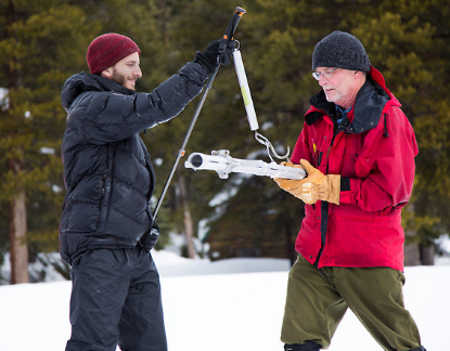
NORTHERN CALIFORNIA – The latest statewide snow survey shows continued gains for the Sierra snowpack thanks to the recent series of winter storms.
Thursday's manual snow survey by the California Department of Water Resources, or DWR, at Phillips Station in the Sierra Nevada range found a snow water equivalence of 28.1 inches, a significant increase since the Jan. 3 survey, when just 6 inches was found there.
The average as measured at Phillips since 1964 is 11.3 inches.
Snow water equivalence is the depth of water that theoretically would result if the entire snowpack melted instantaneously. That measurement is more important than depth in evaluating the status of the snowpack.
On average, the snowpack supplies about 30 percent of California’s water needs as it melts in the spring and early summer.
More telling than a survey at a single location, however, are DWR’s electronic readings Thursday from 101 stations scattered throughout the Sierra Nevada.
Statewide, the snowpack holds 31 inches of water equivalent, or 173 percent of the Feb. 2 average (18.1 inches). On Jan. 1 before a series of January storms, the snow water equivalent (SWE) of the statewide snowpack was 6.5 inches, just 64 percent of the New Year’s Day average.
Measurements indicate the water content of the northern Sierra snowpack is 26 inches, 144 percent of the multi-decade average for the date. The central and southern Sierra readings are 32 inches (173 percent of average) and 32 inches (200 percent of average), respectively.
The Phillips snow course, which is near the intersection of Highway 50 and Sierra-at-Tahoe Road, is one of hundreds that will be surveyed manually throughout the winter.
Manual measurements augment the electronic readings from more than 100 sensors in the state’s mountains that provide a current snapshot of the water content in the snowpack.
Frank Gehrke, chief of the California Cooperative Snow Surveys Program, conducted Thursday's survey at Phillips and reported that, “We’ve got a very good snowpack, a very robust snowpack on the ground right now.”
The first four months of Water Year 2017 (Oct. 1 to Feb. 2) were wet due to atmospheric river storms and rainfall from lesser storms that drenched the state.
All three regions DWR monitors continuously for their rainfall had recorded more by Jan. 23 than their annual averages for the entire water year, which runs from Oct. 1 through Sept. 30:
• The average annual precipitation at the eight-station Northern California index is 50 inches; that total was surpassed on Jan. 20, 112 days into Water Year 2017. Water Year 1997 had more rain in the region during the October-through-January period (58.22 inches) than during the same period this water year (53.2 inches).
• The San Joaquin Basin rainfall total Thursday is 204 percent of average for the date.
• Tulare Basin rainfall is 207 percent of average for the date.
Shasta Lake, California’s largest surface reservoir now holds 114 percent of its historical average on Thursday’s date. One year ago, Shasta’s storage was just 78 percent of its February 2 average.
Similarly, Lake Oroville, the State Water Project’s largest reservoir, holds much more water Thursday than a year ago – 121 percent of its historical average Thursday compared to just 68 percent one year ago.
Although this year, so far, is exceptionally wet, storms can cease. For example, after the previous drought declaration was ended in March 2011 – and the arrival of some storms in November and December 2012 – severe drought returned, leading to the driest four year period (and some of the warmest years) in California’s history.
“In the last 10 water years, eight have been dry, one wet, one average,” said State Climatologist Mike Anderson. “Hopefully this year will end up being wet, but we cannot say whether it will be one wet year in another string of dry ones.”
Many Californians continue to experience the effects of drought and a number of Central Valley communities still depend on water tanks and bottled water.
Lake Cachuma in Santa Barbara County is at just 12 percent capacity, and groundwater – source of at least a third of the supplies Californians use – will take much more than a few storms to be replenished in many areas.
California’s climate is the most variable of any state. Historically, it swings from drought to flood and back to drought, and climate change is intensifying those, DWR reported.
In addition, as global warming drives up average temperatures in California more precipitation will fall as rain, not snow stored in the Sierra Nevada and other mountains. To help prepare for these ever-wider extremes, the agency said Californians should be making conservation a way of life.
Below is a historical snowpack water content average for the past 15 years.
Statewide Snowpack Water Content – Feb. 1 Average (17.75 inches):
• 2002: 110.
• 2003: 101.
• 2004: 111.
• 2005: 163.
• 2006: 122.
• 2007: 42.
• 2008: 116.
• 2009: 58.
• 2010: 111.
• 2011: 129.
• 2012: 37.
• 2013: 87.
• 2014: 14.
• 2015: 23.
• 2016: 116.
On Thursday, Congressman Mike Thompson (CA-05), chair of the Gun Violence Prevention Task Force, forcefully spoke against H.J. Res. 40, which would undermine the background check system for firearm purchases.
The resolution prohibits the Social Security Administration, or SSA, from reporting the names of beneficiaries who cannot responsibly own a firearm to the National Instant Criminal Background Check System, or the NICS.
Under the Congressional Review Act, passage of this resolution would prevent the SSA from passing a substantially similar rule in the future – barring the agency from being able to report those who should not have firearms to the NICS background system indefinitely.
“I am a gun owner and a strong supporter of the Second Amendment, but this resolution is not about denying the right to own a gun – it is about upholding the law. And the law is very clear about who should be reported to the NICS background system. This law was passed more than a decade ago to keep guns from those who cannot responsibly own them,” Thompson said.
“Passage of this resolution would put Americans at risk. It would prevent the SSA from reporting the names of those who should not have a gun – indefinitely. If there are concerns about this rule, we can revise it. But the CRA process is not a revision. It would ban the SSA from even trying to fix the rule. This is a dangerous overstep, and I urge every Member to consider the safety of our districts. No one wants another Virginia Tech. No one wants another Newtown,” he said.
The SSA regulation complies with the NICS Improvement Amendments Act of 2007, which requires federal agencies to submit the records of individuals prohibited from possessing a firearm under existing federal law to NICS.
The regulation states that the SSA will only report individuals who meet both of the following criteria:
• They have a very severe, long-term, mental disorder that prevents them from holding any kind of job – even part-time or below the minimum wage.
• Legal, medical, and lay evidence have indicated they are not capable of managing their own benefits.
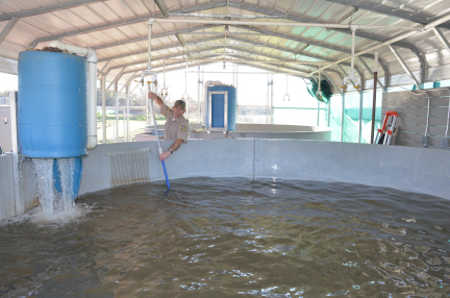
NORTHERN CALIFORNIA – Following recent heavy rains, workers at the Nimbus and American River hatcheries labored around the clock to prevent massive debris loads from clogging the main water supply for below Nimbus Dam.
Their intense efforts to clean intake structures and adjust water flows during battering winds and rains saved millions of eggs and young fish over the 11-day ordeal.
After a winter deluge from Jan. 7 to 18, the two hatcheries’ main water source experienced clogging that affected the water distribution system, putting more than 5.5 million trout and salmon eggs and 3 million young trout, steelhead and salmon in peril.
Both hatcheries are on a gravity water flow supply from the main intake screen at Nimbus Dam. There are no other filters until the water reaches each hatchery.
January storms swelled water levels at Folsom and Nimbus dams to the highest points since the El Niño floods of 1997 to 1998. The high flows resulted in a release of up to 60,000 cubic feet of water per second (cfs) from Nimbus Dam, while the normal rate is around 6,000-10,000 cfs.
This huge water flow swept up debris that had collected above water line during the extensive drought. The debris clogged, overwhelmed and then incapacitated the automatic cleaning screen at the intake, compromising water flow to both hatcheries.
In a joint cooperative effort and at the height of the crisis, technicians from the Bureau of Reclamation devised a simple but effective way to quickly remove the debris clogging the main intake screen.
They also bypassed systems that limited the time between cleaning cycles on the machinery, thereby allowing CDFW personnel to monitor the process 24 hours a day and keep water flowing to the hatcheries.
“It was a tense situation that called on our staff to work double shifts cleaning and operating the main intake structure screen and unclogging egg incubation jars inside each hatchery,” said Nimbus Hatchery Manager Paula Hoover. “They were working as fast as they could, 24/7, to save the fish.”
At American River Hatchery, the recent crisis threatened 1.4 million trout eggs in various stages of development, along with 1.7 million young trout.
The fish and eggs were in danger of suffocation as the debris clog caused reduced oxygen levels and reduced the flow of water as much as 50 percent.
Further complicating operations, the drum filter for the hatchery building was overwhelmed by the increased sediment, prompting workers to create a bypass to keep water flowing to the building.
The hatchery raises more than 2.5 million trout annually for planting in lakes, rivers and streams in 15 counties throughout northern and central California. More than a quarter of a million anglers utilize these waters for recreational fishing.
None of the Golden Trout rescued from the Volcanic Wilderness Area due to drought conditions were affected because they are housed in aquaculture systems that can be switched to 100 percent recirculation as needed.
These Golden Trout will be kept at the hatchery until conditions in their natural habitat improve and they can be released back to the wild, likely in the late spring or early summer of this year.
At Nimbus Hatchery, 450,000 steelhead and 4.5 million salmon in various stages of development faced the same dire situation. Preparing for the worst, staff had emergency equipment ready to perform on-site releases of more than 250,000 year-old steelhead into the raging American River if conditions at the hatchery deteriorated further.
“The recreational and economic impact from potential loss of trout, salmon and steelhead from these two hatcheries would be substantial,” said North Central Region Fisheries Program Manager Kevin Thomas. “As usual, dedicated CDFW hatchery staff demonstrated exceptional care and effort, helping millions of fish survive to provide recreational, commercial and tribal fishing opportunities for California and the businesses they support.”
LAKE COUNTY, Calif. – The first quarterly meeting for 2017 of Lake County Division 35, California Retired Teachers Association, or CalRTA, will be held on Tuesday, Feb. 14, at the Riviera Hills Restaurant, 10200 Fairway Drive, Kelseyville.
The luncheon meeting begins with registration at 9:30 a.m.
A business meeting will be called to order at 10 a.m. which will be followed by this month’s program.
Division President Joyce Anderson, announced that Nicole Vice, representing AirMedCare, will speak and offer CalRTA members the opportunity to join at the reduced group rate pricing.
AirMedCare is the largest medical transport provider in the United States with more than 240 aircraft in 32 states. Locally, REACH, a member of AirMedCare is based at Lampson Field in Lakeport.
All CalRTA members are invited to attend as well as recently retired teachers, family members or other interested individuals.
This is an opportunity to learn how the California Retired Teachers Association is working to protect the retirement and pensions of California teachers.
In addition the Lake County chapter provides scholarships to students, grants to local teachers and supports education in Lake County in numerous other ways.
At the conclusion of the program, lunch will be served.
As this is Valentine’s Day, the menu consists of romantic chicken piccata, beautiful salad, sweet tasting rice and veggies, risqué ice cream and chocolate kisses. Beverages are included. The cost of lunch is $15 including tax and gratuity.
Attendees will be entered into a drawing for the opportunity to win a free lunch at next quarter’s meeting.
Reservations or transportation arrangements may be made by calling Julie at 707-279-2625.
NORTH COAST, Calif. – Caltrans reports that the following road projects will be taking place around Lake County and the North Coast during the coming week.
Included are Mendocino County projects that may impact Lake County commuters.
LAKE COUNTY
Highway 20
– PG&E has been granted a Caltrans Encroachment Permit for utility repairs near Van Sleeper Road on Tuesday, Feb. 7. One-way traffic control will be in effect from 9 a.m. to 3 p.m. Motorists should anticipate five-minute delays.
Highway 175
– Valley fire recovery work from the junction of Routes 29/175 in Middletown to Loch Lomond will continue. One-way traffic control will be in effect from 7 a.m. to 5 p.m. weekdays. Motorists should anticipate five-minute delays.
– AT&T has been granted a Caltrans Encroachment Permit for utility repairs near Socrates Mine Road beginning Friday, Feb. 3. One-way traffic control will be in effect from 8 a.m. to 3 p.m. weekdays. Motorists should anticipate five-minute delays. LC#P175DA
MENDOCINO COUNTY
Highway 1
– PG&E has been granted a Caltrans Encroachment Permit for utility repairs from Haven Neck Drive to Old Stageroad Drive on Wednesday, Feb. 8. One-way traffic control will be in effect from 9 a.m. to 3 p.m. weekdays. Motorists should anticipate five-minute delays.
– Repairs at the Albion River Bridge will continue. One-way traffic control will be in effect from 8 a.m. to 4 p.m. weekdays. Motorists should anticipate five-minute delays.
– PG&E has been granted a Caltrans Encroachment Permit for utility repairs near Simpson Lane on Tuesday, Feb. 7. One-way traffic control will be in effect from 8 a.m. to 4 p.m. Motorists should anticipate five-minute delays.
– Emergency slide removal near Leggett will continue. One-way traffic control with stop signs will be in effect 24 hours per day, seven days per week. Motorists should anticipate five-minute delays.
Highway 101
– Routine maintenance near Frog Woman Rock will continue. Northbound traffic will be restricted to one lane 24 hours per day, seven days per week. Motorists should anticipate minor traffic slowdowns.
– Caltrans will perform routine maintenance near Hewlitt and Sturtevant Road on Monday, Feb. 6. One-way traffic control will be in effect from 9 a.m. to 4 p.m. Motorists should anticipate 10-minute delays.
– PG&E has been granted a Caltrans Encroachment Permit for utility repairs near Henry Station Road beginning Wednesday, Feb. 8. One-way traffic control will be in effect from 9 a.m. to 3 p.m. weekdays. Motorists should anticipate five-minute delays.
– Emergency slide repairs on the westbound Route 20 to southbound Route 101 connector ramp will continue. Full intermittent closures will be in effect from 7 a.m. to 7 p.m., 7 days per week. Motorists should anticipate 10-minute delays.
– Emergency slide repairs just south of Standish-Hickey State Park will continue. One-way traffic control will be in effect from 7:30 a.m. to 5 p.m. weekdays. Motorists should anticipate five-minute delays.
– Emergency slide removal near Piercy will continue. Traffic will be reduced to one lane in both directions 24 hours per day, seven days per week. Motorists should anticipate minor traffic slowdowns.
Highway 175
– Emergency storm damage repairs from Harrison Street to Wooldridge Ranch Road will continue through Friday, Feb. 3. One-way traffic control will be in effect from 7 a.m. to 5 p.m. weekdays. Motorists should anticipate five-minute delays.
– PG&E has been granted a Caltrans Encroachment Permit for tree trimming from McDowell Street to 1.0 mile east of Buckman Road beginning Monday, Feb. 6. One-way traffic control will be in effect from 9 a.m. to 3 p.m. weekdays. Motorists should anticipate 10-minute delays.
The Caltrans Traffic Operations Office has reviewed each project and determined that individual project delays are expected to be less than the statewide policy maximum of 30 minutes, unless noted otherwise above.
For information pertaining to emergency roadwork or for updates to scheduled roadwork, please contact the California Highway Information Network (CHIN) at 1-800-GAS-ROAD (1-800-427-7623).