How to resolve AdBlock issue?
Refresh this page
How to resolve AdBlock issue?
Refresh this page
Lake County News,California
  • Home
    • Registration Form
  • News
    • Education
    • Veterans
    • Community
      • Obituaries
      • Letters
      • Commentary
    • Police Logs
    • Business
    • Recreation
    • Health
    • Religion
    • Legals
    • Arts & Life
    • Regional
  • Calendar
  • Contact us
    • FAQs
    • Phones, E-Mail
    • Subscribe
  • Advertise Here
  • Login

News

Lakeport Planning Commission to consider allowing temporary cannabis events at fairgrounds

LAKEPORT, Calif. — The Lakeport Planning Commission will consider an ordinance to change city code to allow for temporary cannabis events at the Lake County Fairgrounds.

The commission will meet at 5:30 p.m. Wednesday, Jan. 14, in the council chambers at Lakeport City Hall, 225 Park St.

The agenda is available here.

To speak on an agenda item, access the meeting remotely here; the meeting ID is 814 1135 4347, pass code is 847985. 

To join by phone, dial 1-669-444-9171; for one tap mobile, +16694449171,,81411354347#,,,,*847985#.

Comments can be submitted by email to This email address is being protected from spambots. You need JavaScript enabled to view it.. To give the city clerk adequate time to print out comments for consideration at the meeting, please submit written comments before 4:30 p.m. on Wednesday, Jan. 14.

The commission’s main item of business is its consideration of the recommendation of an ordinance amending sections of the Lakeport Municipal Code regarding commercial cannabis events.

Specifically, the proposed changes would allow limited temporary cannabis events at the Lake County Fairgrounds, whose chief executive officer recently contacted the city about a proposal to host a temporary cannabis event this spring with cannabis retail sales permitted, according to a report to the commission from Community Development Director Joey Hejnowicz.

“The Lake County Fairgrounds has expressed interest in hosting a cannabis-related event as part of its broader, year-round event programming strategy intended to increase community engagement, attract visitors, and support the long-term financial sustainability of the Fairgrounds,” Hejnowicz wrote. “The Fairgrounds regularly hosts large, managed events and has the infrastructure, staffing capacity, and security experience necessary to accommodate specialized, regulated events.”

He said the proposed cannabis event “is envisioned as a springtime gathering designed to showcase and celebrate Lake County's local cannabis growers and farmers, many of whom are long-standing agricultural producers within the region. The event would combine cannabis-related programming with live music and entertainment to create a destination-style
event that highlights Lake County's unique agricultural identity and emerging cannabis economy.”

Hejnowicz’s report said the amendment to the municipal code “is structured as a prohibition citywide with a limited exception at a single established venue,” in this case, the fairgrounds, and requires compliance with state law and all Department of Cannabis Control license conditions. 

Staff is recommending the commission adopt the draft ordinance with the changes and find that the proposed amendment to Chapter 5.34 of the Lakeport Municipal Code “appropriately balances local control with state cannabis regulations, supports economic development and community events at an established venue, and maintains robust safeguards to protect public health, safety, and welfare.”

Email Elizabeth Larson at This email address is being protected from spambots. You need JavaScript enabled to view it.. Follow her on Twitter, @ERLarson, and on Bluesky, @erlarson.bsky.social. Find Lake County News on the following platforms: Facebook, @LakeCoNews; X, @LakeCoNews; Threads, @lakeconews, and on Bluesky, @lakeconews.bsky.social. 

Viral outbreaks are always on the horizon – here are the viruses an infectious disease expert is watching in 2026

Viruses know no borders. mammuth/iStock via Getty Images Plus

A new year might mean new viral threats.

Old viruses are constantly evolving. A warming and increasingly populated planet puts humans in contact with more and different viruses. And increased mobility means that viruses can rapidly travel across the globe along with their human hosts.

As an infectious diseases physician and researcher, I’ll be keeping an eye on a few viruses in 2026 that could be poised to cause infections in unexpected places or in unexpected numbers.

Influenza A – on the cusp of a pandemic

Influenza A is a perennial threat. The virus infects a wide range of animals and has the ability to mutate rapidly. The most recent influenza pandemic – caused by the H1N1 subtype of influenza in 2009 – killed over 280,000 people worldwide in its first year, and the virus continues to circulate today. This virus was often called swine flu because it originated in pigs in Mexico before circulating around the world.

Most recently, scientists have been monitoring the highly-pathogenic avian influenza H5N1 subtype, or bird flu. This virus was first found in humans in southern China in 1997; wild birds helped spread the virus around the world. In 2024, the virus was found for the first time in dairy cattle in the U.S. and subsequently became established in herds in several states.

Cow standing in a pen, looking into camera
Avian flu has spread across dairy herds in the U.S. USDA Agricultural Research Service via AP

The crossover of the virus from birds to mammals created major concern that it could become adapted to humans. Studies suggest there have already been many cow-to-human transmissions.

In 2026, scientists will continue to look for any evidence that H5N1 has changed enough to be transmitted from human to human – a necessary step for the start of a new influenza pandemic. The influenza vaccines currently on the market probably don’t offer protection from H5N1, but scientists are working to create vaccines that would be effective against the virus.

Mpox – worldwide and liable to worsen

Mpox virus, formerly called monkeypox virus, was first discovered in the 1950s. For many decades, it was seen rarely, primarily in sub-Saharan Africa. Contrary to its original name, the virus mostly infects rodents and occasionally crossed over into humans.

Mpox is closely related to smallpox, and infection results in a fever and painful rash that can last for weeks. There are several varieties of mpox, including a generally more severe clade I and a milder clade II. A vaccine for mpox is available, but there are no effective treatments.

Microscopy image of clusters of teal circles
Mpox has spread around the world. NIAID/Wikimedia Commons, CC BY-SA

In 2022, a global outbreak of clade II mpox spread to more than 100 countries that had never seen the virus before. This outbreak was driven by human-to-human transmission of the virus through close contact, often via sex.

While the number of mpox cases has significantly declined since the 2022 outbreak, clade II mpox has become established around the world. Several countries in central Africa have also reported an increase in clade I mpox cases since 2024. Since August 2025, four clade I mpox cases have occurred in the U.S., including in people who did not travel to Africa.

It is unclear how mpox outbreaks in the U.S. and abroad will continue to evolve in 2026.

Oropouche virus – insect-borne and poised to spread

Oropouche virus was first identified in the 1950s on the island of Trinidad off the coast of South America. The virus is carried by mosquitoes and small biting midges, also known as no-see-ums.

Most people with the virus experience fever, headache and muscle aches. The illness usually lasts just a few days, but some patients have weakness that can persist for weeks. The illness can also recur after someone has initially recovered.
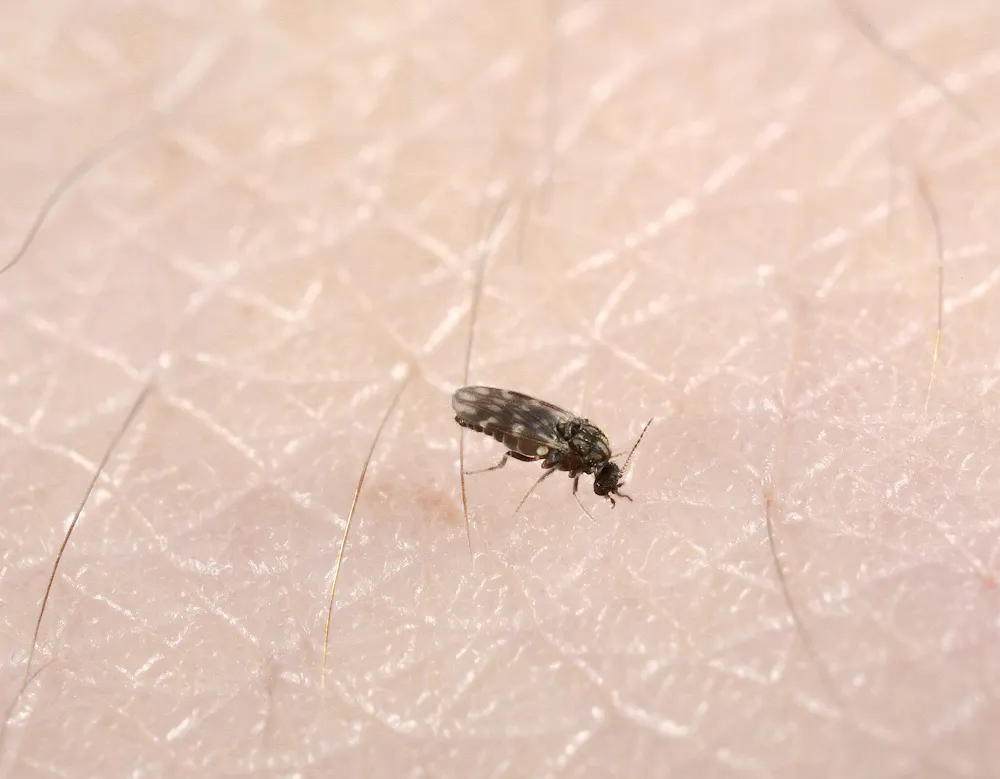
Close-up of small winged bug on human skin
Biting midges – which carry Oropouche virus – are hard to see, as their alias ‘no-seem-ums’ implies. CSIRO via Wikimedia Commons, CC BY-SA

There are many unanswered questions about the Oropouche virus and the disease it causes, and there are no specific treatments or vaccines. For decades, infections in people were thought to occur only in the Amazon region. However, beginning in the early 2000s, cases began to show up in a larger area of South America, Central America and the Caribbean. Cases in the United States are usually among travelers returning from abroad.

In 2026, Oropouche outbreaks will likely continue to affect travelers in the Americas. The biting midge that carries Oropouche virus is found throughout North and South America, including the southeastern United States. The range of the virus could continue to expand.

Even more viral threats

A number of other viruses pose a risk in 2026.

Continuing global outbreaks of chikungunya virus may affect travelers, some of whom may want to consider getting vaccinated for this disease.

Measles cases continue to rise in the U.S. and globally against the backdrop of decreasing vaccination rates.

HIV is poised for a resurgence, despite the availability of effective treatments, due to disruptions in international aid.

Person standing in room, holding pills in hand
Despite the availability of effective treatments, diseases like HIV and measles are seeing resurgences. Brian Inganga/AP Photo

And as-yet-undiscovered viruses can always emerge in the future as humans disrupt ecosystems and travel around the world.

Around the world, people, animals and the wider environment are dependent on each other. Vigilance for known and emerging viral threats and the development of new vaccines and treatments can help keep everyone safe.The Conversation

Patrick Jackson, Assistant Professor of Infectious Diseases, University of Virginia

This article is republished from The Conversation under a Creative Commons license. Read the original article.

Supervisors to discuss Community Development budget, purchasing rules, Public Works and Public Services merger

LAKE COUNTY, Calif. – The Board of Supervisors this week will tackle major issues within county government, including the Community Development Department’s budget deficit and loan repayment, proposed changes to the county’s purchasing rules that could expand staff authority, and a possible merger of two large county departments. 

The‌ ‌board will meet beginning ‌at‌ ‌9‌ ‌a.m. Tuesday, Jan. 13, in the board chambers on the first floor of the Lake County Courthouse, 255 N. Forbes St., Lakeport.

The‌ ‌meeting‌ ‌can‌ ‌be‌ ‌watched‌ ‌live‌ ‌on‌ ‌Channel‌ ‌8, ‌online‌ ‌and‌ ‌on‌ ‌the‌ ‌county’s‌ ‌Facebook‌ ‌page. ‌Accompanying‌ ‌board‌ ‌documents, ‌the‌ ‌agenda‌ ‌and‌ ‌archived‌ ‌board‌ ‌meeting‌ ‌videos‌ ‌also‌ ‌are‌ ‌available‌ ‌at‌ ‌that‌ ‌link. ‌ ‌

To‌ ‌participate‌ ‌in‌ ‌real-time, ‌join‌ ‌the‌ ‌Zoom‌ ‌meeting‌ ‌by‌ ‌clicking‌ ‌this‌ ‌link‌. ‌ ‌

The‌ ‌meeting‌ ‌ID‌ ‌is‌ 865 3354 4962, ‌pass code 726865.‌ ‌The meeting also can be accessed via one tap mobile at +16694449171,,86533544962#,,,,*726865#. The meeting can also be accessed via phone at 669 900 6833.

At 2 p.m., the board will return to a discussion of the Community Development Department’s, or CDD’s, budget deficit – reported less than two months after the board approved a “balanced” budget in September – and plans to repay a $390,000 county loan approved in November to meet payroll. 

It will be the board’s third discussion on this matter, following board meetings on Nov. 18 and Dec. 9.

At the December meeting, CDD staff said the deficit stemmed from “a slow and steady trend of reserve spending,” with the Building Division’s reserves used to cover operations in the Code Enforcement and Planning divisions within the department. 

“Over the past three years, about $1.1 million has been transferred as contributions to those divisions, while just over a million was for salaries,” Deputy County Administrative Officer Casey Moreno said at that meeting. 

This week, CDD and County Administrative Office staff are expected to provide further financial analysis for all CDD divisions, a summary of nonrevenue generating activities for each division, an overview of loan repayment options and timelines, and a high-level fee analysis, according to the staff memo.

County Counsel will also provide input on the legal guidance on fee adoption and use of collected permitting fees. 

At 11:30 a.m., the board will hold a public hearing on the County Administrative Officer’s request to amend the county’s “purchasing ordinance” which governs bidding and purchasing process for public projects. 

This item was continued from the Dec. 9 meeting. 

Key changes proposed include allowing staff to approve bidding exemptions for contracts up to $100,000 and removing the Board of Supervisors from decisions to exempt projects from competitive bidding when it is deemed not in the public interest. 

The staff memo said these changes will improve “efficiency and clarify purchasing for further transparency.”

In the untimed items, the board will be asked to consider and approve combining the Public Works and Public Services departments into “a single, integrated department.”

Staff recommend appointing Lars Ewing, who is both the current Public Services Director and Interim Public Works director, as interim director of the consolidated department, according to the staff memo. 

Consolidation may allow the departments to share standards and expertise and better coordinate capital projects and administrative processes, the memo said. 

While the memo also cites fiscal and staffing benefits, the budget figures included in the memo do not reflect any reduction.

Public Works is currently allocated 60 full-time equivalent positions with an annual budget in the range of $40–45 million, while Public Services has 51 positions and a $30–35 million budget. 

Under the proposal, “the combined department would include approximately 110 FTE positions and a total annual operating budget in the range of $70-$80 million,” according to the memo – reflecting the sum of the two departments rather than a downsizing of staff or spending.

The full agenda follows. 

CONSENT AGENDA

5.1: Approve continuation of emergency proclamation declaring a shelter crisis in the County of Lake.

5.2: Approve continuation of proclamation of the existence of a local emergency due to pervasive tree mortality.

5.3: Approve continuation of proclamation declaring a Clear Lake Hitch emergency.

5.4: (a) Approve proclamation of the Lake County Board of Supervisors commending public officials for exemplary service in public safety; and (b) authorize staff to add the names of honorees and the Chair to sign and issue each completed proclamation for the corresponding honoree at the awards ceremony.

5.5: Approve out-of-state travel for District 5 Supervisor Jessica Pyska and District 2 Supervisor Bruno Sabatier to attend the National Association of Counties (NACo) annual Legislative Conference in Washington D.C. from February 20 to February 25, 2026.

5.6: Approve amendment No. 1 to agreement between the County of Lake and Lake County Resource Conservation District for services under the Adaptation Planning Grant Program Agreement with the Governor’s Office of Planning and Research and authorize the Chair to sign.

5.7: Approve side letter to Lake County Deputy Sheriff Association Unit 16 July 1, 2025 – June 30, 2028, MOU.

5.8: Approve Board of Supervisors meeting minutes December 9, 2025.

5.9: (Second reading) Adopt ordinance amending Chapter 5 of the Lake County Code and adopting by reference the 2025 California Building Standards Code, including Title 24 Parts 1–12, Wildland-Urban Interface, and International Property Maintenance Code.

5.10: (a) Adopt resolution authorizing the 2026-2027 Grant Project—Lake County Child Advocacy Center Program; and (b) authorize the Chair to sign the grant subaward certification of assurance of compliance.

5.11: Approve the 2025-2026 Community Corrections Partnership Plan.

5.12: Approve acceptance of $275,000 additional Housing and Disability Advocacy Program (HDAP) funding for FY 26/27.

5.13: Approve task order proposal from on-call engineer, Brelje & Race Consulting Engineers, and allow Special Districts to move forward with design and preparation of a bid package for sewer main lining and lift station lining.

5.14: (Sitting as the Board of Directors Lake County Watershed Protection District) Approve award of contract for consulting services—Sunny Day Flood Scenario and Inundation Map Compliance for Highland Creek and Adobe Creek Dams in the amount of $32,500; and authorize the Chair to sign and the Water Resources Director to execute the contract.

5.15: (Sitting as the Board of Directors Lake County Watershed Protection District) Approve the purchase and sale agreement with Donna Koker for property within the Middle Creek Flood Damage Reduction and Ecosystem Restoration Project and authorize the Chair of the Board of Directors to sign.

TIMED ITEMS

6.1, 9:02 a.m.: Public input.

6.2, 9:03 a.m.: Pet of the week.

6.3, 9:04 a.m.: New and noteworthy at the library.

6.4, 9:15 a.m.: Consideration of presentation giving an update on the Light Detection and Ranging (LiDAR) derivatives available to the public.

6.5, 9:30 a.m.: Consideration of presentation on the UC Davis Clear Lake Restoration Project.

6.6, 9:45 a.m.: (Sitting as the Lake County Air Quality Management District Board of Directors) Consideration of Air Toxics Hot Spots Report for 2024 presentation and discussion.

6.7, 10:05 a.m.: Public hearing—Consideration of draft resolution adopting the Lake County Climate Adaptation Plan.

6.8, 10:45 a.m.: 2026 Governance Workshop presentation for Probation.

6.9, 11 a.m.: Public hearing (continued from Nov. 18, 2025) – consideration of an ordinance amending Article VIII of Chapter 18 of the Lake County Code to implement a low value property tax exemption.

6.10, 11:15 a.m.: Public hearing – Consideration of resolution approving an application for funding and execution of a grant agreement and any amendments thereto from the 2025 funding year of the State CDBG program.

6.11, 11:30 a.m.: Public hearing (continued from Dec. 9, 2025) – Consideration of an ordinance amending the Purchasing Ordinance: Article X of Chapter Two of the Lake County Code to clarify powers and duties, additional exemptions from competitive bidding, and include increased purchasing limits for public projects.

6.12, 1 p.m.: Consideration of the distribution of excess proceeds in the amount of $663,489.75 from Tax Defaulted Land Sale #162 held May 31, 2024 per R&T §4675.

6.13, 1:15 p.m.: Consideration of a resolution to authorize the California Statewide Communities Development Authority to establish a Community Facilities District for the Guenoc Development.
6.14, 1:30 p.m.: Consideration of proposed findings of fact and decision in the appeal of Maria Kann and Associates (PL-25-198).

6.15, 2 p.m.: Presentation of update on Community Development Department (CDD) loan repayment plan.

NON-TIMED ITEMS

7.1: Supervisors’ weekly calendar, travel and reports.

7.2: Consideration of a supplemental response to the 2024-25 Lake County Civil Grand Jury’s final report.

7.3: Consideration of the following advisory board appointments: Cobb Municipal Advisory Council; Kelseyville Cemetery District; Lake County Ag Advisory Committee; Lower Lake Cemetery District.

7.4: (Second reading) Consideration of ordinance to amend Chapter 21, Articles 4–13, 18, 19, 27 and 68 of the Lake County Zoning Code to implement General Plan Sixth Cycle Housing Element Policies HE-38, HE-59, HE-60, HE-61, HE-71, HE-72 and HE-73.

7.5: Consideration of consolidation of Public Works and Public Services Departments.

7.6: Consideration of letter to the Board of State and Community Corrections (BSCC) regarding proposed juvenile detention regulations.

CLOSED SESSION

8.1, Public employee evaluation: Title—County Counsel.

Email staff reporter Lingzi Chen atThis email address is being protected from spambots. You need JavaScript enabled to view it.. 

Saturday Lakeport ‘ICE Out’ protestors join nationwide effort

Protestors lined the overpass on Lakeport Boulevard at Highway 29 in Lakeport, California, on Saturday, Jan. 10, 2026. Photo courtesy of Bill Groody.


LAKEPORT, Calif. — A large group of protesters gathered on Saturday morning in Lakeport as part of a nationwide outcry over the shooting of a Minneapolis woman by a federal immigration agent.

The “ICE Out for Good” rally drew an estimated 100 Lake County protesters.

Participants lined the overpass on Lakeport Boulevard at Highway 29 in response to the shooting death on Jan. 7 of 37-year-old Renee Nicole Good — a wife and mother of three — by a United States Immigration and Customs Enforcement agent.

A coalition of groups including Indivisible, MoveOn Civic Action, the American Civil Liberties Union, Voto Latino, United We Dream, 50501, the Disappeared in America Campaign of the Not Above the Law coalition mobilized protests nationwide on Saturday and Sunday as part of the ICE Out For Good Weekend of Action.

The coalition reported that after calling for the protests on Friday, 1,000 such protests were quickly organized across the country over the weekend.

The Indivisible Lake County group organized the Lakeport event.

Organizers said they were encouraged by the shows of support expressed by passing motorists honking their horns.

Indivisible Lake County organized several protests last year, including the “Hands Off” protest in April, “No Kings” rallies in June and October, and an anti-fascism rally in August, all in Lakeport, and a Labor Day weekend event in Middletown.

Email Elizabeth Larson at This email address is being protected from spambots. You need JavaScript enabled to view it.. Follow her on Twitter, @ERLarson, and on Bluesky, @erlarson.bsky.social. Find Lake County News on the following platforms: Facebook, @LakeCoNews; X, @LakeCoNews; Threads, @lakeconews, and on Bluesky, @lakeconews.bsky.social. 

Protestors lined the overpass on Lakeport Boulevard at Highway 29 in Lakeport, California, on Saturday, Jan. 10, 2026. Photo courtesy of Bill Groody.


Sewage release impacts Burns Valley Creek area; advisory issued regarding well water

LAKE COUNTY, Calif. — A sewage spill over the weekend has impacted a creek and nearby private wells in the Clearlake area. 

On Sunday Lake County Special Districts confirmed that sewage entered the stormwater drainage system, leading to Burns Valley Creek. 

“As a result, some raw sewage contaminated water has leaked into Clear Lake,” the agency said in a statement posted to the county social media account.

The city of Clearlake issued a separate public notice on Sunday for any residence in the area of Pond Road northwest of Old Highway 53 up to Olympic and along Rumsey between Pamela and Smith. 

“Well water in this area should be considered impacted by the sewage leak, do not consume,” the city said.

Special Districts also urged the public to use bottled water only and not use private well water in the affected area until further notice. 

Water provided by public water systems remains safe to use, Special Districts reported.

The city of Clearlake said an emergency station for clean drinking water has been established at Pond Road and Old Highway 53. 

Residents and visitors are advised not to recreate in Burns Creek or in any bodies of water between Robin Lane/Pond and Pamela/Old Highway 53. Burns Creek to Clearlake should also be considered impacted, officials said.

County staff are working to assess potential impacts. Well testing will begin once laboratory services are available, starting tomorrow, and will continue throughout the week. 

Additional public updates will be provided as more information becomes available, Special Districts said.

For questions, please contact Special Districts 707-263-0119.

Why 2026 could see the end of the Farm Bill era of American agriculture policy

Federal funding is a key support for programs that provide free food to needy families. Joseph Prezioso/AFP via Getty Images

With Congress back in session, legislators will take up a set of issues they haven’t comprehensively addressed since 2018 – the year the last farm bill passed.

Farm bills are massive pieces of legislation that address a diverse constellation of topics, including agricultural commodities, conservation, trade, nutrition, rural development, energy, forestry and more. Because of their complexity, farm bills are difficult to negotiate in any political environment. And as the topics have expanded since the first iteration in 1933, Congress has generally agreed to take the whole thing up once every five years or so.

However, the most recent farm bill’s provisions expired in 2023. They have been renewed one year at a time ever since, but without the comprehensive overhaul that used to accompany farm bills.

As former federal employees handling agriculture policy who now study that topic, it’s unclear to us whether a comprehensive, five-year farm bill can be passed in 2026, or ever again.

The July 2025 enactment of the so-called “One Big Beautiful Bill Act,” the Trump administration’s budget priorities in the tax and spending bill, revised funding levels for many programs that were historically handled in the farm bill. For instance, that law included a 20% cut in funding to the Supplemental Nutrition Assistance Program, known as SNAP, which helps low-income families buy food. And it doubled support for the largest farm subsidy programs.

Those changes and current divisions in Congress mean the nation’s food and agriculture policy may remain stuck in limbo for yet another year.

A man in a field reaches toward a plant.
An Indiana soybean farmer examines his crop. AP Photo/Michael Conroy

Cuts to SNAP used for farm subsidies

For decades, political conventional wisdom has held that sweeping federal farm bills are able to pass only because farmers seeking subsidies and anti-hunger advocates wanting increased SNAP dollars recognize the mutual advantage in working together. That’s how to build a broad, bipartisan consensus strong enough to garner the 60 votes in the U.S. Senate to avoid a filibuster and actually pass a bill.

But the One Big Beautiful Bill Act tax and spending law did not create a compromise between those competing interests. It slashed SNAP spending by US$186 billion over the next decade. At the same time, it boosted price support for farmers who grow key crops like corn, soybeans and wheat by $60 billion, in addition to a $10 billion economic relief package passed at the end of 2024 to address high costs of seeds, fertilizer and other farming supplies.

Supporters of anti-hunger programs are furious that these funds for farmers are being paid for by cutting SNAP benefits to families.

In addition, about one-third of the SNAP cuts came by shifting the program’s cost to state budgets. States have always carried some of the costs to administer SNAP, but they have never before been required to fund billions of dollars in benefits. Many states will be unable to cover these increased costs and will be forced to either reduce benefits or opt out of SNAP altogether, dramatically cutting the help available to hungry Americans.

Groups that support SNAP are unlikely to help pass any bill relating to food or farm policy that does not substantially reverse the cuts to SNAP.

A crowd of people moves through an area with many boxes.
Californians collect free food at a community gathering. Justin Sullivan/Getty Images

And farmers who receive money under the two largest farm subsidy programs are not even required to grow the specific crops those programs are meant to support. Rather, they must simply own farmland that was designated in 1996 as having grown that crop in the early 1980s.

Farmers have repeatedly said they would prefer federal farm policies that support markets and create conditions for stable, fair commodity prices. And evidence shows that spending more money on farm subsidies does little to actually improve underlying economic conditions affecting the costs of farming or the prices of what is grown.

And yet, in early December 2025, the Department of Agriculture released an additional $12 billion to help offset losses farmers experienced when Trump’s tariffs reduced agricultural exports. In mid-December, the National Farmers Union said that money still wasn’t enough to cover losses from consistently low commodity prices and high seed and fertilizer costs.

A regular five-year farm bill may be out of reach

The success of any bill depends on political will in Congress and outside pressure coming together to deliver the required number of votes.

Some leaders in Congress remain optimistic about the prospects of a farm bill passing in 2026, but major legislation is rare with midterm elections looming, so meaningful progress appears unlikely. It seems to us more likely that the ongoing stalemate will continue indefinitely.

In September 2025, Politico reported that instead of a complete five-year farm bill, the House and Senate committees on agriculture might take up a series of smaller bills to extend existing programs whose authorizations are expiring. Doing so would be an effective declaration that a permanent five-year farm bill is on indefinite hold.

Prospects for sustainable farm policy

By using financial incentives cleverly, Congress has shifted farming practices over time in ways that lawmakers determined were in the public’s interest.

The 2022 Inflation Reduction Act, for instance, allocated $20 billion over four years to encourage farmers to reduce or offset carbon emissions, which the Agriculture Department calls “climate-smart agriculture.” Those funds, along with a separate Department of Agriculture initiative with similar aims, were well received by American farmers. Farmers applied for far more money than was actually available.

A large green machine moves through rows of crops.
A Georgia farmer harvests corn from a field. AP Photo/Mike Stewart

The One Big Beautiful Bill Act tax and spending law cut those funds and repurposed them for traditional Agriculture Department programs for farmers who want to implement conservation practices on their land.

But unexpectedly, the Trump administration’s “Make America Healthy Again,” or MAHA, agenda contains some ideas that climate-smart advocates have previously advanced. These include scathing indictments of the effects of conventional agriculture on Americans’ health, including concerns over pesticide use and the so-far-undefined category of “ultra-processed foods.”

The MAHA agenda could be an opportunity for organic farmers to secure a boost in federal funding. In December, the Agriculture Department committed $700 million toward “regenerative” practices, but that’s a trifling amount compared with the billions commodity farmers received in 2025.

And the administration’s allies who support conventional agriculture have already expressed concerns that MAHA efforts might reduce the nation’s agricultural productivity. The administration may end up caught between the MAHA movement and Big Ag.

Overall, in this new political environment, we believe advocates for changes in agriculture and food aid will likely need to rethink how to advance their agendas without the promise of a farm bill coming anytime soon.The Conversation

Christopher Neubert, Deputy Director, Swette Center for Sustainable Food Systems, Arizona State University and Kathleen Merrigan, Executive Director, Swette Center for Sustainable Food Systems, Arizona State University

This article is republished from The Conversation under a Creative Commons license. Read the original article.

  • 22
  • 23
  • 24
  • 25
  • 26
  • 27
  • 28
  • 29
  • 30
  • 31

Community

  • Lake County Wine Alliance offers sponsor update; beneficiary applications open 

  • Mendocino National Forest announces seasonal hiring for upcoming field season

Public Safety

  • Lakeport Police logs: Thursday, Jan. 15

  • Lakeport Police logs: Wednesday, Jan. 14

Education

  • Woodland Community College receives maximum eight-year reaffirmation of accreditation from ACCJC

  • SNHU announces Fall 2025 President's List

Health

  • California ranks 24th in America’s Health Rankings Annual Report from United Health Foundation

  • Healthy blood donors especially vital during active flu season

Business

  • Two Lake County Mediacom employees earn company’s top service awards

  • Redwood Credit Union launches holiday gift and porch-to-pantry food drives

Obituaries

  • Rufino ‘Ray’ Pato

  • Patty Lee Smith

Opinion & Letters

  • The benefits of music for students

  • How to ease the burden of high electric bills

Veterans

  • CalVet and CSU Long Beach team up to improve data collection related to veteran suicides

  • A ‘Big Step Forward’ for Gulf War Veterans

Recreation

  • Wet weather trail closure in effect on Upper Lake Ranger District

  • Mendocino National Forest seeking public input on OHV grant applications

  • State Parks announces 2026 Anderson Marsh nature walk schedule 

  • BLM lifts seasonal fire restrictions in central California

Religion

  • Kelseyville Presbyterian to host Ash Wednesday service and Lenten dinner Feb. 18

  • Kelseyville Presbyterian Church to hold ‘Longest Night’ service Dec. 21

Arts & Life

  • Auditions announced for original musical ‘Even In Shadow’ set for March 21 and 28

  • ‘The Rip’ action heist; ‘Steal’ grounded in a crime thriller

Government & Politics

  • Lake County Democrats issue endorsements in local races for the June California Primary

  • County negotiates money-saving power purchase agreement

Legals

  • March 3 hearing on ordinance amending code for commercial cannabis uses

  • Feb. 12 public hearing on resolution to establish standards for agricultural roads

How to resolve AdBlock issue?
Refresh this page