NORTH COAST, Calif. – A Sonoma County Sheriff’s Deputy arrested a wanted Clearlake woman on Monday after a foot chase and Taser deployment.
Sgt. Spencer Crum reported that 39-year-old Sadie Bardelmeier was arrested in Santa Rosa.
At about noon on Monday deputies responded to a call of a suspicious man yelling profanities in front of Taylor Mountain Elementary School in the 1200 block of E. Robles Avenue in Santa Rosa, Crum said.
When they arrived the deputies couldn’t find the man but they were aware of a nearby homeless encampment in a field to the rear of the school. Crum said the encampment was supposed to be vacated and had recently been posted with “no trespassing” signs by the property owner.
The deputies walked to the field behind the school and found two people, a man and a woman, in a newly constructed camp, Crum said.
As the deputies tried to identify the two, the woman – later identified as Bardelmeier – gave a false name and was visibly nervous. Crum said the deputy tried to detain her but she began running away.
Crum said the deputy gave chase through a field covered in high grass, ordering Bardelmeier to stop but she kept running.
He warned that he was going to use a Taser but Bardelmeier didn’t stop. Crum said the deputy deployed his Taser and Bardelmeier fell to the ground, at which point she was taken into custody without incident and gave her real name.
Crum said it was determined that Bardelmeier had a $200,000 arrest warrant out of Sonoma County for vehicle theft and possession of stolen property. She also had a $5,000 drug-related arrest warrant out of Lake County. The warrants were why she gave a false name and ran away from the deputies.
Bardelmeier was booked into the Sonoma County Jail for her warrants and was additionally charged with providing false information to a peace officer and resisting arrest, Crum said.
LAKEPORT, Calif. – Firefighters have contained a small wildland fire that occurred near Lakeport Tuesday morning.
The Mathews incident was first reported shortly after 10:30 a.m., Tuesday, according to radio reports.
Units responding said a large column of smoke could be seen from Lakeport. Power lines also were down upon their arrival.
Lakeport Fire, Kelseyville Fire and Cal Fire responded to the incident, located on an access road to Granite Construction off of Highway 175 and half a mile west of Mathews Road, according to Cal Fire Division Chief Greg Bertelli.
Aircraft from Cal Fire – including Copter 104 from the Boggs Mountain Helitack and an air tanker – were among the resources working the fire.
Bertelli told Lake County News early Tuesday afternoon that the fire had been contained.
“We will keep resources there throughout the day,” said Bertelli, noting that the area’s afternoon winds are a concern.
As for the cause, it remains under investigation. “There were power lines in the area but we don’t have a definite cause yet,” Bertelli said.
Email Elizabeth Larson at This email address is being protected from spambots. You need JavaScript enabled to view it.. Follow her on Twitter, @ERLarson, or Lake County News, @LakeCoNews.
LAKEPORT, Calif. – A Monday meeting state officials hosted to receive input on possibly putting off the compliance date for Clear Lake’s total maximum daily load, or TMDL, drew a standing-room-only crowd to Lakeport City Hall.
More than 80 people filled the council chambers for the meeting, which ran close to two hours and 15 minutes.
The California Regional Water Quality Control Board’s Central Valley Region hosted the public outreach meeting on potential amendments to the Clear Lake Nutrient Total Maximum Daily Load Control Program, including its compliance date, which was June 19.
Water Board staffer Michelle Wood said the meeting’s purpose was to hear the public’s comments, concerns and ideas about the program.
“We’re not going to be making any decisions today,” said Wood.
In fact, Water Board staff during the meeting would explain that they hadn’t yet made any recommendations on program changes to the board, and that the process ahead would be a detailed one involving more opportunities for public comment.
The questions and concerns raised at the meeting will be evaluated by Water Board staff, who will then write them up in a new report that’s put out for public review, update that report with any new information that arises from the public review and then take suggestions to the board. At that point, the public will again have the chance to give input.
Staffer Taran Sahota said Clear Lake has a long history of algae due to being a eutrophic lake. It’s a nutrient-rich lake due to the area’s geology, which is rich in phosphorous.
The increase in earth-moving activities and loss of 80 percent of wetlands led to Clear Lake being placed on a federal list of impaired water bodies in 1986, Sahota said.
Sahota said the lake had been getting better, but then beginning in 2009 algae bloom conditions have increased.
The TMDL, adopted in 2006, calls for a limit of 87,000 kilograms of phosphorus going into the lake each year, Sahota said.
The Water Board reviewed the TMDL program in 2012 based on five years’ worth of data. At that point, Sahota said they realized the program goals may not be realistic due to the Middle Creek Restoration Project being behind schedule.
That project – meant to restore close to 1,700 acres of property along the Northshore to wetland – was identified by the TMDL and other studies as a critical component, as it’s predicted to reduce nutrient loading to Clear Lake’s upper arm by almost a third, she said.
While there are a number of other critical parts of the program, Water Board staff indicated during the meeting that a main issue with moving forward is the delay in the Middle Creek project, with only half of the needed properties acquired.
Lake County Water Resources Director Phil Moy told Lake County News on Monday that funds for Middle Creek property acquisitions were first obtained in 2004.
Moy said $12.8 million has been spent to date for 30 parcels totaling about 850 acres. Another 39 acres totaling about 825 acres remain.
During the meeting it was estimated that $15.2 million is needed to make the remaining property purchases.
Moy said the biggest obstacle is funding, and he’s not yet heard about additional money being made available.
Due to the delays with the Middle Creek project, Water Board staff said they are looking at amending the TMDL program and compliance date.
Community members express frustration, ask questions
Community members during the public comment raised questions about who was responsible for guaranteeing the program followed its deadlines, complained about a lack of enforcement on local and state levels, a complex bureaucracy and not enough state staff to enforce compliance.
Wood explained that program compliance is handled under many different permit programs, all of which have consequences.
She said there also are staffers under multiple regulatory programs, with five people assigned to the Central Valley area – a number that would be faulted for being insufficient.
“Clear Lake is a priority area because of the nutrient TMDL,” she said, noting that staffers have been to Lake County for numerous inspections over the last several years.
Wood encouraged community members to notify them of areas – particularly for irrigated agriculture – that should be inspected.
In response to questions about technologies that are being reviewed to help the lake, Wood confirmed they have investigated them. “One of the struggles with Clear Lake is that it's a huge lake,” and so they haven’t found anything cost effective that would do more harm than good.
Daniel Green, who has extensive experience in permaculture, said he’s discovered that there are approaches that everyone can take to implement permaculture and natural design to help prevent erosion and nutrient load.
He said that every time a cut is made in the dirt, it’s important to replant natural species to catch sediment rather than letter it flow into the lake.
Victoria Brandon, representing the Lake County Sierra Club and Lake County Resource Conservation DIstrict, said nutrient sources have been identified in a general way, but that work needs to be done more in depth in the upper and sub-watersheds.
She said they know that Scotts Creek is producing a lot of nutrients, but they don’t know specifically where it’s coming from.
Peter Windrem, chair of the Chi Council for the Clear Lake Hitch, a fish native to Clear Lake at the state has listed as threatened, said the Middle Creek project is critical both in reducing algae and increasing hitch numbers.
“Money is the issue. Money. Money,” he said, explaining that the county has to come up with the funds to purchase the remaining properties so the US Army Corps of Engineers can remove the levees.
“We are asking that y’all get that money over here, as soon as possible,” he said, noting that the state committed in its 2012 report on the TMDL program to help with the funds.
Tom Smythe, a retired water resources engineer who worked for the county of Lake for 29 years, said the TMDL isn’t adequate as it only focuses on erosion control while not looking at internal nutrient loading on the lake.
He said monitoring of the lake by UC Davis and the county over 25 years showed 500 tons of phosphorous coming out of the lake’s sediment every year, particularly in the summertime. He said that’s more than five times the allocation allowed in the TMDL program.
Smythe said the upper arm of the lake has phosphorous levels in its sediment similar to those of 150 years ago, while in the Oaks and lower arms the sediment level is twice as high.
“We need to know what was happening with this lake 150 years ago and before that,” Smythe said, adding that the US Geological Survey’s studies of Clear Lake have found that it’s been nutrient rich for the last 10,000 years.
While he said tules are important – and 85 percent of them have been lost around the lake – the Middle Creek project will only restore 10 to 15 percent of what was lost.
He would note in followup comments later in the meeting that the Middle Creek project isn’t going to fix everything. “There's no magic bullet. There are a lot of bullets.”
Mike Dunlap said the Middle Creek project isn’t going to happen until eminent domain is allowed. He said that at least three farmers in the area have said they won’t sell under any circumstances.
Sarah Ryan, environmental director for Big Valley Rancheria, said there are many weaknesses in dealing with the lake’s problems, from lack of monitoring for irrigated agriculture, use of septic tanks, herbicide use, off-highway vehicles, illegal marijuana grows and well drilling during the drought. She said the recent fish kills can be linked to cyanobacteria blooms.
While everyone is waiting for Middle Creek, Ryan said other work can be done, including reducing erosion and planting tules.
“To delay it another 10 or 20 years? What does that mean?” she asked of putting off the compliance date.
She said Big Valley Rancheria had to delay its annual tule boat races due to the tribe’s monitoring program finding, for the first time, toxin levels along the rancheria shoreline. Work to aerate the water in that area resulted in the cyanobacteria blooms disappearing, along with toxins no longer being detected.
There also are issues related to water quality, with 70 percent of Lake County’s residents getting their drinking water from Clear Lake. And Ryan said she wasn’t even getting into the impacts on tourism or home values.
“Delay is just not acceptable because the beneficial uses are not being met,” Ryan said.
Harry Lyons, retired biology and ecology professor at Yuba College, is now secretary of the Middle Creek Restoration Coalition. He said they are requesting the water board’s help in connecting to the California Department of Water Resources in order to get grant funds for the project.
Pointing to the $1.9 billion being dedicated to restoring Lake Tahoe, Lyons said $15.2 million is a small amount to dedicate to the world’s favorite shallow green lake.
Brenna Sullivan, executive director of the Lake County Farm Bureau, said the county’s farmers don’t apply phosphorus in their fertilizer because of the soil’s high levels of the nutrient, so reducing phosphorus loading in irrigated agriculture comes from erosion control.
Sullivan agreed with Brandon that more water quality monitoring is needed to get a clearer picture of the sources of the nutrients.
County resident Bill Wetmore said the water is undrinkable, tens of thousands of fish have died off this summer, and the physical and economic well-being of Lake County depend on taking care of Clear Lake – sooner rather than later.
Wetmore said it’s unacceptable to have a lake he and children can't swim in, and reported that he’s hearing from people that the algae and fish kills have become worse.
Ricky DeHerrera, a student at St. Mary’s College whose mother owns a home in the county, said he missed his first day of classes to make the meeting.
A bass fisherman, DeHerrera said he’s been around Clear Lake since 1998 and said conditions are the worst that he’s ever seen, which he blamed on “limp-wristed enforcement.”
“How long do you want to kick this can down the road?” he asked, noting that the county’s economy relies on Clear Lake’s health.
This year he’s seen not just shad and carp die off, but trophy-class bass, catfish and bluegill, and pointed out that bass fishing brings in at least $1 million to the local economy annually.
In followup comments, DeHerrera said that the Water Board needed to hold meetings at times that are more convenient for community members – not in the middle of a weekday afternoon.
Lake County District 3 Supervisor Jim Steele told the group that evidence-based management is critical, and said that since 1994 there hasn’t been the necessary monitoring.
Steele said he worked on Clear Lake decades ago, and said that in 1975, 1976 and 1977 – which were drought years – there was an algal bloom on Clear Lake that was worse this year’s by a long shot.
“Back then we were saying the same things we are today,” he said.
He said there is a need to do more monitoring of vineyards and of the 26 sub-watersheds that feed Clear Lake.
Steele said weather episodes like what occurred this winter drive what happens on the lake. A lot of loose soil is generated by activities all year long, but that makes no difference. What does make the difference is one good storm, he added.
Comments are due on the proposal to amend the TMDL by Sept. 15 and can be sent to Water Board staff: Holly Grover, This email address is being protected from spambots. You need JavaScript enabled to view it.; Michelle Wood, This email address is being protected from spambots. You need JavaScript enabled to view it.; or Taran Sahota, This email address is being protected from spambots. You need JavaScript enabled to view it..
Email Elizabeth Larson at This email address is being protected from spambots. You need JavaScript enabled to view it.. Follow her on Twitter, @ERLarson, or Lake County News, @LakeCoNews.
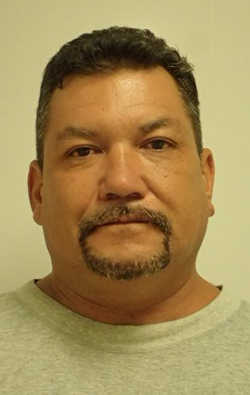
Lorenzo Reyes Cespedes, 44, was arrested on Sunday, August 27, 2017, for the assault of Clearlake resident Cody Myrick in Lower Lake, Calif., on Friday, August 25, 2017. Lake County Jail photo. LAKE COUNTY, Calif. – A Clearlake man who was assaulted in Lower Lake late last week remains hospitalized, with authorities arresting one suspect and seeking a second in the beating.
Cody Myrick, 24, has been identified by friends and family as the victim of the brutal Friday night beating.
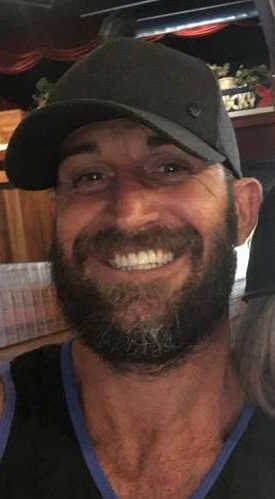
Sgt. Corey Paulich of the Lake County Sheriff's Office said so far one suspect in the case, Lorenzo Reyes Cespedes, 44, of Lucerne, has been arrested and the agency is tracking down a second man, Elijah Cain Ward, 37.
Based on the investigation so far, Myrick was assaulted late on Friday night in front of Maynard’s Bar in Lower Lake, Paulich said.
At around 12 a.m. Saturday, a deputy patrolling the area found Myrick unconscious on Main Street in front of the bar, Paulich explained.
He said Myrick was taken to Adventist Health Clear Lake Hospital before being flown to an out-of-county trauma center.
“There were other bar patrons who provided descriptions of the suspects,” said Paulich.
“One of the deputies checked the Middletown area for the suspects based on the description provided and located Cespedes,” said Paulich.
Paulich said Cespedes was found in front of Twin Pine Casino and identified, but not arrested.
“At that point he denied any knowledge of the altercation,” Paulich said of Cespedes.
Ward came out of casino, contacted the deputy and provided a statement in which he said he was with Cespedes. Paulich said both men were intoxicated; Cespedes appeared to be more so than Ward.
Ward admitted there was an altercation but claimed that it was between Myrick and Jennifer Ashley Thach, 39, of Lower Lake, Paulich said.
Thach was arrested early Friday morning on a public intoxication charge, according to Lake County Jail records.
Deputies were able to obtain surveillance video of the area where Myrick was assaulted, Paulich said.
Cody Myrick. Courtesy photo. Paulich said they were able to confirm that Ward and Cespedes had assaulted Myrick. He said that, based on that video, Thach was present but didn’t appear to be involved in the assault.
Cespedes would later come in voluntarily to give a statement to authorities, in which he pointed the finger at Ward, saying the fight had broken out between Ward and Myrick, Paulich said.
Paulich said Cespedes subsequently was arrested. Jail records show he was taken into custody just after 12 a.m. Sunday, about 24 hours after Myrick was found.
Cespedes was booked on two felony charges, assault with great bodily injury and battery with serious bodily injury. He later posted the required percentage of the $30,000 bail and was released.
His booking sheet indicated he is set for an initial court date on Oct. 17.
As of Monday evening, Ward had not yet been arrested. Paulich said an arrest warrant was being completed for Ward, who has a local address but who they believed has left the county in the wake of the assault.
On Monday, Myrick remained in critical condition, Paulich said.
A GoFundMe account has been set up to help Myrick and his family.
The page reported that Myrick suffered a blow to the head during the assault, and that his parents are with him.
As of early Tuesday, the page had raised $920 of a $5,000 goal.
Anyone with information about the case can call the Lake County Sheriff’s Office at 707-262-4200.
Email Elizabeth Larson at This email address is being protected from spambots. You need JavaScript enabled to view it.. Follow her on Twitter, @ERLarson, or Lake County News, @LakeCoNews.
Elijah Cain Ward, 37, is wanted for the assault of Clearlake resident Cody Myrick in Lower Lake, Calif., on Friday, August 25, 2017. Facebook photo.
CLEARLAKE, Calif. – Clearlake Animal Control has six dogs this week that are ready and waiting for their new families.
This week’s available dogs include mixes of Great Dane, pit bull, Rhodesian Ridgeback, shepherd and terrier.
To meet the animals, call Clearlake Animal Control at 707-994-8201 and speak to Marcia at Extension 103 or Cheri at Extension 115, 9 a.m. to 3 p.m. Monday through Thursday, or leave a message at any other time.
Below are this week's available pets.
“Duke” is a young Great Dane and shepherd mix. Photo courtesy of Clearlake Animal Control. ‘Duke’
“Duke” is a young Great Dane and shepherd mix.
Shelter staff said Duke is only 9 months old, is good with children and loves to play.
He’s not recommended with other dogs and cats.
“Jester” is a 4-month-old male pit bull mix puppy. Photo courtesy of Clearlake Animal Control. ‘Jester’
“Jester” is a 4-month-old male pit bull mix puppy.
He has a short red and white coat.
Shelter staff said Jester loves to hug, play and go for walks.
“Oreo” is a young male terrier mix. Photo courtesy of Clearlake Animal Control. ‘Oreo’
“Oreo” is a young male terrier mix waiting for his new family.
He has a short black and white coat.
Shelter staff said Oreo, who was found on the streets, is a sweet dog who loves to go for a jog with you.
“Panda” is a young male pit bull terrier mix. Photo courtesy of Clearlake Animal Control. ‘Panda’
“Panda” is ready to go to a new home.
He’s a young male pit bull terrier mix with a short black and white coat.
Shelter staff said Panda is very sweet, likes to go for walks and will be your best friend.
“Red Dog” is a young male pit bull terrier. Photo courtesy of Clearlake Animal Control. ‘Red Dog’
“Red Dog” is a young male pit bull terrier with a short red coat.
Shelter staff said he is a sweet dog.
“Roger Rabbit” is a young male Rhodesian Ridgeback mix. Photo courtesy of Clearlake Animal Control. ‘Roger Rabbit’
“Roger Rabbit” is a young male Rhodesian Ridgeback mix.
He has a short red coat.
Email Elizabeth Larson at This email address is being protected from spambots. You need JavaScript enabled to view it.. Follow her on Twitter, @ERLarson, or Lake County News, @LakeCoNews.
In a major step toward sustainable groundwater management in California, more than 99 percent of the state’s high- and medium-priority groundwater basins have met a key deadline to form local groundwater sustainability agencies under the state’s landmark Sustainable Groundwater Management Act of 2014.
The act, also known as SGMA, required formation of locally controlled groundwater sustainability agencies, or GSAs, in the state’s 127 high- and medium-priority groundwater basins by June 30.
The medium-priority basins include the Big Valley and Scotts Valley basins in Lake County.
As of this week, 99 percent of the basins in that category are now covered by a local GSA, a groundwater adjudication, or an alternative sustainability plan.
“This is a signal accomplishment that required the leadership of myriad Californians who care about the future of their communities,” said Felicia Marcus, chair of the State Water Resources Control Board. “The successful formation of so many GSAs doesn’t by any means mean that this was easy. It was really hard – and it’s a great down payment on the hard work to come as GSAs move into developing their management plans.”
For the remaining basins that did not meet the GSA formation deadline, the State Water Board sent letters to property owners late last week to identify if there are active wells drawing groundwater that must be reported to the state.
Portions of basins not covered by a GSA, adjudication, or alternative plan are considered unmanaged areas.
Groundwater extractions made from an unmanaged area must be reported to the state.
“Groundwater accounts for a third of the state’s water supply on average and serves as a critically important source in dry years,” said Department of Water Resources Director Grant Davis. “It’s encouraging to see such a strong commitment from landowners and communities to manage this critical water source now and for future generations.”
he next step for GSAs is to create and implement groundwater sustainability plans that describe needed actions and implementation measures to bring their basins into balanced levels of pumping and recharge in the timeframe outlined in SGMA.
SGMA allows GSAs to tailor plans to the economic and environmental needs of the regions, and provides tools and authorities for developing projects and regulating groundwater use to meet the GSA’s sustainability goals.
Basins identified as critically overdrafted are required to have sustainability plans in place by Jan. 31, 2020. All other high- and medium-priority basins have until Jan. 31, 2022, to adopt plans.
The plans will be reviewed by the Department of Water Resources, or DWR, and will be continuously updated to ensure sustainable management of the state’s groundwater by the year 2042.
To assist with the development of groundwater sustainability plans, DWR will provide important information and data, technical and non-technical assistance, best practices, guidance publications and grant funding opportunities that may be crucial to a plan’s success.
In addition, DWR staff will present sustainability plan workshops for GSAs around the state.
Signed into law by Gov. Edmund G. Brown Jr. in 2014, SGMA is landmark legislation that empowers local agencies to sustainably manage groundwater resources.
In areas where groundwater users and local agencies are unable or unwilling to sustainably manage their groundwater, SGMA authorizes State Water Board intervention.
California depends on groundwater for a major portion of its annual water supply, particularly during times of drought.
The long-term planning required by SGMA will provide a buffer against drought and climate change, and will contribute to reliable water supplies regardless of weather patterns in the state.
 How to resolve AdBlock issue?