 How to resolve AdBlock issue?
News
LAKEPORT, Calif. – With the deepest, coldest nights of winter on their way, the Lake Ministerial Association is preparing to open a warming center to give the county’s homeless a respite from the elements, and it’s seeking the community’s help to fund the effort.
The association and a dedicated cadre of volunteers will open the warming center for the third winter in a row on Dec. 4. It will remain open until March 30.
Services will include a warm and secure place to sleep overnight, dinner and breakfast, hot showers, laundry assistance, plus help with obtaining identification, computer and WiFi access for job training and housing searches, and family reunification mediation, the association reported.
The Dec. 4 opening is three weeks earlier than its opening last year – which came on Christmas Eve – and nearly a month ahead of its first year’s opening at the end of December 2015.
The goal, said Jacqueline Maxman – who along with husband Nathan have been stalwart volunteers since the center’s inception – is to get ahead of the cold December nights. In the previous two years, the winter’s coldest nights had occurred in the weeks before the center opened.
To offer community members more details on its plan for the warming center, the Lake Ministerial Association held a Monday night meeting at the Lakeport Seventh-day Adventist Church at 1111 Park Way.
The church will once again house the warming center. Earlier this year, the church ran the warming center and a shelter for flood victims side by side.
Tina Scott, who represents District 4 on the Board of Supervisors, helped open the Monday meeting, which saw about 12 people in attendance – several of them volunteers with a few curious community members and a representative from the city of Lakeport among them.
“I’m here because I support the warming center and I was a volunteer,” said Scott, whose district also encompasses the warming center location.
A “point-in-time” count found that Lake County has 401 homeless individuals, Scott said.
The warming center – which this year was required to get a major use permit from the county – can only house 24 people per night. While Scott said that’s only a fraction of those in need, it’s still an important effort.
Seth Cantu, a church member and one of the earliest volunteers, explained how the warming center intake process will work.
The process, refined over the previous two years of operation, will include center clients arriving at the bus stop at the old Natural High School, located in the 800 block of N. Main Street across from St. Mary’s Catholic Church, in the city of Lakeport, he said.
There, the intake process begins. It continues when they arrive at the center – via a Lake Transit Authority bus – and fill out agreement forms, he said. All clients must arrive by 8 p.m.
Building relationships with clients is key, Cantu said. The trust that’s been built up between those who use the center and its volunteers led to families with children coming to use the center last year.
The center will continue to operate Mondays through Fridays – hours are 6 p.m. to 7:30 a.m. – and will have two two security officers, he said.
Cantu said the center is animal-friendly, with crates provided and two outdoor dog runs also available.
Jacqueline Maxman said the center requires 10 volunteers and a team leader to cover the overnight shifts.
She said those 10 volunteer positions break down as follows: two to cover the bus stop, two to work on intake at the center, two to assist with showers (one male, one female), two to serve and clean up after dinner, and two sleepers – also one male and female – to be present overnight.
Separately, a few volunteers are needed to arrive early in the morning to serve breakfast and help close the center by 7 a.m.
Maxman said they are using a digital platform – Signup Genius – to take volunteer signups. Signups for the months of December and January are now live.
So far, she said many nights are filling up through the efforts of church and community groups and individuals. Nights where they need help are Mondays and Tuesdays.
One of the key concerns for the center this year is funding.
Maxman said it’s projected to cost $44,000 to run the center this year. That amount covers paid staff, taxes and fees for staff, transportation and payments to the church to cover utility costs.
“At this point in time we are not well-funded,” Maxman said.
Pastor Shannon Kimbell-Auth, whose leadership helped launch the center in 2015, said center organizers want it to be 25-percent funded by the middle of November in order to open next month.
Based on verbal commitments and past donation amounts, she estimated that they have about $8,000 toward that goal. They are hoping to get $12,000 by the middle of this month.
In a connected effort, Clear Lake High School student Quintin Scott is holding a sleeping bag and pillow drive to benefit Lake County’s homeless.
For his senior project, Scott is aiming to collect and donate 100 new or gently used pillows and sleeping bags to the homeless, whose numbers he fears have grown because of the wildland fires.
To donate to Scott’s efforts, call him at 707-245-6280.
This year, the Kelseyville United Methodist Church is the warming center’s fiscal sponsor.
Donations can be mailed for the center to the Kelseyville United Methodist Church, P.O. Box 446, Kelseyville, CA 95451, with “Warming Center” in the memo line.
To sign up to volunteer, go to www.signupgenius.com and search forThis email address is being protected from spambots. You need JavaScript enabled to view it. .
Email Elizabeth Larson atThis email address is being protected from spambots. You need JavaScript enabled to view it. . Follow her on Twitter, @ERLarson, or Lake County News, @LakeCoNews.
The association and a dedicated cadre of volunteers will open the warming center for the third winter in a row on Dec. 4. It will remain open until March 30.
Services will include a warm and secure place to sleep overnight, dinner and breakfast, hot showers, laundry assistance, plus help with obtaining identification, computer and WiFi access for job training and housing searches, and family reunification mediation, the association reported.
The Dec. 4 opening is three weeks earlier than its opening last year – which came on Christmas Eve – and nearly a month ahead of its first year’s opening at the end of December 2015.
The goal, said Jacqueline Maxman – who along with husband Nathan have been stalwart volunteers since the center’s inception – is to get ahead of the cold December nights. In the previous two years, the winter’s coldest nights had occurred in the weeks before the center opened.
To offer community members more details on its plan for the warming center, the Lake Ministerial Association held a Monday night meeting at the Lakeport Seventh-day Adventist Church at 1111 Park Way.
The church will once again house the warming center. Earlier this year, the church ran the warming center and a shelter for flood victims side by side.
Tina Scott, who represents District 4 on the Board of Supervisors, helped open the Monday meeting, which saw about 12 people in attendance – several of them volunteers with a few curious community members and a representative from the city of Lakeport among them.
“I’m here because I support the warming center and I was a volunteer,” said Scott, whose district also encompasses the warming center location.
A “point-in-time” count found that Lake County has 401 homeless individuals, Scott said.
The warming center – which this year was required to get a major use permit from the county – can only house 24 people per night. While Scott said that’s only a fraction of those in need, it’s still an important effort.
Seth Cantu, a church member and one of the earliest volunteers, explained how the warming center intake process will work.
The process, refined over the previous two years of operation, will include center clients arriving at the bus stop at the old Natural High School, located in the 800 block of N. Main Street across from St. Mary’s Catholic Church, in the city of Lakeport, he said.
There, the intake process begins. It continues when they arrive at the center – via a Lake Transit Authority bus – and fill out agreement forms, he said. All clients must arrive by 8 p.m.
Building relationships with clients is key, Cantu said. The trust that’s been built up between those who use the center and its volunteers led to families with children coming to use the center last year.
The center will continue to operate Mondays through Fridays – hours are 6 p.m. to 7:30 a.m. – and will have two two security officers, he said.
Cantu said the center is animal-friendly, with crates provided and two outdoor dog runs also available.
Jacqueline Maxman said the center requires 10 volunteers and a team leader to cover the overnight shifts.
She said those 10 volunteer positions break down as follows: two to cover the bus stop, two to work on intake at the center, two to assist with showers (one male, one female), two to serve and clean up after dinner, and two sleepers – also one male and female – to be present overnight.
Separately, a few volunteers are needed to arrive early in the morning to serve breakfast and help close the center by 7 a.m.
Maxman said they are using a digital platform – Signup Genius – to take volunteer signups. Signups for the months of December and January are now live.
So far, she said many nights are filling up through the efforts of church and community groups and individuals. Nights where they need help are Mondays and Tuesdays.
One of the key concerns for the center this year is funding.
Maxman said it’s projected to cost $44,000 to run the center this year. That amount covers paid staff, taxes and fees for staff, transportation and payments to the church to cover utility costs.
“At this point in time we are not well-funded,” Maxman said.
Pastor Shannon Kimbell-Auth, whose leadership helped launch the center in 2015, said center organizers want it to be 25-percent funded by the middle of November in order to open next month.
Based on verbal commitments and past donation amounts, she estimated that they have about $8,000 toward that goal. They are hoping to get $12,000 by the middle of this month.
In a connected effort, Clear Lake High School student Quintin Scott is holding a sleeping bag and pillow drive to benefit Lake County’s homeless.
For his senior project, Scott is aiming to collect and donate 100 new or gently used pillows and sleeping bags to the homeless, whose numbers he fears have grown because of the wildland fires.
To donate to Scott’s efforts, call him at 707-245-6280.
This year, the Kelseyville United Methodist Church is the warming center’s fiscal sponsor.
Donations can be mailed for the center to the Kelseyville United Methodist Church, P.O. Box 446, Kelseyville, CA 95451, with “Warming Center” in the memo line.
To sign up to volunteer, go to www.signupgenius.com and search for
Email Elizabeth Larson at
LAKE COUNTY, Calif. – The Los Angeles-based owner of the property that formerly was the site of Lucerne’s Riviera Motel has agreed to a large settlement in an environmental case brought against him by the District Attorney’s Office, with both the project’s contractor and foreman pleading no contest to misdemeanor violations related to the building’s demolition.
Lake County District Attorney Don Anderson announced the resolution of two cases related to environmental and worker safety violations that occurred during and after the demolition of the Riviera Motel in Lucerne between June and September 2016.
Earlier this year, the District Attorney’s Office brought a civil lawsuit against property owner Frank McHugh and filed a criminal case against McHugh’s contractor Benjamin Farcas and Petru Belea, who acted as an on-site foreman.
Both the civil and criminal actions were filed by the District Attorney’s Office as the result of a months-long investigation by the Office of Criminal Investigations for the Department of Toxic Substances Control in Sacramento.
The environmental and worker safety violations were initially discovered when the Lake County Air Quality Management District responded to a citizen dust complaint at the Riviera Motel on Friday, June 10, 2016.
The District Attorney’s Office said Inspectors discovered that Farcas and Belea had begun demolishing the existing building without first surveying for the presence of asbestos or notifying the air district, as required by law, and ordered Farcas and Belea to stop work.
Despite the order to stop, the demolition was completed over the weekend while county offices were closed, the District Attorney’s Office reported.
Farcas paid cash to local, untrained Lake County residents for assisting Belea with the demolition and failed to provide these workers with any protective equipment or adequate water for on-site dust control, officials said.
Tests of the demolition debris revealed that chrysotile, a type of asbestos, was present, according to Anderson’s office. Asbestos, a known carcinogen, has long been known to cause diseases of the lung in any exposed population.
Anderson assigned prosecution of this matter to Rachel Monten, a deputy district attorney in Lake County and environmental circuit prosecutor with the Circuit Prosecutor Project at the California District Attorneys Association.
Circuit prosecutors, like Monten, bring specialized experience in prosecuting environmental and workplace safety crimes to rural counties in California that are often hard-pressed to allocate resources to prosecute these types of crimes, at no cost to the county.
On Oct. 10, a civil settlement against McHugh was filed in Lake County Superior Court and approved by Judge Michael Lunas.
McHugh admitted wrongdoing for multiple ongoing hazardous waste and asbestos NESHAP violations, was placed under an injunction to prevent future violations, and was ordered to pay $272,825.81 in civil penalties and investigative cost recovery, divided between the Department of Toxic Substances Control, the Lake County Air Quality Management District, the Lake County District Attorney’s Office and the Circuit Prosecutor Project.
On Nov. 1, Farcas pleaded no contest to one misdemeanor violation of Health and Safety Code section 25189.5(d) for unlawful storage of hazardous waste between June and September 2016.
Farcas was sentenced to three years’ informal probation, six months’ jail, and two hundred hours of community service, the District Attorney’s Office said.
In addition, officials said he was ordered to pay a criminal penalty of $10,220 plus $5,000 to the Mendocino Community Health Clinic in Lakeport to fund health screenings for exposed workers and their families.
Finally, both of Farcas’ contracting licenses issued by the Contractors’ State Licensing Board were revoked for a minimum period of one year, Anderson reported.
On that same day, Belea pleaded no contest to one misdemeanor violation of Business and Professions Code section 7028 for contracting without a license. Belea was sentenced to three years’ informal probation and one hundred hours of community service, according to the District Attorney’s Office.
In addition, he was ordered to pay a criminal penalty of $720 plus $2,500 to the Mendocino Community Health Clinic in Lakeport to fund health screenings for exposed workers and their families.
The District Attorney’s Office and the Circuit Prosecutor Project are dedicated to protecting the citizens of Lake County, Anderson said.
“These violations posed a serious threat to both the Lake County residents who were exposed to asbestos on-site with no protection, and the surrounding community,” Anderson said.
He thanked the Lake County Air Quality Management District for its thorough documentation of the initial violations, and to the Department of Toxic Substances Control’s Office of Criminal Investigations for its tireless efforts and commitment to these cases over the past year.
“The District Attorney’s Office takes environmental and worker safety crimes seriously, and will prosecute any individuals who cut corners and endanger local citizens to the fullest extent of the law,” Anderson said.
Lake County District Attorney Don Anderson announced the resolution of two cases related to environmental and worker safety violations that occurred during and after the demolition of the Riviera Motel in Lucerne between June and September 2016.
Earlier this year, the District Attorney’s Office brought a civil lawsuit against property owner Frank McHugh and filed a criminal case against McHugh’s contractor Benjamin Farcas and Petru Belea, who acted as an on-site foreman.
Both the civil and criminal actions were filed by the District Attorney’s Office as the result of a months-long investigation by the Office of Criminal Investigations for the Department of Toxic Substances Control in Sacramento.
The environmental and worker safety violations were initially discovered when the Lake County Air Quality Management District responded to a citizen dust complaint at the Riviera Motel on Friday, June 10, 2016.
The District Attorney’s Office said Inspectors discovered that Farcas and Belea had begun demolishing the existing building without first surveying for the presence of asbestos or notifying the air district, as required by law, and ordered Farcas and Belea to stop work.
Despite the order to stop, the demolition was completed over the weekend while county offices were closed, the District Attorney’s Office reported.
Farcas paid cash to local, untrained Lake County residents for assisting Belea with the demolition and failed to provide these workers with any protective equipment or adequate water for on-site dust control, officials said.
Tests of the demolition debris revealed that chrysotile, a type of asbestos, was present, according to Anderson’s office. Asbestos, a known carcinogen, has long been known to cause diseases of the lung in any exposed population.
Anderson assigned prosecution of this matter to Rachel Monten, a deputy district attorney in Lake County and environmental circuit prosecutor with the Circuit Prosecutor Project at the California District Attorneys Association.
Circuit prosecutors, like Monten, bring specialized experience in prosecuting environmental and workplace safety crimes to rural counties in California that are often hard-pressed to allocate resources to prosecute these types of crimes, at no cost to the county.
On Oct. 10, a civil settlement against McHugh was filed in Lake County Superior Court and approved by Judge Michael Lunas.
McHugh admitted wrongdoing for multiple ongoing hazardous waste and asbestos NESHAP violations, was placed under an injunction to prevent future violations, and was ordered to pay $272,825.81 in civil penalties and investigative cost recovery, divided between the Department of Toxic Substances Control, the Lake County Air Quality Management District, the Lake County District Attorney’s Office and the Circuit Prosecutor Project.
On Nov. 1, Farcas pleaded no contest to one misdemeanor violation of Health and Safety Code section 25189.5(d) for unlawful storage of hazardous waste between June and September 2016.
Farcas was sentenced to three years’ informal probation, six months’ jail, and two hundred hours of community service, the District Attorney’s Office said.
In addition, officials said he was ordered to pay a criminal penalty of $10,220 plus $5,000 to the Mendocino Community Health Clinic in Lakeport to fund health screenings for exposed workers and their families.
Finally, both of Farcas’ contracting licenses issued by the Contractors’ State Licensing Board were revoked for a minimum period of one year, Anderson reported.
On that same day, Belea pleaded no contest to one misdemeanor violation of Business and Professions Code section 7028 for contracting without a license. Belea was sentenced to three years’ informal probation and one hundred hours of community service, according to the District Attorney’s Office.
In addition, he was ordered to pay a criminal penalty of $720 plus $2,500 to the Mendocino Community Health Clinic in Lakeport to fund health screenings for exposed workers and their families.
The District Attorney’s Office and the Circuit Prosecutor Project are dedicated to protecting the citizens of Lake County, Anderson said.
“These violations posed a serious threat to both the Lake County residents who were exposed to asbestos on-site with no protection, and the surrounding community,” Anderson said.
He thanked the Lake County Air Quality Management District for its thorough documentation of the initial violations, and to the Department of Toxic Substances Control’s Office of Criminal Investigations for its tireless efforts and commitment to these cases over the past year.
“The District Attorney’s Office takes environmental and worker safety crimes seriously, and will prosecute any individuals who cut corners and endanger local citizens to the fullest extent of the law,” Anderson said.
CLEARLAKE, Calif. – The Clearlake City Council this week will get the latest update on the Sulphur fire recovery process and consider adoption fees for marijuana dispensaries operating in the city.
The council will meet in closed session at 5 p.m. Thursday, Nov. 9, to discuss a performance evaluation of City Manager Greg Folsom and property negotiations related to 14050 and 14060 Olympic Drive before the open session of the meeting begins at 6 p.m. in the council chambers at Clearlake City Hall, 14050 Olympic Drive.
On Thursday night the council will get an update from staff on the Sulphur fire recovery and have a discussion of right-of-entry agreements and deadlines for property owners.
In other fire-related business, the council will consider authorizing to commit cost-of-share expenses due to the Sulphur fire for hazard mitigation.
Also on the agenda is a public hearing to consider a resolution to adopt fees applicable to commercial cannabis and marijuana dispensary fees.
There also will be a public hearing to consider a resolution authorizing submittal of an application to the California Housing and Community Development for the Community Development Block Grant Program.
Also on the agenda are several presentations. Certificates of appreciation will be presented to City Hall-O-Ween contributors and volunteers; a proclamation will be given designating November as Alzheimer’s Awareness Month in Clearlake and honoring Eva Johnson as the founder of the Adult Day Care Program, now known as Elder Day Services of Lake County; and recognition will be offered to long-term city employees and volunteers.
Items on the consent agenda – items considered noncontroversial and usually accepted as a slate on one vote – are warrant registers; consideration of continuation of a declaration of local emergency issued on Oct. 9 and ratified by council action on Oct. 12; consideration of continuation of declaration of a local health emergency issued on Oct. 12 and ratified by council action on Oct. 18; request for renewal of contract with Axon/Taser International for body-worn camera system; consideration of agreement between the county of Lake and the city of Clearlake of Public Health and Environmental Health assistance provided by state and presidentially declared disasters; consideration of agreement between the county of Lake and the city of Clearlake for reimbursement of cost share for Public Health and Environmental Health assistance provided during state or presidentially declared disasters.
Email Elizabeth Larson atThis email address is being protected from spambots. You need JavaScript enabled to view it. . Follow her on Twitter, @ERLarson, or Lake County News, @LakeCoNews.
The council will meet in closed session at 5 p.m. Thursday, Nov. 9, to discuss a performance evaluation of City Manager Greg Folsom and property negotiations related to 14050 and 14060 Olympic Drive before the open session of the meeting begins at 6 p.m. in the council chambers at Clearlake City Hall, 14050 Olympic Drive.
On Thursday night the council will get an update from staff on the Sulphur fire recovery and have a discussion of right-of-entry agreements and deadlines for property owners.
In other fire-related business, the council will consider authorizing to commit cost-of-share expenses due to the Sulphur fire for hazard mitigation.
Also on the agenda is a public hearing to consider a resolution to adopt fees applicable to commercial cannabis and marijuana dispensary fees.
There also will be a public hearing to consider a resolution authorizing submittal of an application to the California Housing and Community Development for the Community Development Block Grant Program.
Also on the agenda are several presentations. Certificates of appreciation will be presented to City Hall-O-Ween contributors and volunteers; a proclamation will be given designating November as Alzheimer’s Awareness Month in Clearlake and honoring Eva Johnson as the founder of the Adult Day Care Program, now known as Elder Day Services of Lake County; and recognition will be offered to long-term city employees and volunteers.
Items on the consent agenda – items considered noncontroversial and usually accepted as a slate on one vote – are warrant registers; consideration of continuation of a declaration of local emergency issued on Oct. 9 and ratified by council action on Oct. 12; consideration of continuation of declaration of a local health emergency issued on Oct. 12 and ratified by council action on Oct. 18; request for renewal of contract with Axon/Taser International for body-worn camera system; consideration of agreement between the county of Lake and the city of Clearlake of Public Health and Environmental Health assistance provided by state and presidentially declared disasters; consideration of agreement between the county of Lake and the city of Clearlake for reimbursement of cost share for Public Health and Environmental Health assistance provided during state or presidentially declared disasters.
Email Elizabeth Larson at
LAKE COUNTY, Calif. – Autumn is deer mating season – which means deer are on the move and less cautious about darting out into the road.
in the past two weeks, Caltrans crews on the North Coast have seen an increase in deer collisions.
"This happens every fall, but it catches drivers off guard, especially at dusk," said Caltrans South Area Maintenance Superintendent Marty Sills.
On Wednesday evening, the California Highway Patrol reported that a vehicle had hit and injured a deer in the area of Highway 29 at Clayton Creek Road near Lower Lake.
It is also mating season for elk, which are less numerous than deer, but just as hazardous to motorists here in Northern California.
Caltrans said drivers should be extra vigilant this time of year and follow these tips for driving in deer country:
– Be particularly attentive between sunset and midnight, the hours shortly before and after sunrise, and in foggy conditions. Most deer-vehicle collisions occur during these times.
– Drive carefully in areas known to have high deer populations. Places where roads divide agricultural fields or streams from forestland are particularly dangerous.
– If you see a deer, slow down. Others are probably nearby.
– Use high-beam headlights when there is no oncoming traffic. The high beams can reflect off animal eyes and warn you of their presence.
– If a deer is in your lane, brake firmly but stay in the lane. The most serious crashes occur when drivers swerve.
– Don't rely on deer whistles, deer fences, or reflectors to deter deer.
– If your car strikes a deer, don't touch the animal. If the deer is blocking the highway, call 911.
For more safety information and the latest updates like Caltrans District 1 on Facebook.
in the past two weeks, Caltrans crews on the North Coast have seen an increase in deer collisions.
"This happens every fall, but it catches drivers off guard, especially at dusk," said Caltrans South Area Maintenance Superintendent Marty Sills.
On Wednesday evening, the California Highway Patrol reported that a vehicle had hit and injured a deer in the area of Highway 29 at Clayton Creek Road near Lower Lake.
It is also mating season for elk, which are less numerous than deer, but just as hazardous to motorists here in Northern California.
Caltrans said drivers should be extra vigilant this time of year and follow these tips for driving in deer country:
– Be particularly attentive between sunset and midnight, the hours shortly before and after sunrise, and in foggy conditions. Most deer-vehicle collisions occur during these times.
– Drive carefully in areas known to have high deer populations. Places where roads divide agricultural fields or streams from forestland are particularly dangerous.
– If you see a deer, slow down. Others are probably nearby.
– Use high-beam headlights when there is no oncoming traffic. The high beams can reflect off animal eyes and warn you of their presence.
– If a deer is in your lane, brake firmly but stay in the lane. The most serious crashes occur when drivers swerve.
– Don't rely on deer whistles, deer fences, or reflectors to deter deer.
– If your car strikes a deer, don't touch the animal. If the deer is blocking the highway, call 911.
For more safety information and the latest updates like Caltrans District 1 on Facebook.
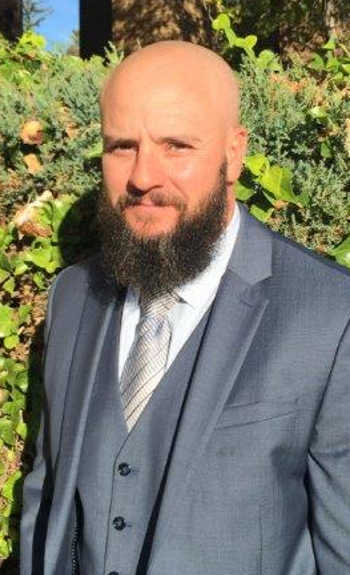
LAKE COUNTY, Calif. – With the 2018 election year just around the corner, the race for district attorney is starting to take shape, with the incumbent to face a challenger.
On Tuesday, Kelseyville attorney Steve Brown announced that he will challenge two-term incumbent Don Anderson for the district attorney’s job next year.
“I am seeking the position of district attorney to restore confidence in the leadership of our Lake County District Attorney’s Office,” said Brown. “The people of Lake County deserve a DA who will work to enforce the law fairly and fight to secure justice for those who are victimized by criminals.”
Also on Tuesday, Anderson confirmed to Lake County News that he will definitely seek a third term in 2018.
“When I run, I’m going to run on my record,” and the achievements of his department of the past seven years, Anderson said.
Brown explained his reasons for challenging Anderson, who was first elected in 2010.
“Unfortunately, our current district attorney has fallen short of the expectations of Lake County citizens in prosecuting criminal cases,” Brown said. “Worse, in some instances, he is not prosecuting cases on the merits and is instead making sweetheart deals with criminal defendants based on his relationship with them or their attorney. The DA’s mismanagement of major felony cases is becoming more and more common.”
Asked for comment about Brown’s allegations about his record, Anderson said, “It’s hard to respond when he doesn’t cite any cases.”
Anderson added, “No deals are ever made based on any personal relationships,” and if there are personal relationships to defendants, his department has to be excluded and the State Attorney General’s Office has to take over.
He said cases are judged on their merits and the defendant’s history. “Everything we do is within our ethical standards.”
While Brown is suggesting Anderson is soft on crime, Anderson said later this month he’s set to receive the Prosecutor of the Year Award from the California Narcotic Officers' Association. Anderson said he’s receiving the award for his hard stance on drug-related crimes.
A long family history in Lake County
A fourth-generation Lake County resident, Brown currently works with a successful private practice law firm in Lakeport, where he handles criminal, civil and family law cases.
He previously served as a contract attorney for the Lake County Public Defender’s Office. In 2016, he was appointed by the governor to serve on the Lake County Fair Board.
Brown is the son of Rob Brown, the county supervisor representing District 5, which includes Kelseyville.
Steve Brown is a graduate of Kelseyville High School and William Penn College which he attended on a wrestling scholarship.
Brown earned his law degree at Empire Law School in Santa Rosa and served as a small claims court supervisor in 2007 and 2008 for Sonoma County. He and his wife Nikole have been married for 10 years and have three young sons.
“As our new district attorney, I will ensure that criminal cases are prosecuted fairly, aggressively and on the merits. I will build a stronger crime-fighting partnership with our county sheriffs, local city police departments, and state law enforcement agencies,” said Brown. “I will also establish the highest level of ethical standards for the Office and guarantee equal enforcement of the law for all citizens, with no favoritism given to anyone.”
A key law enforcement endorsement Brown has landed so far comes from Lake County Chief Probation Officer Rob Howe.
“I’ve known Steve Brown for many years. He is truly dedicated to protecting the safety of our families, homes and businesses. Steve’s leadership will make a huge difference in reducing crime and revitalizing the management of the District Attorney’s Office,” said Howe.
“I am humbled by the outpouring of support for my candidacy throughout every part of our community,” said Brown. “The people of Lake County are eager for strong crime-fighting leadership from their District Attorney.”
Email Elizabeth Larson at
LAKE COUNTY, Calif. – A Sacramento man has won a $2 million jury verdict against the county of Lake for a September 2014 crash in which he was hit head-on by a sheriff’s deputy who lost control of his patrol vehicle.
On Nov. 2, following a five-week trial, a jury unanimously decided that the county was liable for damages totaling approximately $2,047,274 for the crash that injured 31-year-old Marc Loberg.
“Physically I will never be the same, but knowing the jury understood what I went through, and what I am still going through in deciding their verdict means a lot to me,” Loberg said.
“Mr. Loberg fought against the odds and placed his faith in the hands of 12 people to obtain justice. The jury agreed with Mr. Loberg issuing a unanimous verdict that the county of Lake was liable for the crash,” said Loberg’s attorney, Jesse Chrisp.
Asked about what the county may do in response to the verdict, County Counsel Anita Grant told Lake County News, “As for next steps, this is still an ongoing matter so I can’t comment at this time as to what actions the County may or may not consider.”
Chrisp acknowledged that the county has the right to appeal the case. However, he added, “If the county chooses to resolve this case it will allow our client to move on with his life in a positive direction.”
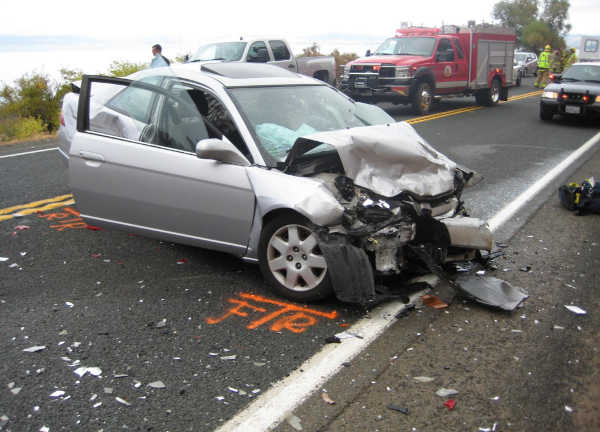
The crash occurred during rainy conditions on the morning of Sept. 18, 2014, as Lake County News has reported.
Loberg, on his way home from attending a wedding, was driving eastbound in a 2002 Honda Accord on Highway 20 near Bruner Drive east of Lucerne when he was hit head-on by a sheriff’s Ford Crown Victoria patrol car driven by Deputy Richard Kreutzer.
Kreutzer was on patrol but not responding to an emergency when he collided head-on with Loberg at an estimated 50 miles per hour.
Chrisp said that, as a result of the crash, Loberg was “catastrophically injured.”
Loberg was taken by ambulance to Sutter Lakeside hospital where he was diagnosed and treated for a severely shattered wrist that was deformed and disfigured, a concussion, severe abdominal bruising, and a shattered ankle joint that turned arthritic and will need to be fused in the future, Chrisp said.
The original crash reports said Kreutzer suffered minor injuries, specifically, a forehead laceration.
Chrisp said the county denied liability for the crash at trial and denied all of Loberg’s claims.
The county said that Kreutzer lost control due to no fault of his own and blamed the wet roadway as the cause. Kreutzer also claimed that he only accelerated slightly that day and was not a cause of the crash.
Evidence presented during the trial showed that Kreutzer, who was driving westbound, was attempting to go around a semi truck that had just pulled over in a turnout.
As shown in the dashcam video above, when the truck pulled over, it gave Kreutzer a narrow space to move around it as traffic in the opposite lane approached.
Data collected from the patrol cruiser’s electronic data recorder or “black box” showed that Kreutzer had applied 100-percent of the gas pedal as he accelerated to move around the truck.
At that point, Kreutzer lost control of the patrol car, which in the dashcam video appeared to fishtail across the oncoming lane of Highway 20. Kreutzer corrected to go back into the westbound lane, at which time his vehicle and Loberg’s collided head-on.
Testifying in support of Loberg was Dr. Eric Rossetter, a Stanford-educated Ph.D. in mechanical engineering who works as an accident reconstructionist.
Rossetter stated that Kreutzer lost control of his vehicle from his rapid acceleration from full throttle on the wet road.
After the jury concluded that the county was liable for the crash, it was asked to determine what was fair and reasonable monetary damages based on the past harm and long-term harm that Loberg is going to suffer as a result of the crash, Chrisp said.
To determine harm, Chrisp said the jury was presented with multiple days of expert testimony provided by medical doctors, including a treating orthopedic surgeon who was past chief of staff for surgery at Sonoma Valley Hospital, a local podiatric surgeon, and the reading radiologist who is also the team radiologist for the Oakland A’s and UC Berkeley athletic teams.
Chrisp said the doctors explained the medical procedures that had already been performed, and the future medical procedures needed.
The county presented its own expert medical testimony from an orthopedic surgeon from San Francisco who denied Loberg would need any further treatment.
Chrisp said Loberg and his family also provided testimony as to how the crash and the injuries had affected his life.
So far, Loberg has undergone three surgeries for his wrist, and his treating doctors testified he will need four future surgeries including a total wrist fusion, and a subtalar joint fusion fusing his heel bone with his ankle, Chrisp said.
“After these surgeries Mr. Loberg’s range of motion and movement will be severely limited in the wrist and ankle. He will also have pain and discomfort for life. These injuries and a total of seven surgeries add up to a catastrophic amount of harm,” Chrisp said.
He said the crash has “changed the trajectory” of Loberg’s life, “and the jury recognized that fact in its verdict.”
Because Loberg is young and has injuries considered to be lifelong, Chrisp said the verdict is reasonable under the law, which asks the jury to provide compensation for a total of 47 years. He said the jurors had to balance the harm with their verdict.
Loberg said he was “very shocked and disappointed” that the county disputed the facts about Kreutzer’s actions that day, despite the black box data.
“I can understand the county has a right to defend against frivolous lawsuits, but I feel the county should have taken this case and my injuries more seriously and recognized they were in the wrong this time. I’m grateful to the Jurors for their time and diligence in standing up to the county for me,” Loberg said.
Grant said the amount the county has been ordered to pay “is a covered loss under our CSAC-Excess Liability Authority membership.”
The insurance authority is a member-directed insurance risk sharing pool that assists California public entities, according to its Web site.
Email Elizabeth Larson at