 How to resolve AdBlock issue?
News

California Governor Jerry Brown on Friday met with Prime Minister of Canada Justin Trudeau in San Francisco, where the two leaders pledged to expand cooperation on climate action, trade and criminal justice reform.
“We've got a lot to do with Canada while our Washington government is temporarily missing in action. In terms of climate action, California and more than a dozen other [U.S.] states are taking real action. I'm looking forward to forging agreements with various provinces in Canada and particularly in zero-emission vehicles – electric cars, hydrogen cars,” said Gov. Brown at the opening of Friday’s meeting. “I'm hoping Canada, California and the rest of America can really commit to developing the technologies that will allow us to have zero-emission vehicles be a big part of our future.”
“It's a real pleasure to meet with Gov. Brown, an opportunity to talk about all the great connections between California and Canada,” said Prime Minister Trudeau. “Climate change has been an issue that the Governor has been a leader on and I want to congratulate him on that and thank him as well for the cap-and-trade system Ontario is part of and others and the fact that we have so much work to do together as friends and as a planet.”
The governor and prime minister discussed the importance of getting more zero-emission vehicles on the road, increasing cooperation between U.S. states and Canadian provinces ahead of this year’s UN Climate Change Conference (COP24) and Canada’s participation in the Global Climate Action Summit, which will be held in San Francisco this September.
The two leaders also discussed ongoing NAFTA negotiations between the U.S., Canada and Mexico and Governor Brown and Prime Minister Trudeau agreed to explore opportunities for criminal justice reform experts from California and Canada to collaborate.
The governor’s office said Friday’s meeting builds on the long-standing cooperation between California, Canada and a number of Canadian provinces to combat climate change.
Last year, Gov. Brown welcomed Canada to the Under2 Coalition, a global pact of more than 200 cities, states and countries – representing 1.3 billion people and 40 percent of the world’s GDP – committed to limiting the increase in global average temperature to below 2 degrees Celsius, the level of potentially catastrophic consequences.
At last year’s United Nations Climate Change Conference (COP23), Governor Brown joined Canada’s Minister of Environment and Climate Change, to affirm North America’s commitment to the Paris Agreement.
Additionally last year, Gov. Brown met with the Premiers of Quebec and Ontario – both members of the Under2 Coalition – and signed an agreement officially integrating their cap-and-trade programs.
California along with the states of Oregon and Washington and the province of British Columbia are members of the Pacific Coast Collaborative, a pact formed to strategically align policies to reduce greenhouse gases and promote clean energy.

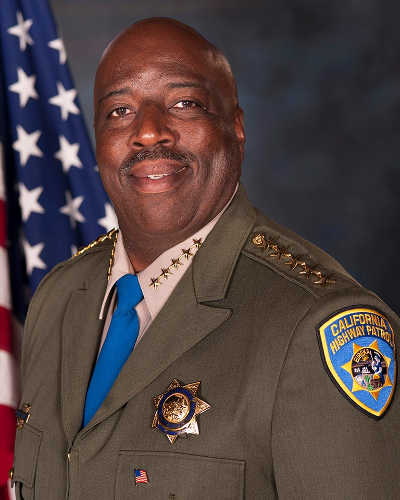
The search for a new California Highway Patrol commissioner is over.
Warren Stanley, 56, of Sacramento has just been appointed CHP commissioner by Gov. Jerry Brown.
Stanley has been serving as acting commissioner since 2017, since the resignation of Joe Farrow.
Commissioner Stanley has been employed with the CHP since 1982, and is one of the distinguished few to hold every position from Officer to Commissioner within the CHP.
While working as a patrol officer, he served as a member of the Protective Services Detail and worked as a Field Training Officer. He excelled through the ranks, supervising the CHP’s Border Division Investigative Services Unit as a Lieutenant, and served as the Commander of the CHP Academy, where he was responsible for the leadership of 191 employees and the training of approximately 1,700 cadets. He promoted to the rank of Chief in 2008, and assumed command of the CHP’s Coastal Division followed by the CHP’s Southern Division. Stanley was appointed to the rank of Assistant Commissioner, Staff, in 2010, followed by the rank of Assistant Commissioner, Field, in 2012. Prior to his appointment to Commissioner, he served as the Deputy Commissioner and was responsible for the day-to-day operations of the largest state law enforcement agency in the nation; a Department with more than 11,000 employees.
Commissioner Stanley released the following statement following today’s appointment:
“I would first and foremost like to thank Governor Brown for placing his trust in me and giving me this incredible opportunity to lead the California Highway Patrol. I am extremely honored and proud to accept this appointment and serve as your Commissioner. I vow to continue the CHP’s long and distinguished legacy of providing Safety, Service, and Security to the people of California, and lead a Department committed to earning the public’s trust every day.”
Commissioner Stanley holds a Bachelor of Science degree in Criminal Justice from California State University, Los Angeles, and is a graduate of the Federal Bureau of Investigation, National Executive Institute.
“CHP Commissioner Stanley has served the public for more than 35 years with the California Highway Patrol, excelling at every role from patrol officer to deputy commissioner where he oversaw the day-to-day operations of the CHP,” said Acting Transportation Agency Secretary Brian Annis. “Warren has led the CHP’s response in the face of some of the worst natural disasters in this state’s history. We know that under his leadership the department will continue to uphold its mission.”
Commissioner Stanley is the first African American in the history of the CHP to hold the rank of Commissioner.
NASA engineer Manuel Vega can see one of the Olympic ski jump towers from the rooftop of the South Korean weather office where he is stationed.
Vega is not watching skiers take flight, preparing for the 2018 PyeongChang Winter Olympics and Paralympic games. Instead, he's inspecting the SUV-sized radar beside him.
The instrument is one of 11 NASA instruments specially transported to the Olympics to measure the quantity and type of snow falling on the slopes, tracks and halfpipes.
NASA will make these observations as one of 20 agencies from eleven countries in the Republic of Korea as participants in a project called the International Collaborative Experiments for PyeongChang 2018 Olympic and Paralympic Winter Games, or ICE-POP.
Led by the Korea Meteorological Administration, the international team will make snow measurements from the start of the Olympics on Feb. 9 through the end of the Paralympics on March 18.
Vega and the international team is studying how well researchers can measure snow from the ground and space and provide better data for snowstorm predictions.
The NASA team, along with U.S. colleagues at Colorado State University, the National Center for Atmospheric Research, and National Oceanic and Atmospheric Administration (NOAA), will use a collection of ground instruments, satellite data, and weather models to deliver detailed reports of current snow conditions and will test experimental forecasts models.
NASA's observations and snow forecasts will be made at 16 different points near Olympic event venues and then relayed to Olympic officials to help them account for approaching weather.
"The Olympics provide a means to test some of our observation methods and help develop prediction models in a real-world applied environment and enable our observations to be used by the forecasters and Olympic planning folks as well," Vega said.
At times, the weather in this part of northeast South Korea is not much different from Greenbelt, Maryland, where Vega works at NASA's Goddard Space Flight Center. But South Korea has much colder extremes.
The area is higher in elevation, windier because of the mountains, and also has very diverse terrain. In a matter of hours, Vega could travel from a coastal beach area to snowy mountains – and so could a snowstorm.
"We are interested in South Korea because we can improve our understanding of the physics of snow in mountainous areas to help improve the accuracy of our observations and models," said Walt Petersen, research physical scientist at NASA's Marshall Space Flight Center, Huntsville, Alabama. Petersen is in charge of coordinating the NASA ground instruments and science in the PyeongChang area with the ICE-POP international science community.
Petersen says a big snow producer for the PyeongChang area is a system he calls a "backdoor cold front."
Big domes of cold air travel over the Sea of Japan picking up moisture and energy and then hit South Korea on the northeast side.
The terrain on the east side of the Korean peninsula changes dramatically from the coastal area to the mountains.
With such a steep change in terrain, air flow can change rapidly and spur big snow events near PyeongChang – and that's what the team is hoping for in order to test how well they can observe and predict snowstorms.
Tracking snow in tricky terrain
South Korea's diverse terrain makes this project an exciting, albeit challenging, endeavor for scientists to study snow events.
Ground instruments provide accurate snow observations in easily accessible surfaces, but not on uneven and in hard to reach mountainous terrain.
A satellite in space has the ideal vantage point, but space measurements are difficult because snow varies in size, shape and water content. Those variables mean the snowflakes won't fall at the same speed, making it hard to estimate the rates of snowfall.
Snowflakes also have angles and planar "surfaces" that make it difficult for satellite radars to read.
The solution is to gather data from space and the ground and compare the measurements. NASA will track snowstorms from space using the Global Precipitation Measurement mission, or GPM.
The GPM Core Observatory, a satellite designed to estimate rainfall rates and detect falling snow from space, is a joint mission between NASA and the Japan Aerospace Exploration Agency, and coordinates with twelve other U.S. and international satellites to provide global maps of precipitation every 30 minutes.
The team will complement the space data with 11 NASA instruments observing weather from the ground in PyeongChang.
These instruments are contributing to a larger international pool of measurements taken by instruments from the other ICE-POP participants: a total of 70 instruments deployed at the Olympics.
A few of the NASA instruments are snow imagers that use high speed cameras and advanced software to image every single snowflake falling in its viewing area, useful for counting the snowflakes and determining how much water is falling at that moment.
Another ground instrument is NASA’s Dual-frequency, Dual-polarized, Doppler Radar (D3R) system that was lifted by a crane to the roof of DaeGwallyeong Regional Weather Office to measure the quantity and types of falling snow, such as sleet or light and fluffy snow.
The radar operates at very similar wavelengths to those used onboard the GPM Core Observatory to provide similar snow observations but from a different vantage point.
Improving weather forecast models
The data will help inform Olympic officials about the current weather conditions, and will also be incorporated into the second leg of NASA's research: improving weather forecast models.
NASA Marshall's Short-term Prediction Research and Transition Center (SPoRT) is teaming up with NASA Goddard to use an advanced NASA weather prediction model to provide weather forecasts in six-hour intervals over specific points on the Olympic grounds.
NASA SPoRT, which regularly works with the U.S. National Weather Service at NOAA, specifically designed the ICE-POP model with two important improvements.
First, the model can better paint a picture of what the cloud is made of, and can provide specific details on whether the cloud is producing rain or snow.
In addition, the ICE-POP includes satellite data of the sea surface temperature surrounding the Korean peninsula from the NASA satellites Terra and Aqua and the NASA/NOAA/Department of Defense Suomi-National Polar Orbiting Partnership satellite, respectively.
Sea surface temperature data show scientists how much energy is available and how much moisture could be evaporated into the atmosphere and precipitated out as snow.
"This model includes a complex representation of clouds in atmospheric models to better characterize rain, ice, and snow content in clouds. It also includes one of the highest resolution sea surface temperature products available in real time," said Brad Zavodsky, the project manager for SPoRT at Marshall. "We're excited to see how well this high-resolution model will perform."
NASA SPoRT uses this information to provide Olympic officials experimental, real-time forecasts every six hours using the NASA Unified Weather Research Forecast model (NU-WRF) based at Goddard.
The SPoRT team will be providing four forecasts per day to the Korean Meteorological Administration, who will look at this model in conjunction with all the real-time forecast models in the ICE-POP campaign before relaying information to Olympic officials. The NU-WRF is one of five real-time forecast models running in the ICE-POP campaign.
"When you run these models together from the different agencies, you can see how one model behaves versus another one. You learn a great deal about your abilities to predict in a forecast model and how to improve it," Zavodsky said.
To improve the models, scientists will simultaneously run the NU-WRF model at Goddard's Mesoscale Processes Laboratory and examine how adjusting certain parameters in the model change the output, especially to match up with observations made from ground and space instruments.
“If we get an improved model, it opens the possibility of using the model to help improve satellite-based methods for estimating snowfall, and more generally, improves our understanding of clouds, climate, and the water and energy cycles," Petersen said.
In order to build a better model, Petersen's dream scenario at Pyeongchang is for the GPM mission and ground instruments to simultaneously obtain a good view of a few snowstorms. Then they will have enough information to compare different forecast models and observations, with the goal of improving both approaches to understanding and estimating mountain snowfall.
In short, Petersen hopes for what a lot of Olympic athletes want in PyeongChang: precipitation and perfection.
Kasha Patel works for NASA's Goddard Space Flight Center, Greenbelt, Md.
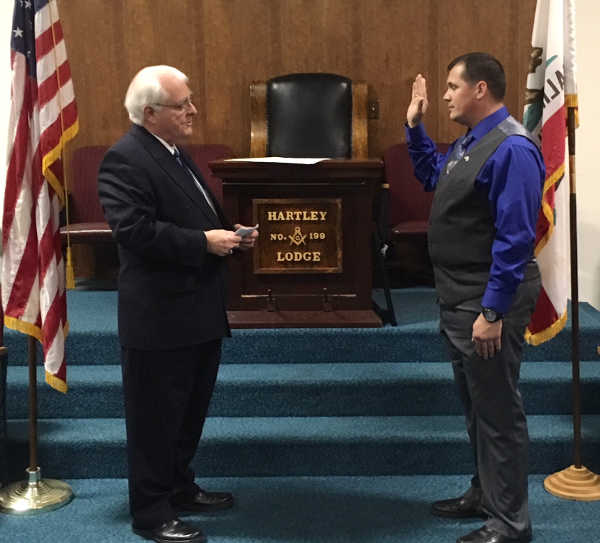
LAKEPORT, Calif. – Lakeport’s newest postmaster has officially taken office.
Benjamin C. Lovato, 37, was sworn in as postmaster of Lakeport Post Office at the Lakeport Hartley Masonic Lodge No. 199 on Thursday evening.
In front of a crowd of around 50 people, retired Judge Richard Martin administered the oath of office to Lovato.
Seven postmasters from as far away as Garberville and Pt. Reyes attended the swearing in, along with Lovato’s family, staff and friends.
Lovato told the crowd, “I’m going to continue to make sure that Lakeport provides great customer service, like we always have. I strive everyday to make sure that my staff, myself, are a key component in this community. We want to make sure the community is happy with us.”
“Ben is going to make a great Postmaster,” said Judge Martin after the swearing in. “He’s good with the customers and goes out of his way to help. He’s good to his staff, they’re happy and it’s a more friendly environment since he’s taken over.”
“It is an honor,” Lovato said, “to come back to Lakeport where I first started with the Post Office back in 2005. I will continue my dedication to the Post Office, continue this great legacy of connecting America and this world, as we have been doing for 242 years, since 1776 when Benjamin Franklin was the first Postmaster.”
Lakeport’s first postmaster was sworn in 1867. Lovato, now the 28th postmaster of Lakeport, stands in good company in the long lineage of the United States Post Office.
Lucy Llewellyn Byard is a freelance correspondent for Lake County News. She lives in Lucerne.
LAKEPORT, Calif. – The Lakeport City Council this week honored a longtime planning commission on his retirement, discussed upgrades to City Hall and considered changes to the meeting schedule for the Parks and Recreation Commission.
One of the council’s first items of business on Tuesday was honoring retiring Lakeport Planning Commissioner Harold Taylor, who stepped down in December after 14 years of service.
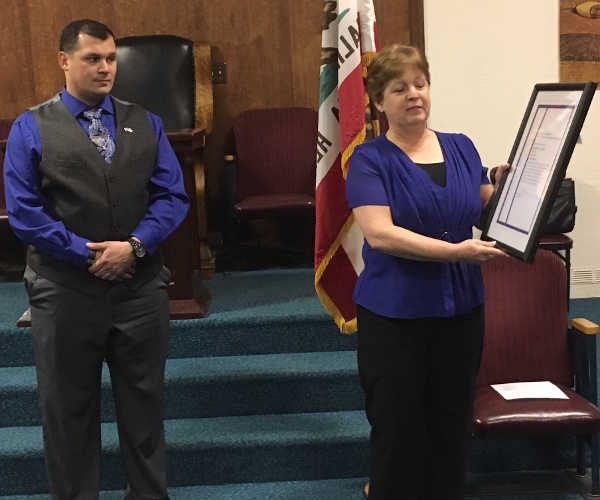
Mayor Mireya Turner presented the proclamation to Taylor, who she said “conscientiously executed the duties associated with his position.”
During his tenure on the commission, Turner said Taylor was instrumental in the updating, review and implementation of the 2009 General Plan Update, 2009 and 2014 Housing Element Updates, and adoption of the Lakeport Lakefront Revitalization Plan in 2017.
Turner said Taylor’s knowledge of construction development practices “provided invaluable insight and benefit to the decision making process of the Planning Commission, most specifically in regards to the 2010 Martin Street Senior Apartments and 2017 Martin Street Multi-Family apartment projects which have and continue to provide greater affordable housing opportunities to the community.”
Taylor received a standing ovation from the council and the audience.
Afterward, he said he would be keeping his eyes on things.
Following the proclamation presentation to Taylor, the council unanimously voted to appoint Kipp Knorr to the Lakeport Planning Commission to fill Taylor’s term, which expires Dec. 31 2018. Knorr was the only applicant.
Community Development Director Kevin Ingram went to the council to ask for direction on a proposal to remodel a portion of City Hall in order to make it more customer friendly. This year’s city budget has $70,000 set aside for the project.
He said staff was seeking the council’s input on priorities and its permission to go out and beginning seeking area contractors to do the work.
He said the goal is to create a “one-stop customer service center” that will update the layout of the lobby and other public areas, clustering customer services in one location and allowing for staff to help more people at a time.
City Manager Margaret Silveira said that, currently, the finance window can only serve one person at a time, which can back up a lot.
The proposed changes outlined in Ingram’s written report include relocating the Community Development Department public window from its current location to the main lobby and adjacent to the Finance/Utility customer service window; providing public counter space large enough to view building plans and serve multiple customers at once; creating more usable space to accommodate Finance Department Staff and serve multiple customers at once; create a public window compliant with the American with Disabilities Act; allow for storage area in the council chambers for extra tables and chairs currently stacked at the back of the room, and moving the council chamber doors beyond the entry to the conference room to reduce conflicts between the users of those space.
Staff also suggested the council consider related improvements that include a City Hall security system upgrade, constructing a fur wall along the north building concrete wall in order to achieve greater energy efficiency within the entire building, and repairing the exterior building coating to prohibit water seepage through concrete exterior walls currently creating efflorescence in the council chambers.
Ingram said the primary goal of the discussion was to seek council input, have staff put together proposals and solicit responses and cost estimates.
Councilman Kenny Parlet moved to approve moving forward on going out for proposals, with the council voting 5-0.
In other business, the council, after a lengthy deliberation, decided to go against a staff recommendation to make Parks and Recreation Commission meetings quarterly and instead make them monthly. The current ordinance doesn’t specify how often the commission – established in 1984, needs to meet.
Staff had said the number of meetings and meeting times were cumbersome, according to some commission applicants. It also requires staff time to attend the meetings, which staff has had to cancel repeatedly over the past 16 months. During that time, there have only been six meetings.
Commissioners refused to compromise with a reduced meeting scheduling, arguing that they wouldn’t be able to get anything done.
The council also approved a proposed resolution authorizing the police department to conduct criminal background checks for commercial cannabis licensing purposes. Such background checks are a requirement in the city’s new commercial cannabis ordinances.
In other business, the council voted 5-0 to appoint Pamela Harpster, Dan Peterson and Andy Lucas to the Lakeport Economic Development Committee effective immediately, with those terms expiring Dec. 31, 2019.
There was no reportable action coming out of the council’s closed session to discuss property negotiations related to 800 N. Main St., 810 N. Main St. and 910 Bevins St., Turner said.
Email Elizabeth Larson at
020618 Lakeport City Council agenda packet by LakeCoNews on Scribd
LAKEPORT, Calif. – Teams from Middletown and Upper Lake will compete in the Lake County Mock Trial competition next week.
The two teams will once again face off in the courtroom on Monday, Feb. 12, in Lake County Superior Court, located on the fourth floor of the Lake County Courthouse, 255 N. Forbes St. in Lakeport.
The first round will take place from 9 to 11 a.m., with the second found of competition from 12:30 to 2:30 p.m.
The two teams will take turns both as prosecution and defense in the fictional case of People v. Davidson, which involves first degree murder and a pretrial argument on the Fourth Amendment.
According to the case brief, Casey Davidson, a resident of the town of Acorn, Calif., faces a felony count of first degree murder for the death of Alex Thompson, another young resident of Acorn and member of Ultra Nats, an extremist nationalist group.
The prosecution alleges that Davidson murdered Thompson using Davidson’s walking stick in the same park where a political rally had just taken place during the morning of Sept. 14, 2017. The defense argues that Davidson did not murder Thompson and has an alibi for what happened at the time of Thompson’s death.
Based on the brief, the pretrial issue in People v. Davidson focuses on whether it is a search under the Fourth Amendment for the government to obtain routinely collected GPS location data from a third party.
At the end of each round, the judge will announce his verdict.
After the completion of both rounds, scoring will be completed and the county winner announced in a short ceremony in which students will receive certificates for their performance.
The winning team will travel to Orange County in March for the 37th annual California Mock Trial Finals, hosted by the Constitutional Rights Foundation, and compete with teams from 33 other counties.
Email Elizabeth Larson atThis email address is being protected from spambots. You need JavaScript enabled to view it. . Follow her on Twitter, @ERLarson, or Lake County News, @LakeCoNews.
The two teams will once again face off in the courtroom on Monday, Feb. 12, in Lake County Superior Court, located on the fourth floor of the Lake County Courthouse, 255 N. Forbes St. in Lakeport.
The first round will take place from 9 to 11 a.m., with the second found of competition from 12:30 to 2:30 p.m.
The two teams will take turns both as prosecution and defense in the fictional case of People v. Davidson, which involves first degree murder and a pretrial argument on the Fourth Amendment.
According to the case brief, Casey Davidson, a resident of the town of Acorn, Calif., faces a felony count of first degree murder for the death of Alex Thompson, another young resident of Acorn and member of Ultra Nats, an extremist nationalist group.
The prosecution alleges that Davidson murdered Thompson using Davidson’s walking stick in the same park where a political rally had just taken place during the morning of Sept. 14, 2017. The defense argues that Davidson did not murder Thompson and has an alibi for what happened at the time of Thompson’s death.
Based on the brief, the pretrial issue in People v. Davidson focuses on whether it is a search under the Fourth Amendment for the government to obtain routinely collected GPS location data from a third party.
At the end of each round, the judge will announce his verdict.
After the completion of both rounds, scoring will be completed and the county winner announced in a short ceremony in which students will receive certificates for their performance.
The winning team will travel to Orange County in March for the 37th annual California Mock Trial Finals, hosted by the Constitutional Rights Foundation, and compete with teams from 33 other counties.
Email Elizabeth Larson at