How to resolve AdBlock issue?
News
Why was an earthquake in Virginia felt at more than twice the distance than a similar-sized earthquake in California?
The answer is one that many people may not realize. Earthquakes east of the Rocky Mountains can cause noticeable ground shaking at much farther distances than comparably-sized earthquakes in the West.
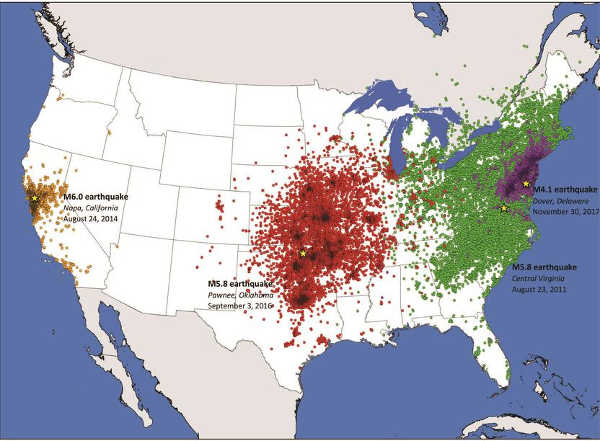
A magnitude 5.8 earthquake in 2011 in Mineral, Virginia, was felt up to 600 miles from the epicenter. Tens of millions of people in the eastern United States and southeastern Canada felt this earthquake.
For comparison, a magnitude 6.0 earthquake in 2014 in Napa, California, was felt only as far as 250 miles from the epicenter.
Despite the Napa earthquake releasing about twice as much energy as the Virginia earthquake and causing much more damage near the epicenter, it wasn’t felt nearly as far away.
As another example, the magnitude 4.1 earthquake that occurred in December 2017 near Dover, Delaware, was felt approximately 200 miles from the epicenter.
The region that felt this earthquake is about the same size as that of the much larger California event, which released about 700 times more energy.
Scientists are researching a variety of factors that influence regional differences in the intensity and effects of earthquakes.
Some of the factors have to do with the nature of the underlying tectonic plates and their geologic history. Others are connected to the size and age of buildings.
Seismic waves can travel farther in the east
Eastern North America has older rocks, some of which formed hundreds of millions of years before those in the West. These older formations have been exposed to extreme pressures and temperatures, making them harder and often denser. Faults in these older rocks have also had more time to heal, which allows seismic waves to cross them more effectively when an earthquake occurs.
In contrast, rocks in the West are younger and broken up by faults that are often younger and have had less time to heal.
So when an earthquake occurs, more of the seismic wave energy is absorbed by the faults and the energy doesn’t spread as efficiently.
More vulnerable infrastructure in the east
Many of the older structures in the East, such as buildings and bridges built before the 1970s, were not designed to endure earthquakes and therefore may not fare well.
The recent earthquakes that struck near Christchurch, New Zealand showed the damage that infrequent earthquakes can do to a region with older structures.
With that said, modern buildings are being constructed to newer design standards, and there has been progress in retrofitting many older buildings in the East. In the West, older structures are often retrofitted, and new structures are designed to withstand strong shaking.
Furthermore, smaller structures such as houses could experience stronger and more damaging shaking in the East. Earthquakes in the East tend to cause higher-frequency shaking – faster back and forth motion – compared to similar events in the West.
Shorter structures are more susceptible to damage during fast shaking, whereas taller structures are more susceptible during slow shaking.
Surprising level of shaking in Washington, DC
An example of the earthquake hazard in the eastern U.S. is provided by the surprising level of high-intensity ground shaking that occurred in Washington, DC, during the 2011 Virginia earthquake.
This shaking caused well-publicized damage to some historic buildings, even though the earthquake was moderate in size and its epicenter was 80 miles from the city.
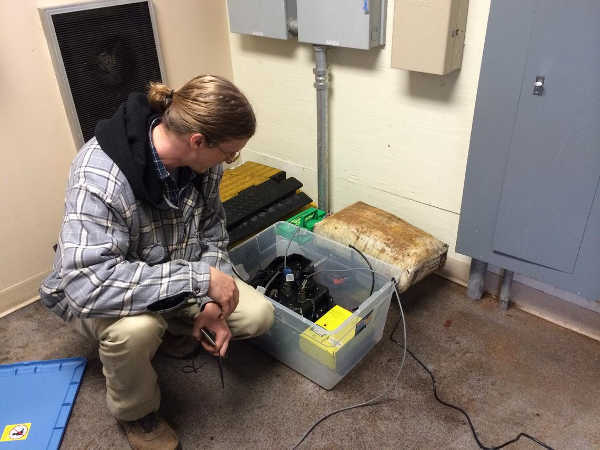
To learn more, USGS scientists deployed 27 temporary seismometers throughout DC to study variations in the strength of earthquake ground shaking. The instruments recorded ground motions from 30 earthquakes around the world during the 10 months they were in place.
Scientists confirmed that shaking is amplified in the parts of DC underlain by a thin layer of sediments compared to areas built on more solid, harder bedrock. This is because the energy in the seismic waves can move the lighter, weaker sediments more easily than the harder bedrock, and that energy gets “trapped” and echoes multiple times within the sediments.
While this amplification effect has been well documented in some western cities, including Seattle, Los Angeles and San Francisco, this is the first study that directly measures the effect in the nation’s capital. It was previously suspected to occur in Washington, DC, and had been found in other cities such as Boston.
Other major cities in the central and eastern United States with similar geology that could lead to amplified ground shaking include Trenton, New Jersey; Wilmington, Delaware; Baltimore, Maryland; Richmond, Virginia; and Columbia, South Carolina. Similar deposits also underlie cities in the Mississippi Valley and Gulf Coast, notably Memphis, Tennessee, near the New Madrid Seismic Zone.
The new results about amplification and the more efficient energy transmission in the East are part of an increased understanding and awareness of earthquake hazards in central and eastern U.S. cities. This information is especially useful to engineers and architects when designing buildings and retrofitting existing structures.
Challenges of Assessing earthquake hazards in the east
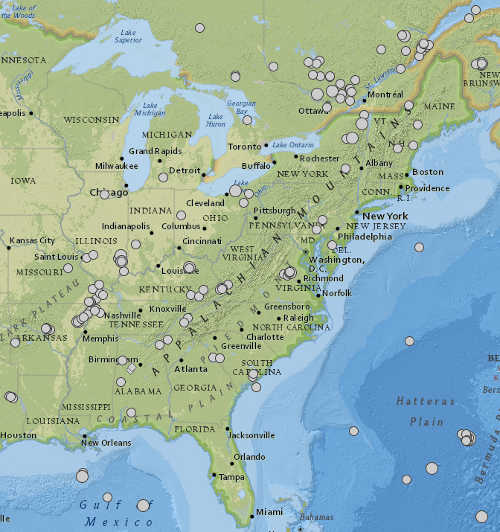
The geology of the eastern United States and the relatively sparse history of earthquakes to study make it difficult for scientists to assess how frequently earthquakes will occur and how large they can be.
Eastern earthquakes are more of a mystery because they do not take place at a plate boundary where most other earthquakes originate. Scientists do not fully understand the state of stress within tectonic plates, and they are studying how stresses accumulate and evolve and how earthquakes are triggered.
Scientists also do not know precisely where most active faults are located in the East. Most faults have not had major earthquakes or movement in the past few million years, and the faults that are active may only have earthquakes every few thousand or tens of thousands of years. Furthermore, any evidence of past earthquakes on the land’s surface in the eastern U.S. is often obscured by vegetation or is more subdued because of erosion.
Conversely, the West has more active faults and many areas with sparse vegetation, meaning earthquakes can leave clear markings that inform research on earthquake history, size and effects.
Ongoing research
The National Science Foundation and the USGS recently added new seismic stations in the central and eastern United States, creating a more robust network that augments the monitoring by university partners. USGS scientists also are working with university collaborators on several research projects.
For example, they are searching parts of Virginia and the Carolinas for evidence of strong earthquake shaking in the past, monitoring earthquakes and studying faults near the 2011 earthquake in Virginia and the 1886 earthquake in Charleston, South Carolina, and conducting detailed studies of the seismically active central Virginia region.
Scientists can’t predict earthquakes
As far as predicting earthquakes, no reliable short-term earthquake prediction method has ever been developed. Nor do scientists expect to develop a method in the foreseeable future.
However, using scientific data – such as fault locations and patterns of earthquakes over many years – probabilities can be calculated for future earthquakes, and that information is used in development of building codes.
Furthermore, the USGS and its partners are working to develop a prototype Earthquake Early Warning System for the West Coast of the U.S. called ShakeAlert. The system does not predict earthquakes, but once an earthquake happens, it could provide a few seconds to tens of seconds of warning before seismic waves arrive and cause strong shaking.
More earthquakes in the West
The western United States lies along the boundaries of major tectonic plates that make up the Earth’s crust – the North American Plate and the ocean plates to the west.
These plates are moving against each other, breaking up the crust along many faults like the San Andreas Fault. Faults in the East are less active and lie entirely within the North American Plate.
One of the most important takeaway messages is that everyone should know how to protect themselves during an earthquake. Check out FEMA’s Ready campaign for tips on earthquake preparedness.
The USGS is the federal agency with primary responsibility for recording and reporting earthquake activity nationwide and assessing seismic hazards to reduce risks to life and property. The USGS has created and provides tools to support earthquake loss reduction, including hazard assessments, earthquake scenarios, comprehensive real-time earthquake monitoring and public preparedness handbooks. Learn more about USGS earthquake science.
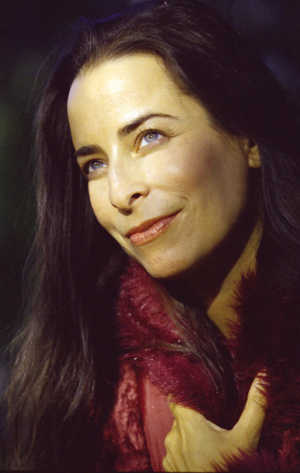
LAKEPORT, Calif. – This year’s Lake County Symphony Mother’s Day Concert will go beyond Bach and Beethoven.
The concert will take place beginning at 2 p.m. Sunday, May 13, at the Soper Reese Theater, 275 S. Main St.
This year’s concert will feature Jenna Mammina, a skilled vocal stylist, songwriter and educator-whose unique blend of musical styles will keep the energy level high and display the versatility of the talented musicians in the Lake County Symphony.
John Parkinson, music director and symphony conductor, said he decided to change the program’s usual format because he was so impressed with Mammina’s unique talents, and also because, along with his love of classical music, he is also a major jazz fan.
Described as one of the leading women of jazz/pop crossover for three years in a row by Jazziz Magazine, Mammina has shared the honor of both the magazine cover and a featured original song, (“A love that Lasts”) with Diana Krall and Norah Jones.
Other notable accolades include SF Weekly’s Jazz Performer of the Year, a nomination for Best Jazz Album for her CD (“Meant To Be”) from the California Music Awards, and the Goldy Award for her continuing work with children through her nationally acclaimed music education program, Scat for Cats.
Her first album (“Under the Influence”) was one of the most widely praised debuts in recent years, earning a four-star review in Japan’s most prestigious jazz magazine, Swing Journal.
This first effort from Mammina was also lauded by Derk Robertson, writing for the SF Chronicle, which he chose as number nine in his top albums of 1999.
Her second album, “Meant to Be,” was nominated for a California Music Award in the Outstanding Jazz Album category.
Mammina says she found music early in life in St. Joseph, Michigan, singing in church at the age of 5 and performing in school musicals. In her teens, she learned guitar and piano and performed with local bands.
After attending Michigan State University and Laney College in Oakland, Mammina settled in San Francisco, going on to record five albums, all released on her own label, Mamma Grace. An accomplished performer who puts on as many as 250 shows per year and has played with musicians like Bobby McFerrin, Bobby Watson, Nancy King, Andy Narell and Steve Coleman, reviewers say Mammina combines folk music, pop and jazz, to create her own unique style. She often includes songs from such performers as Abbey Lincoln (her idol), Elvis Costello, U2 and Tom Waits, as well as her own original compositions.“I don’t want to categorize my music,” said Mammina. “It’s not that I don’t know who I am. I don’t sing classical, and I’m not a soul singer or an R&B singer, but I have been influenced by that stuff too. I can sing a Patsy Cline tune, a James Taylor or Led Zeppelin tune, but I do it with my own flair.”
Her voice has been described as “sweet and flexible” and “whisper-like” with “airbrushed phrasings and silky nuance.” Grapevine Culture critic Kimberlye Gold writes, “Jenna could sing a page from the phone book and make it sound like her own private piece of the sky.”
When she is not performing, Mammina enjoys teaching song and movement (she is a longtime yoga teacher) to kids of all ages through her trademark workshops “Scat for Cats,” “Art of the Duo,” and the latest, “So You Want to be a Rock and Roll Star,” at schools and universities throughout the country.
Songs for the upcoming Mother’s Day Concert at the Soper-Reese come from such notables as Roy Orbison (Blue Bayou) Bonnie Hayes (Have a Heart), Joni Mitchell (Help Me), Dolly Parton (Here You Come Again) Abbey Lincoln (Throw it Away) Jules Styne & Sammy Cahn (Time After Time), G. Anthony Bertig (Moonlight Duet ), Tony Bertig (Where Life Will Take You), Rolf Sturm (Begin to Dance-arranged by Sturm) as well as her own songs, Inner Smile, Contradictions and Upside Down World. Most were arranged for orchestra by Isaac Narell.The Mother’s Day concert opens with the LCSA Youth Orchestra, conducted by Sue Condit. “Hunting the Wild Beast” will lead the audience into a world of castles, knights and dragons.
The driving rhythms in this piece tell a story of hunters pursuing the dragon, but leaving the outcome to the imagination of the listener.
The final piece is “The Magical World of Pixar,” a medley of the Big Race, Nemo Egg (Main Title), The Spirit of Adventure, The Glory Days, Ratatouille Main Theme and You’ve Got a Friend in Me.
This high-spirited medley will be familiar to those who enjoy Pixar Studio movies.The 11 a.m. full dress rehearsal,is free to those 18 and younger and costs just $5 for the older crowd.
Lightning can strike and electricity can travel through pipes and water, shocking you, according to John Jensenius, lightning safety specialist for the National Weather Service, or NWS.
During a thunderstorm, simple daily tasks such as doing the dishes or taking a shower can increase your risk of getting struck by lightning.
"You just want to stay away from things that conduct electricity within the home," Jensenius said. "That would include both the wires and the plumbing, so in that particular case certainly showers would be dangerous, it would be dangerous to be washing your hands or washing dishes. Just avoid those any time you can hear thunder."
"If you're at all connected to ... anything that plugs into the wall, which could be, for example, a dishwasher or a washing machine that's plugged into the wall or also has connections to plumbing, that becomes dangerous," Jensenius said.
He said that lightning can strike up to about 10 miles away from a thunderstorm. With that in mind, if you can hear thunder, you're within striking distance of a storm and you'll want to get to a safe place.
According to the NWS, a safe place is indoors, away from metal, plumbing, anything plugged in, concrete, windows and doors. Picnic shelters, dugouts and dog houses are not safe. A vehicle with a metal roof is safe if the windows are up.
Jensenius said some people think if they have plastic pipes, they're able to shower during a storm without risk.
"That's not true. Water can conduct electricity as well. We see that on the outside where lightning strikes something and if there are puddles around, it can easily electrocute somebody nearby the puddle."
AccuWeather Senior Meteorologist Dan Kottlowski noted it can also depend on how your house is grounded.
"When a house is built, it should be built so that when your electricity comes in, it's grounded to your house. If your house is grounded to separate rods that are basically stuck down into the ground, then that's a bit safer because nothing is attached to the plumbing," Kottlowski said.
Kottlowski said some homes, years ago, had electrical systems that were grounded to the plumbing system.
He said one way to change where your electrical system is grounded to is to have an electrical contractor come in and put steel rods in the ground, a few feet away from the house, and attach the electrical system to those rods.
In order to determine if your electrical system is grounded to your plumbing, it's best to contact an electrician, Kottlowski said.
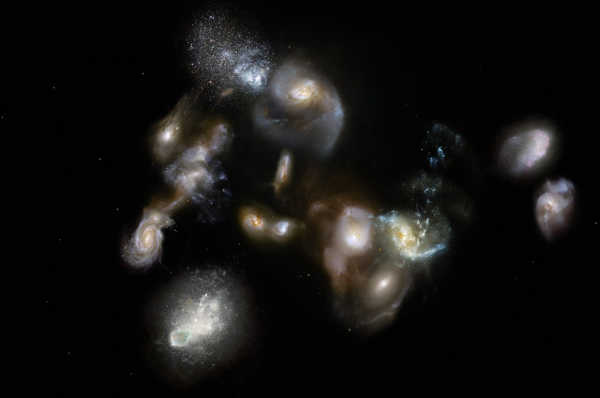
The ALMA and APEX telescopes have peered deep into space – back to the time when the Universe was one tenth of its current age – and witnessed the beginnings of gargantuan cosmic pileups: the impending collisions of young, starburst galaxies.
Astronomers thought that these events occurred around three billion years after the Big Bang, so they were surprised when the new observations revealed them happening when the Universe was only half that age! These ancient systems of galaxies are thought to be building the most massive structures in the known Universe: galaxy clusters.
Using the Atacama Large Millimeter/submillimeter Array (ALMA) and the Atacama Pathfinder Experiment (APEX), two international teams of scientists led by Tim Miller from Dalhousie University in Canada and Yale University in the US and Iván Oteo from the University of Edinburgh, United Kingdom, have uncovered startlingly dense concentrations of galaxies that are poised to merge, forming the cores of what will eventually become colossal galaxy clusters.
Peering 90 percent of the way across the observable Universe, the Miller team observed a galaxy protocluster named SPT2349-56. The light from this object began travelling to us when the Universe was about a tenth of its current age.
The individual galaxies in this dense cosmic pileup are starburst galaxies and the concentration of vigorous star formation in such a compact region makes this by far the most active region ever observed in the young Universe. Thousands of stars are born there every year, compared to just one in our own Milky Way.
The Oteo team discovered a similar megamerger formed by ten dusty star-forming galaxies, nicknamed a “dusty red core” because of its very red colour, by combining observations from ALMA and the APEX.
Iván Oteo explains why these objects are unexpected: “The lifetime of dusty starbursts is thought to be relatively short, because they consume their gas at an extraordinary rate. At any time, in any corner of the Universe, these galaxies are usually in the minority. So, finding numerous dusty starbursts shining at the same time like this is very puzzling, and something that we still need to understand.”
These forming galaxy clusters were first spotted as faint smudges of light, using the South Pole Telescope and the Herschel Space Observatory. Subsequent ALMA and APEX observations showed that they had unusual structure and confirmed that their light originated much earlier than expected — only 1.5 billion years after the Big Bang.
The new high-resolution ALMA observations finally revealed that the two faint glows are not single objects, but are actually composed of fourteen and ten individual massive galaxies respectively, each within a radius comparable to the distance between the Milky Way and the neighbouring Magellanic Clouds.
"These discoveries by ALMA are only the tip of the iceberg. Additional observations with the APEX telescope show that the real number of star-forming galaxies is likely even three times higher. Ongoing observations with the MUSE instrument on ESO’s VLT are also identifying additional galaxies,” comments Carlos De Breuck, ESO astronomer.
Current theoretical and computer models suggest that protoclusters as massive as these should have taken much longer to evolve. By using data from ALMA, with its superior resolution and sensitivity, as input to sophisticated computer simulations, the researchers are able to study cluster formation less than 1.5 billion years after the Big Bang.
"How this assembly of galaxies got so big so fast is a mystery. It wasn’t built up gradually over billions of years, as astronomers might expect. This discovery provides a great opportunity to study how massive galaxies came together to build enormous galaxy clusters," says Tim Miller, a PhD candidate at Yale University and lead author of one of the papers.
The partnership will extend across clinics and facilities in Humboldt, Mendocino, Sonoma, Lake, Napa and Solano counties.
The proposed arrangement is subject to regulatory review.
“Adventist Health and St. Joseph Health believe this is the right thing to do for the communities we serve,” said Jeff Eller, Adventist Health president of the Northern California region. “Patients will benefit from more access points, better health outcomes and controlled costs by coordinating their care across the spectrum of their health needs.”
The affiliation applies to facilities, services and clinics associated with Adventist Health Howard Memorial, Adventist Health Ukiah Valley, Adventist Health Clear Lake, Adventist Health St. Helena and Adventist Health Vallejo and Home Health services and facilities, services and clinics associated with St. Joseph Hospital Eureka, Redwood Memorial Hospital, Santa Rosa Memorial Hospital, Queen of the Valley Hospital and the St. Joseph Home Care Network.
The arrangement does not include the other 15 Adventist Health hospitals in the western United States or the other 50 Providence St. Joseph Health hospitals located throughout the western United States and Texas.
Under this affiliation, Adventist Health and St. Joseph Health will retain existing hospital names, licenses, capital assets and employees.
“Both Adventist Health and St. Joseph Health have a strong history of successful clinical collaboration. This is an extraordinary moment in the histories of St. Joseph Health and Adventist Health,” said Kevin Klockenga, St. Joseph Health Northern California Region president and chief executive officer. “By coming together under a new organization, we will work together to ensure a healthier future for the communities we serve by providing patients access to a full continuum of high-quality services close to home.”
Officials at Adventist Health and St. Joseph Health are working toward a closing of the proposed transaction sometime later this year.
Meanwhile, both organizations remain committed to delivering exceptional care throughout the region.

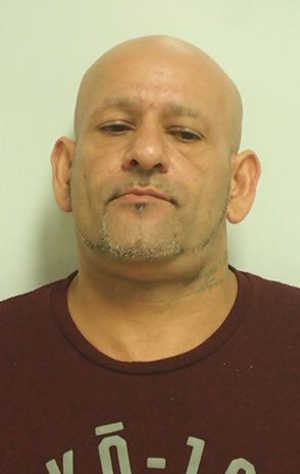
NICE, Calif. – A Northshore man wanted on a felony warrant in Texas was arrested this week on numerous charges related to drug and weapon possession following a traffic stop.
Jose Gustavo Mena III, 43, of Nice was arrested on Wednesday, according to Lt. Corey Paulich of the Lake County Sheriff’s Office.
On Wednesday evening a Lake County Sheriff’s deputy patrolling the Nice area observed the driver of a black BMW talking on his cell phone in the area of Liberty Street and Buckingham Way, Paulich said.
As the deputy followed the vehicle he noticed the driver moving around and leaning towards the passenger side. Paulich said the deputy conducted an enforcement stop on Highway 20 near Butte Street.
The deputy contacted the driver, who Paulich said was Mena. As he was speaking with Mena the deputy could smell a strong odor of marijuana coming from inside the vehicle, Paulich said.
Paulich said Mena told the deputy the vehicle belonged to a family member who smoked marijuana. The deputy had Mena step out of the vehicle and, after evaluating Mena, the deputy determined he was under the influence of a controlled substance and placed him under arrest.
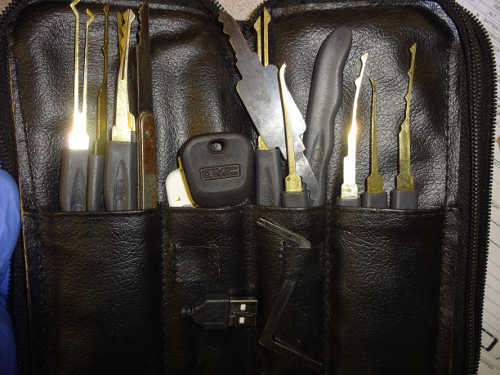
During a search of the vehicle, the deputy located three marijuana cigarettes, a lock pick set, and a loaded 9 millimeter handgun in the pocket located on the back of the passenger seat. The handgun was not registered, according to Paulich.
Paulich said Mena was transported to the Lake County Jail where he was booked for several felonies including carrying an unregistered loaded handgun in public, felon in possession of a firearm, felon carrying a concealed firearm, felon in possession of ammunition and being under the influence of a controlled substance while in possession of a loaded firearm.
It also was determined that Mena had a felony arrest warrant out of Texas for being a felon in possession of a firearm, Paulich said.
Mena remained in custody early Saturday with his bail set at $50,000.