LAKEPORT, Calif. – Lakeport’s fire chief is asking community members to use extra caution after two small vegetation fires this past week were sparked by fireplace or woodstove ashes.
The fires occurred on Monday afternoon in the 1500 block of McMahon Road and Thursday night in the 1000 block of Crystal Lake Way.
In the case of the McMahon Road fire, neighbors were getting it under control by the time firefighters arrived, according to radio traffic.
Firefighters got on scene of the Crystal Lake Way fire on Thursday and found it burning with a slow rate of spread, but were able to knock it down quickly, according to Lakeport Fire Chief Doug Hutchison.
In both cases, Hutchison said the case was ashes that had been dumped.
“Both of these had real potential. We got really lucky,” he said of the fires.
Hutchison asked community members to be cognizant of the very high level of fire danger that still exists this late in the year.
While it’s cold, and people want to use their wood stoves and fireplaces, Hutchison said it’s still dry enough that ashes can cause a fire.
He said it’s important to make sure ashes are completely out and cold before dumping them.
Email Elizabeth Larson at This email address is being protected from spambots. You need JavaScript enabled to view it.. Follow her on Twitter, @ERLarson, or Lake County News, @LakeCoNews.
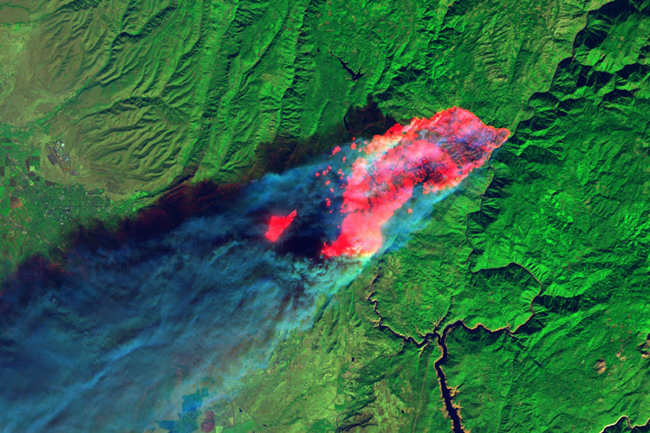
Short-wave infrared (red) captured by Landsat 8 shows the full extent of the actively burning area of the Camp fire four hours after it started on Nov. 8. The red patches are fires that leapfrogged in front of the primary burn front, which was growing at a rate of approximately 5 km per hour. Earth Engine image by Jeff Chambers.
BERKELEY, Calif. – Satellite images of the area around Paradise, Calif., on the morning of Nov. 8 captured the Camp fire when it was only four hours old, yet had already burned halfway through the city.
Overlaid with earlier high-resolution images of the city’s buildings and surrounding landscape, the images clearly indicate the buildings that had likely burned by 10:45 a.m. that Thursday, as well as the rapidly leapfrogging flames and the path of destruction the fire had created since its ignition at around 6:30 a.m.
The northeastern, upwind edge of the burn lies beneath and parallel to three high-tension power lines running along Highway 70, about a mile and a half northeast of a town called Pulga and a site identified as a possible origin of the fire.
So far, the Camp fire has scorched 149,000 acres, left dozens of people dead and destroyed more than 12,786 structures – including 9,700 single-family residences – making it the most destructive fire in California history. It was 55-percent contained as of Saturday night.
The images were generated by Jeff Chambers, a UC Berkeley professor of geography, using Google’s Earth Engine, which combines an analysis platform and detailed base maps with large storage and daily downloads of publicly available Earth-imaging data from orbiting satellites.
The Landsat 8 satellite happened to snap its once-every-16-days shot of that area at 10:45 a.m. on Thursday, Nov. 8.
The satellite recorded visible and infrared wavelengths. Short-wavelength infrared, or SWIR, light (1.2- to 3-micron wavelength) is captured in two bands with Landsat 8, and these SWIR wavelengths are emitted by burning materials and penetrate smoke and aerosols, allowing a detailed picture of the fire’s progress.
As assembled by Chambers, the infrared signature of fire is an eerie red wash over Earth Engine’s base map of homes and businesses in Paradise.
“It’s astonishing,” Chambers said. “You can see the fire burning right through the city. The burn front at 10:45 a.m. on Thursday morning was that far into the city. Earth Engine tools allow this type of rapid analysis, and I think it’s important to get this out there to the public right away.”
Chambers used the satellite data to clock the fire’s speed at about 5 kilometers (3 miles) per hour during its first four hours, driven in part by flying embers that caused the fire to leapfrog up to 4 kilometers, or 2.5 miles, ahead of the advancing fire front.
“People need to understand how quickly these fires can propagate. Early warning is so critical here,” he said.
Chambers is a field ecologist and biogeographer who uses remote sensing to augment his ground studies of how areas are impacted and recover after hurricanes, droughts, fires and other natural disasters. Earlier this year, he published results of rapid mapping of the damage to Puerto Rico’s forests caused by 2017’s Hurricane Maria, and a publication for peer review is nearing completion on that work.
On Saturday, Nov. 10, Chambers pulled up Landsat data from 10:45 a.m. Nov. 8, and manipulated it to see what could be learned. Such information, if it had been available immediately after the satellite obtained the images and been updated frequently, might have been invaluable to firefighters.
“You can see the way in which the structure of the burn is aligned with the built environment,” he said. “At 10:45 in the morning, all these structures were engulfed in flames. You can see that clearly in the image and start counting the hundreds of homes burned.”
Chambers emphasized that the Camp fire is not a forest fire, but a wildland fire made dangerous by its proximity to dense human habitation.
“The vegetation of the ignition area if not a forested region, it's a complex mosaic of grasses, shrubs and forest patches, with downed and dead woody debris and urban structures,” he said.
Chambers plans within a few weeks to build a user interface that can interact with his Earth Engine code, allowing anyone to manipulate the images and zoom in on areas of interest.
Robert Sanders writes for the UC Berkeley News Center.
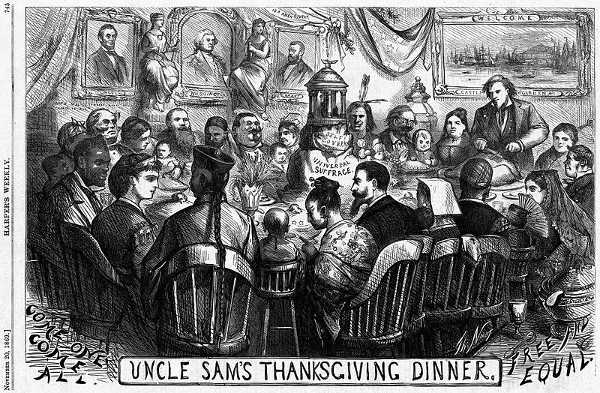
Harper’s Weekley’s “Uncle Sam’s Thanksgiving Dinner,” from November 1869, by Thomas Nast. Library of Congress Prints and Photographs Division Washington, D.C. 20540 USA. It should come as no surprise that Thanksgiving – the holiday during which millions of American families gorge themselves on Turkey, pies and stuffing – has become warped from its original design.
Let’s take a brief look at the history of thanksgiving days in European and American North America.
1514: Spanish explorer Francisco Vasquez de Coronado and his men conduct a service of thanksgiving for the abundant food and water they find along the Palo Duro Canyon in the Texas Panhandle.
1564: French Huguenot colonists settle in the area of Jacksonville, Florida and sing “a psalm of Thanksgiving unto God.”
1607: When Jamestown colonists arrive in Virginia, they immediately erect a wooden cross and give thanks to God for their safe passage across the ocean.
1619: English colonists at Berkeley Hundred in Virginia decree that the day of their arrival, December 4, “shall be yearly and perpetually kept holy as a day of Thanksgiving to Almighty God.”
1621: The Pilgrims at Plymouth, Massachusetts, hold a feast to celebrate the harvest and God’s bounty.
1777: During the Revolutionary War, the Continental Congress designates December 18 of that year a day “for solemn Thanksgiving and praise” for the Patriot army’s victory at Saratoga. This is the first national American day of thanksgiving.
1789: President George Washington proclaims November 26 to be a day for “rendering unto [God] our sincere and humble thanks – for his kind care and protection of the People of this Country previous to their becoming a Nation – for the signal and manifold mercies, and the favorable interpositions of his Providence which we experienced in the course and conclusion of the late war – for the great degree of tranquility, union, and plenty, which we have since enjoyed – for the peaceable and rational manner, in which we have been enabled to establish constitutions of government for our safety and happiness, and particularly the national One now lately instituted – for the civil and religious liberty with which we are blessed; and the means we have of acquiring and diffusing useful knowledge; and in general for all the great and various favors which he hath been pleased to confer upon us…”
1863: President Abraham Lincoln gives an official proclamation setting the last Thursday of November a National Day of Thanksgiving. The President says, in part,
“I do therefore invite my fellow citizens in every part of the United States, and also those who are at sea and those who are sojourning in foreign lands, to set apart and observe the last Thursday of November next, as a day of Thanksgiving and Praise to our beneficent Father who dwelleth in the Heavens. And I recommend to them that while offering up the ascriptions justly due to Him for such singular deliverances and blessings, they do also, with humble penitence for our national perverseness and disobedience, commend to His tender care all those who have become widows, orphans, mourners or sufferers in the lamentable civil strife in which we are unavoidably engaged, and fervently implore the interposition of the Almighty Hand to heal the wounds of the nation and to restore it as soon as may be consistent with the Divine purposes to the full enjoyment of peace, harmony, tranquillity [sic] and Union.”
Up to this point, Thanksgiving Day, whenever it landed, served as a time to take stock of one’s blessings. These days often occurred at the end, or in the middle of, great hardships – from dangerous crossings of vast oceans and a reprieve from starvation brought about by a good harvest, to the fighting for one’s independence and steadfastly enduring the ravages of a civil war.
In moments like these, when human will was pitted against the many and diverse pains of this world and all seemed lost, time was set aside to recognize the small blessings – to be grateful to be alive and to have the chance to continue to fight whatever great struggle you currently found yourself in.
Nationalist agendas and corporate greed gradually ate away at the spirit of such a holiday. Beginning in the 1890s, the imagery of Thanksgiving became increasingly focused on the Pilgrims and Wampanoag Indians, which was used as a way of teaching children into what good citizenship looked like.
Never before was the holiday so heavily associated with the Pilgrims – after all, their “thanksgiving” day had only been one among many observed over the centuries. There wasn’t anything special about it. In fact, only by a great stretch of the imagination could it be considered the first American Thanksgiving. That honor should instead belong to the Thanksgiving of 1777 or 1789.
The holiday was further corrupted in 1941 when, at the behest of President Franklin Roosevelt, Congress pushed Thanksgiving back, from the last to the fourth Thursday of November. By then, the holiday had become heavily commercialized, and President Roosevelt wanted more time between Thanksgiving and Christmas so that people would purchase more goods and boost the depressed economy.
A holiday based on humble gratitude had become a tool to indoctrinate children and a chance to boost the economy. It’s continued much the same to this day. In fact, with Black Friday starting before Thanksgiving dessert is even served, the day has become an even greater boost to the economy than Roosevelt could ever had imagined.
So as you sit down with your family on the fourth Thursday of November, try to forget Thanksgiving altogether and in its place remember what it means to give thanks.
Antone Pierucci is curator of history at the Riverside County Park and Open Space District and a freelance writer whose work has been featured in such magazines as Archaeology and Wild West as well as regional California newspapers.
Puck’s 1907 Thanksgiving cartoon. Library of Congress Prints and Photographs Division Washington, D.C. 20540 USA http://hdl.loc.gov/loc.pnp/pp.print
LAKE COUNTY, Calif. – Lake County Animal Care and Control’s kennels have filled up once again with many different breeds and sizes of dogs needing new families.
Dogs available for adoption this week include mixes of American Bulldog, Chihuahua, dachshund, Labrador Retriever, McNab, pit bull, shepherd and terrier.
Dogs that are adopted from Lake County Animal Care and Control are either neutered or spayed, microchipped and, if old enough, given a rabies shot and county license before being released to their new owner. License fees do not apply to residents of the cities of Lakeport or Clearlake.
If you're looking for a new companion, visit the shelter. There are many great pets hoping you'll choose them.
The following dogs at the Lake County Animal Care and Control shelter have been cleared for adoption (additional dogs on the animal control Web site not listed are still “on hold”).
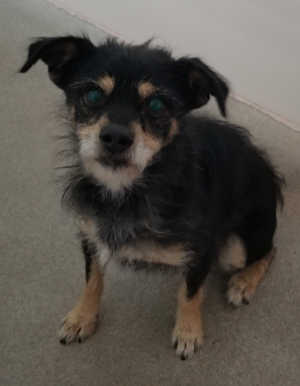
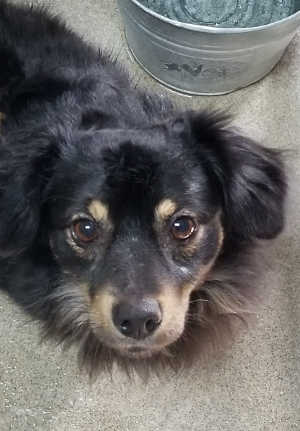
This male terrier mix is in kennel No. 2, ID No. 11374. Photo courtesy of Lake County Animal Care and Control. Terrier mix
This male terrier mix has a coarse black and brown coat.
He already has been neutered.
He’s in kennel No. 2, ID No. 11374.
“Cally” is a female pit bull terrier in kennel No. 5, ID No. 11351. Photo courtesy of Lake County Animal Care and Control. ‘Cally’
“Cally” is a female pit bull terrier with a short tan and white coat.
She’s in kennel No. 5, ID No. 11351.
“Crow” is a male pit bull terrier in kennel No. 7, ID No. 11275. Photo courtesy of Lake County Animal Care and Control. ‘Crow’
“Crow” is a male pit bull terrier with a short black and white coat.
He already has been neutered.
He’s in kennel No. 7, ID No. 11275.
This male terrier is in kennel No. 8, ID No. 11346. Photo courtesy of Lake County Animal Care and Control. Male terrier
This male terrier has a short tan and white coat.
He’s in kennel No. 8, ID No. 11346.
This male pit bull mix is in kennel No. 11, ID No. 11402. Photo courtesy of Lake County Animal Care and Control. Pit bull mix
This male pit bull mix has a short gray and white coat.
He’s in kennel No. 11, ID No. 11402.
“Zara” is a female pit bull-Chihuahua mix in kennel No. 14, ID No. 11337. Photo courtesy of Lake County Animal Care and Control. ‘Zara’
“Zara” is a female pit bull-Chihuahua mix with a short brown and brindle coat.
She has already been altered.
She is in kennel No. 14, ID No. 11337.
This male Chihuahua is in kennel No. 15, ID No. 11375. Photo courtesy of Lake County Animal Care and Control. Male Chihuahua
This male Chihuahua has a short black coat.
He’s in kennel No. 15, ID No. 11375.
This male Chihuahua is in kennel No. 16a, ID No. 11321. Photo courtesy of Lake County Animal Care and Control. Male Chihuahua
This male Chihuahua has a short tan and white coat.
He already has been neutered.
He’s in kennel No. 16a, ID No. 11321.
This male Chihuahua-dachshund mix is in kennel No. 16b, ID No. 11322. Photo courtesy of Lake County Animal Care and Control. Chihuahua-dachshund mix
This male Chihuahua-dachshund mix has a medium-length brown and black coat.
He already has been neutered.
He’s in kennel No. 16b, ID No. 11322.
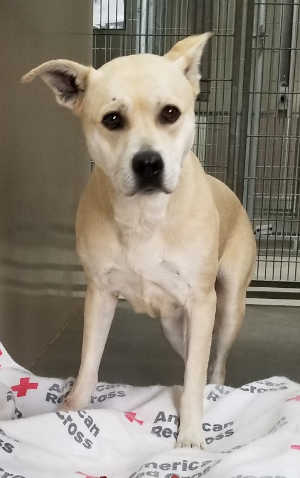
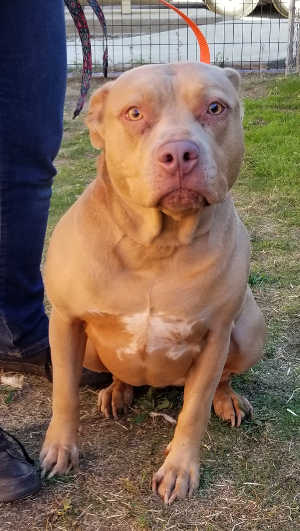
This female Labrador Retriever-pit bull mix is in kennel No. 17, ID No. 11384. Photo courtesy of Lake County Animal Care and Control. Labrador Retriever-pit bull mix
This female Labrador Retriever-pit bull mix has a short cream-colored coat.
She’s in kennel No. 17, ID No. 11384.
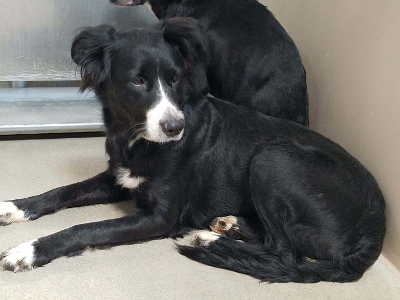
This female Labrador Retriever is in kennel No. 18, ID No. 11239. Photo courtesy of Lake County Animal Care and Control. Female Labrador Retriever
This female Labrador Retriever has a medium-length black coat with white markings.
She already has been spayed.
She’s in kennel No. 18, ID No. 11239.
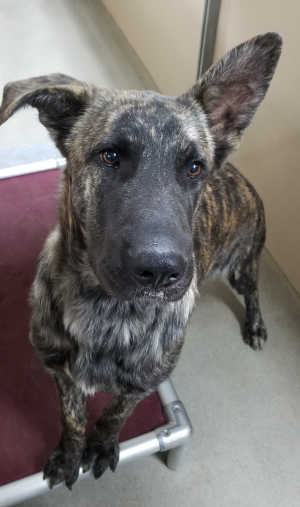
This young male shepherd is in kennel No. 20, ID No. 11385. Photo courtesy of Lake County Animal Care and Control. Male shepherd
This young male shepherd has a short brindle coat with white markings.
He’s in kennel No. 20, ID No. 11385.
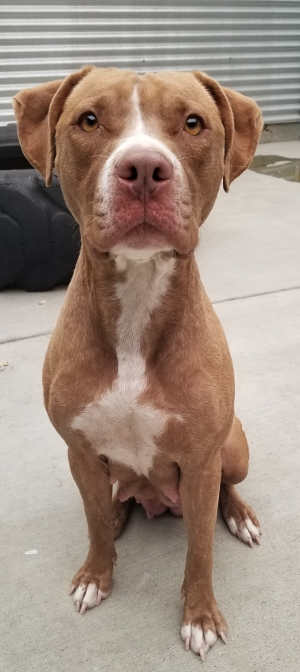
This female pit bull terrier is in kennel No. 22, ID No. 11192. Photo courtesy of Lake County Animal Care and Control. Female pit bull terrier
This female pit bull terrier has a short brown coat.
She’s in kennel No. 22, ID No. 11192.
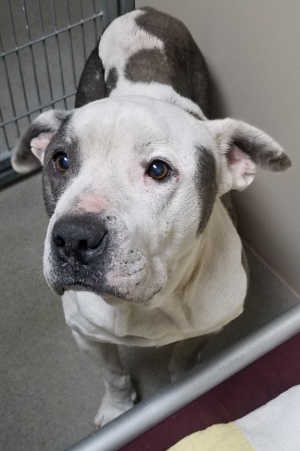
This female pit bull terrier is in kennel No. 23, ID No. 10226. Photo courtesy of Lake County Animal Care and Control. ‘Molly’
“Molly” is a female pit bull terrier.
She already has been spayed.
She’s in kennel No. 23, ID No. 10226.
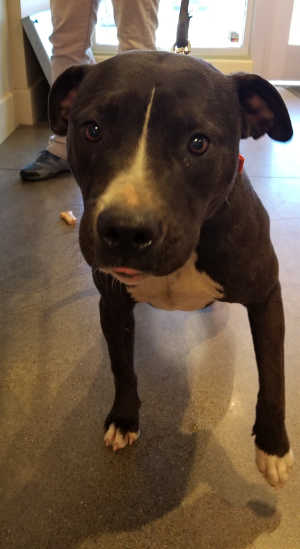
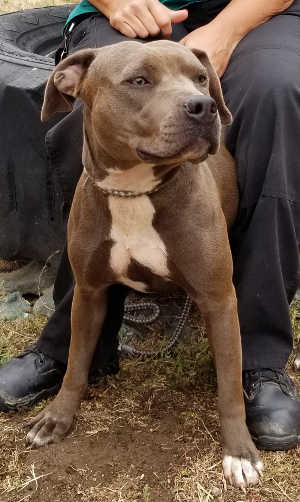
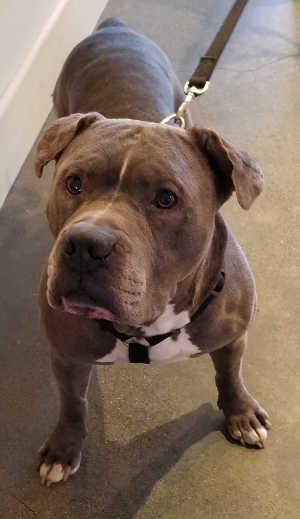
“Saint” is a male American Bulldog-pit bull terrier mix in kennel No. 24, ID No. 11236. Photo courtesy of Lake County Animal Care and Control. ‘Saint’
“Saint” is a male American Bulldog-pit bull terrier mix.
He has a short blue and brindle coat.
He’s in kennel No. 24, ID No. 11236.
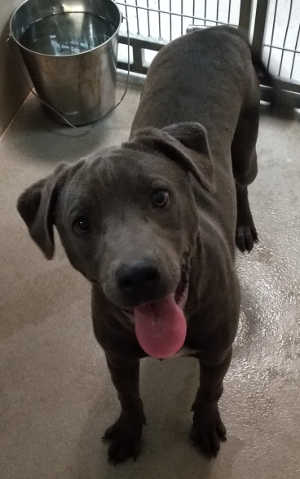
This female Labrador Retriever is in kennel No. 27, ID No. 11400. Photo courtesy of Lake County Animal Care and Control. Female Labrador Retriever
This female Labrador Retriever has a short gray coat.
She’s in kennel No. 27, ID No. 11400.
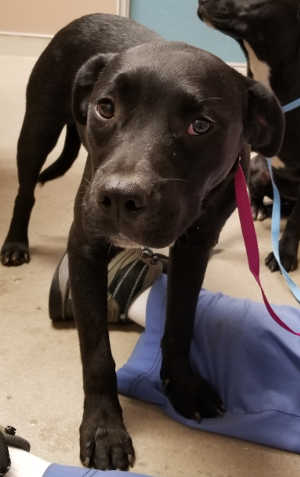
This male terrier-McNab mix is in kennel No. 32, ID No. 11211. Photo courtesy of Lake County Animal Care and Control. Male terrier-McNab
This male terrier-McNab mix has a short black coat.
He already has been neutered.
He’s in kennel No. 32, ID No. 11211.
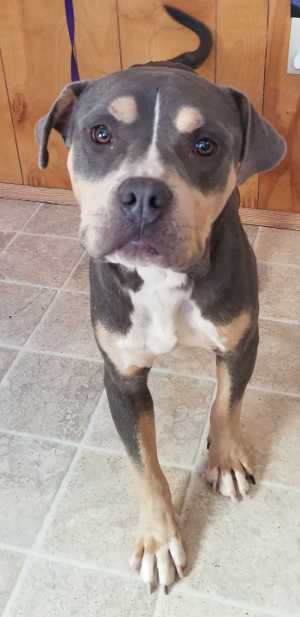
This male pit bull terrier is in kennel No. 33, ID No. 11345. Photo courtesy of Lake County Animal Care and Control. Male pit bull terrier
This male pit bull terrier has a short gray and brown coat.
He’s in kennel No. 33, ID No. 11345.
Lake County Animal Care and Control is located at 4949 Helbush in Lakeport, next to the Hill Road Correctional Facility.
Office hours are Monday through Friday, 11 a.m. to 5 p.m., and 11 a.m. to 3 p.m., Saturday. The shelter is open from 11 a.m. to 4 p.m. Monday through Friday and on Saturday from 11 a.m. to 3 p.m.
For more information call Lake County Animal Care and Control at 707-263-0278.
Email Elizabeth Larson at This email address is being protected from spambots. You need JavaScript enabled to view it.. Follow her on Twitter, @ERLarson, or Lake County News, @LakeCoNews.
Kepler’s astounding success in proving there are more planets than stars in our galaxy, and the existence of many worlds that could be favorable to life has forever changed our perspective.
Many members of the Kepler team and scientists offered thoughts on what this mission, and its finding of “more planets than stars,” has meant to them.
On Thursday evening, NASA’s Kepler space telescope received its final set of commands to disconnect communications with Earth.
The “goodnight” commands finalize the spacecraft’s transition into retirement, which began on Oct. 30 with NASA’s announcement that Kepler had run out of fuel and could no longer conduct science.
Coincidentally, Kepler’s “goodnight” coincides with the anniversary of the death of its namesake, German astronomer Johannes Kepler, who discovered the laws of planetary motion and died 388 years ago on Nov. 15, 1630.
The final commands were sent over NASA’s Deep Space Network from Kepler’s operations center at the Laboratory for Atmospheric and Space Physics, or LASP, at the University of Colorado in Boulder. LASP runs the spacecraft’s operations on behalf of NASA and Ball Aerospace & Technologies Corporation in Boulder, Colorado.
Kepler’s team disabled the safety modes that could inadvertently turn systems back on, and severed communications by shutting down the transmitters.
Because the spacecraft is slowly spinning, the Kepler team had to carefully time the commands so that instructions would reach the spacecraft during periods of viable communication.
The team will monitor the spacecraft to ensure that the commands were successful. The spacecraft is now drifting in a safe orbit around the Sun 94 million miles away from Earth.
The data Kepler collected over the course of more than nine years in operation will be mined for exciting discoveries for many years to come.
NASA's Ames Research Center in California's Silicon Valley manages the Kepler and K2 missions for NASA's Science Mission Directorate. NASA's Jet Propulsion Laboratory in Pasadena, California, managed Kepler mission development. Ball Aerospace & Technologies Corporation operates the flight system with support from LASP.
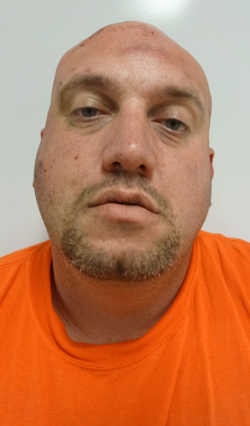
Jacob Lee St. Clair, 38, of San Francisco, Calif., was arrested in Lake County, Calif. He’s wanted in San Mateo, County, Calif., on numerous warrants for felony child abuse. Lake County Jail photo. LAKE COUNTY, Calif. – This week a California Highway Patrol officer took into custody a San Francisco man wanted in San Mateo County for felony child abuse.
Jacob Lee St. Clair, 38, was arrested following a vehicle pursuit late Monday night, according to a report from the CHP’s Clear Lake Area Office.
The CHP said that at 11:26 p.m. Monday Officer Mike Phillips was patrolling the area of Highway 29 north of Highland Springs Road in Lakeport.
Phillips observed a blue Toyota Corolla travelling southbound on Highway 29 at a high rate of speed and initiated a traffic stop. However, the CHP said the Toyota fled, traveling southbound on Highway 29 and rapidly accelerating to speeds up to 120 miles per hour.
The suspect vehicle began crossing over double yellow lines and passing vehicles, and in the interest of public safety, the pursuit was terminated, the CHP said.
The CHP said the suspect vehicle was located a short time later, abandoned in the intersection of Belle Avenue and Lucky Drive.
With the assistance of local residents and the Lake County Sheriff’s Office, Phillips found the suspect – identified as St. Clair – hiding in a carport and apprehended him, the CHP said.
A warrants check revealed that St. Clair had multiple outstanding warrants totaling $300,000 out of San Mateo County on charges of felony child abuse involving a 5-year-old, according to the CHP.
The CHP said San Mateo County District Attorney Steve Wagstaff was contacted on Friday and said he was very pleased that St. Clair was apprehended so justice can be rendered.
St. Clair was booked into the Lake County Jail for multiple violations including felony evasion of a peace officer and drug possession along with his warrants, the CHP said.
On Friday night St. Clair remained in the Lake County Jail.
 How to resolve AdBlock issue?