 How to resolve AdBlock issue?
News

LAKE COUNTY, Calif. – Calpine Corp. has awarded a $20,000 check to the Friends of Boggs Mountain for the purchase of a mini excavator to assist in the building of trails in Boggs Mountain Demonstration State Forest.
Calpine presented the check to the FOBM Board of Directors at Mountain High Coffee in Cobb on Jan. 16.
Friends of Boggs Mountain members said the trail building excavator, a Bobcat E10, will be an incredible asset when rebuilding the trails destroyed in the forest during the Valley fire in 2015.
The group partnered with Cal Fire by signing a memorandum of understanding allowing Friends of Boggs Mountain to lead the trail rebuild project.
Friends of Boggs Mountain, under the guidance of Cal Fire, will work with nonprofits representing all user groups.
The Friends thanked Calpine “for supporting our community and your efforts in bringing back outdoor recreation to Boggs Mountain State Forest.”
Trail work is scheduled to begin in early 2019.
“We look forward to working with community volunteers to rebuild the trails over the next few years,” Friends of Boggs Mountain said in a statement on the donation. “We’ve all missed our trails, and it will be delightful to return to the outdoors and the trails in Boggs Mountain Demonstration State Forest again.”
Visit the Friends of Boggs Mountain Facebook page for information on future volunteer trail work days. You can also email Friends of Boggs Mountain at
Dogs available for adoption this week include mixes of Australian Cattle Dog, boxer, Catahoula Leopard Dog, pit bull, shepherd and Treeing Walker Coonhound.
Dogs that are adopted from Lake County Animal Care and Control are either neutered or spayed, microchipped and, if old enough, given a rabies shot and county license before being released to their new owner. License fees do not apply to residents of the cities of Lakeport or Clearlake.
If you're looking for a new companion, visit the shelter. There are many great pets hoping you'll choose them.
The following dogs at the Lake County Animal Care and Control shelter have been cleared for adoption (additional dogs on the animal control Web site not listed are still “on hold”).

Female pit bull
This female pit bull has a short brindle and white coat.
She’s in kennel No. 18, ID No. 11828.

Australian Cattle Dog-Catahoula Leopard Dog
This young male Australian Cattle Dog-Catahoula Leopard Dog has a medium-length tricolor coat.
He’s in kennel No. 20, ID No. 11831.

Treeing Walker Coonhound
This male Treeing Walker Coonhound has a short tricolor coat.
Shelter staff said he is dominant with other dogs and would prefer not to play but just soak up human affection. He can live with other dogs but prefers to not have them in his space. He’s good with children age 6 and up.
He already has been neutered.
He’s in kennel No. 21, ID No. 11771.

Pit bull terrier-boxer mix
This female pit bull terrier-boxer mix has a short tan and black coat.
She’s in kennel No. 22, ID No. 11825.

‘CoCo’
“CoCo” is a male pit bull terrier mix with a short brown and white coat.
Shelter staff said he is good with other dogs but likes to play rough so a meet and greet with other dogs in the potential adopter’s home is recommended. He’s great with people and would benefit from obedience training.
He’s in kennel No. 28, ID No. 11763.

Female shepherd
This female shepherd has a short tricolor coat.
Shelter staff said she is good with other dogs, and very gentle and submissive. She would benefit from socialization with other dogs and people to build her up. She’s good with kids of all ages.
She’s in kennel No. 29, ID No. 11770.

‘Alaki’
“Alaki” is a male pit bull terrier.
He has a short brindle coat with white markings. He already has been neutered.
Shelter staff said Alaki is great with other dogs that will tolerate his level of play. He would benefit from daily exercise and behavior training, and he is very willing to learn. They said he would be good with children ages 12 and over.
He’s in kennel No. 30, ID No. 6386.

Female shepherd
This female shepherd has a medium-length red coat.
She already has been spayed.
She’s in kennel No. 33, ID No. 11826.
Lake County Animal Care and Control is located at 4949 Helbush in Lakeport, next to the Hill Road Correctional Facility.
Office hours are Monday through Friday, 11 a.m. to 5 p.m., and 11 a.m. to 3 p.m., Saturday. The shelter is open from 11 a.m. to 4 p.m. Monday through Friday and on Saturday from 11 a.m. to 3 p.m.
Visit the shelter online at http://www.co.lake.ca.us/Government/Directory/Animal_Care_And_Control.htm.
For more information call Lake County Animal Care and Control at 707-263-0278.
Email Elizabeth Larson at
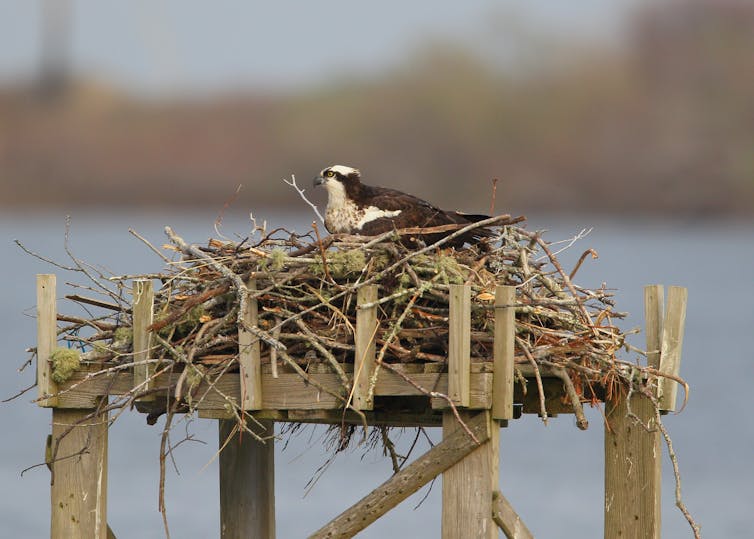
A hundred years ago, a person wandering the back roads of coastal New England might have come across an odd sight: at the edge of a farmyard, cheek by jowl with pigs and chickens and cows, a tall pole topped with a massive stick nest. And standing guard in the nest, a large brown-backed, white-headed wild bird of prey – an Osprey (Pandion haliaetus).
Farmers in this region knew that nesting Ospreys were vigilant watchdogs, quick to chase “chicken-hawks” and other predators away. But as fish eaters, Ospreys were no threat to farm animals. And they were trusting enough to live comfortably near humans. So farmers lured them by building them places to nest – generally, an old wagon wheel atop a bare pole, mimicking the dead trees in which Ospreys had nested for millennia.
Although these clever farmers didn’t know it, they were pioneering methods that would help to bring Ospreys back from the edge of extinction decades later. As I recount in my new book, “Ospreys: The Revival of a Global Raptor,” these birds have made a spectacular recovery from chemical pollution, guns and traps, thanks to many dedicated conservationists and an amazing ability to thrive in close quarters with humans.
Gone in the blink of an eye
Up to 1950, Ospreys were one of the most widespread and abundant hawks in North America. Few rivers, lakes or ocean shorelines lacked a nesting pair. In certain favorable spots, such as islands along the Atlantic coast, wooded swamps in Florida and western states, and shallow-water lagoons bordering the Gulf of Mexico and Baja California, hundreds of nests were often clustered together in just one or two square miles.
But the bottom dropped out after World War II. Insecticides developed for military use – particularly DDT – flooded onto the civilian market to control farm and forest pests and mosquitoes in towns and villages. These chemicals accumulated in food chains, so Ospreys received large doses from the fish they consumed. In their bodies, DDT thinned their eggshells, causing a disastrous drop in the number of eggs that produced live chicks. In addition, other insecticides poisoned nestling and adult Ospreys.
By the mid-1960s, the number of Ospreys breeding along the Atlantic coast between New York City and Boston had fallen by 90 percent. And, as I document in my book, most other populations in the United States and Canada had declined by half to two-thirds.

This was the era of “Silent Spring,” biologist Rachel Carson’s blockbuster exposé, which sounded one of the first alarms about the hidden environmental costs of pesticides.
Ospreys played a lead role in this drama. Their well-documented crash provided concrete data for court cases brought to block indiscriminate spraying. Sanity prevailed: The most lethal and persistent insecticides were banned by the 1970s, giving Ospreys and other birds, including the Bald Eagle and Peregrine Falcon, a respite in the nick of time.
A seismic shift in nesting sites
But restoring robust numbers of Ospreys to regions where most or all of the breeders were gone required more than just curbing the flow of environmental contaminants. Nest sites were increasingly scarce along shorelines as development consumed old pastoral landscapes. With fewer safe places to raise young, Osprey recovery prospects appeared dim, no matter how clean the environment or how abundant local fish populations were.
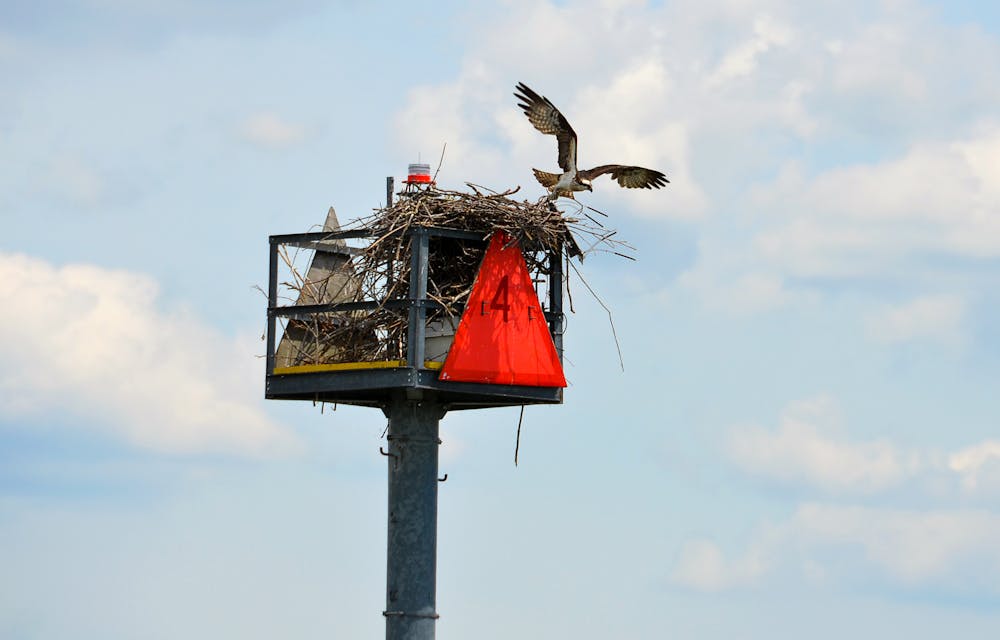
But concerned naturalists took a cue from those old farmyard nest poles and began to erect new poles in the 1970s and ‘80s, especially along the broad ribbon of salt marshes hugging the Atlantic seaboard. Ospreys adapted remarkably, zeroing in to nest on these poles, as well as on a kaleidoscope of other artificial sites springing up along U.S. coasts and rivers: power and lighting structures, channel markers and buoys, and more recently, even megatowers supporting cellphone and other electronic communications equipment. Other nesting birds of prey make occasional use of such sites, but Ospreys have been the champion colonizers.
No one could have predicted such a dramatic shift a generation ago, or what a boost it would give to Osprey numbers. Within just a few miles of where I live along the Massachusetts coast, over 200 Ospreys now nest each year, lured in by abundant nest poles we’ve built on wide-open marshes. Fewer than 20 Ospreys were found here in the 1960s.
This is not an isolated phenomenon. Thousands of pole nests now dot the coastal landscape from Maine to Florida – testimony to persistent work by hundreds of dedicated people. In Florida, at least 1,000 pairs of Ospreys have made cell towers their nesting homes. Along the shores of the Chesapeake Bay, nearly 20,000 Ospreys now arrive to nest each spring – the largest concentration of breeding pairs in the world. Two-thirds of them nest on buoys and channel markers maintained by the U.S. Coast Guard, who have become de facto Osprey guardians.
A global resurgence
These new nests have powered quick growth in numbers, with more Ospreys in the United States and Canada today than ever before. Many are colonizing new areas.
And this revival extends well beyond the Americas. Ospreys have a global reach, from Scotland to Japan and from the Mediterranean to Australia. Particularly in Europe, where most Ospreys were eliminated by guns and traps rather than by insecticides, we are seeing extraordinary recoveries.
Traveling to Europe in the summer of 2016 to research my book, I discovered flourishing new osprey populations. Artificial nest sites – supports built mostly in trees to stabilize existing nests and encourage new ones – were plentiful and packed with young ospreys ready to fledge. In Germany, shallow wire baskets secured atop enormous power pylons provided foundations for hundreds of new nests that had taken hold in areas long-abandoned by Ospreys.
Some researchers complain that providing these birds with nest sites is making them “prisoners of platforms” – creating artificial populations where none were meant to be. But rampant coastal development, plus industrial farming and forestry in surrounding regions, have badly degraded the landscapes in which Ospreys once thrived. To have robust numbers of this species back again is a reward for all who value wild animals, and a reminder of how nature can rebound if we address the key threats.


.jpg)
Alan Poole, Research associate, Cornell University
This article is republished from The Conversation under a Creative Commons license. Read the original article.

NASA has selected a new mission that will help scientists understand and, ultimately, forecast the vast space weather system around our planet. Space weather is important because it can have profound impacts – affecting technology and astronauts in space, disrupting radio communications and, at its most severe, overwhelming power grids.
The new experiment will, for the first time, obtain global observations of an important driver of space weather in a dynamic region of Earth’s upper atmosphere that can cause interference with radio and GPS communications.
The Atmospheric Waves Experiment (AWE) mission will cost $42 million and is planned to launch in August 2022, attached to the exterior of the Earth-orbiting International Space Station. From its space station perch, AWE will focus on colorful bands of light in Earth’s atmosphere, called airglow, to determine what combination of forces drive space weather in the upper atmosphere.
Researchers once thought that only the Sun’s constant outflow of ultraviolet light and particles, the solar wind, could affect the region. However, recently they have learned that solar variability is not enough to drive the changes observed, and Earth’s weather also must be having an effect. To help unravel that connection, AWE will investigate how waves in the lower atmosphere, caused by variations in the densities of different packets of air, impact the upper atmosphere.
AWE is a Mission of Opportunity under NASA’s Heliophysics Explorers Program, which conducts focused scientific research and develops instrumentation to fill the scientific gaps between the agency’s larger missions. Since the 1958 launch of NASA’s first satellite Explorer 1, which discovered Earth’s radiation belts, the Explorers Program has supported more than 90 missions. The Uhuru and Cosmic Background Explorer (COBE) missions led to Nobel prizes for their investigators.
“The Explorers Program seeks innovative ideas for small and cost-constrained missions that can help unravel the mysteries of the universe and explore our place in it,” said Paul Hertz, NASA’s Director of Astrophysics. “This mission absolutely meets that standard with a creative and cost-effective mission to solve mysteries about Earth’s upper atmosphere.”
AWE was selected for development based on its potential science value and the feasibility of its development plans. The mission is led by Michael Taylor at Utah State University in Logan and it is managed by the Explorers Program Office at NASA’s Goddard Space Flight Center in Greenbelt, Maryland.
NASA also has selected the Sun Radio Interferometer Space Experiment (SunRISE) for a seven-month, $100,000 extended formulation study. SunRISE would be an array of six CubeSats operating like one large radio telescope. This proposed mission would investigate how giant space weather storms from the Sun, called solar particle storms, are accelerated and released into planetary space.
While SunRISE has not yet demonstrated its readiness for the next phase of mission development, the proposed concept represents a compelling use of new NASA-developed technology. SunRISE is led by Justin Kasper at the University of Michigan in Ann Arbor and managed by NASA’s Jet Propulsion Laboratory in Pasadena, California.
The Explorers Program, the oldest continuous NASA program, is designed to provide frequent, low-cost access to space using principal investigator-led space science investigations relevant to the work of NASA’s Science Mission Directorate in astrophysics and heliophysics.
The program is managed by Goddard for the Science Mission Directorate, which conducts a wide variety of research and scientific exploration programs for Earth studies, space weather, the solar system and universe.
For more information about the Explorers Program, visit https://explorers.gsfc.nasa.gov.
For information about NASA missions and activities, visit https://www.nasa.gov.
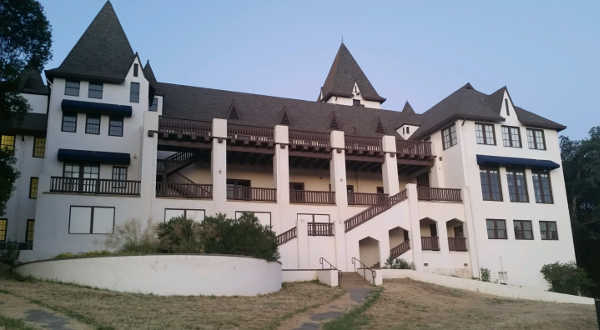
LUCERNE, Calif. – The county of Lake has closed escrow on the sale of the historic Lucerne Hotel.
Carol Huchingson, the county’s administrative officer, said the county received the $2.5 million asking price on Thursday.
Members of the Board of Supervisors told Lake County News they had only had confirmation of the sale from Huchingson during a special Wednesday board workshop.
The Romero Institute, headquartered in Santa Cruz, did not respond to a Friday request from Lake County News for comment.
The historic building, sold over the objection of many community members, was purchased by the county in 2010. The goal was to renovate it and possibly use it for a conference center. The county’s renovation and remodeling efforts resulted in it becoming a Northshore stimulus project.
The building had housed a four-year college, the county’s first and only, until Marymount California University abruptly left in June 2017, as Lake County News has reported.
Since then, Huchingson had pushed the sale through the board, claiming it was necessary because of the county’s financial situation. She led a consultant selection committee that chose the Romero Institute’s proposal to put “New Paradigm College” in the building and then secured the board’s agreement in August to sell the building to the group.
Currently, a search of national and state charitable registries showthere is no freestanding nonprofit to support the entity, New Paradigm College, the Web site of which say it will offer “an academically challenging, culturally rich, and practically grounded degree program in Global Studies.”
According to the proposal selected by the county, New Paradigm College will establish a “preeminent four year accredited educational institution pioneering bachelor of arts program in Integrative Global Studies, an accredited university extension program offering extension courses, certificate granting and degrees completion programs in addition to operating an event and conference center.”
The proposal states that a dedicated project funder “stands ready to provide the funding for the purchase and renovation of The Lucerne Castle as the Campus for New Paradigm College” and that renovations will begin upon close of escrow.
Email Elizabeth Larson at

KELSEYVILLE, Calif. – A Finley man was arrested on Thursday after he assaulted a teenager girl on her way home from school and then fought with two deputies, injuring one of them.
Alfredo Corona Ramirez, 31, of Finley was taken into custody on Thursday afternoon, according to Lt. Corey Paulich of the Lake County Sheriff’s Office.
Paulich said that at 3:30 p.m. Thursday deputies were dispatched to the area of Fifth Street in Kelseyville for a reported assault.
The deputies arrived in the area and contacted a 17-year-old female who told them she was walking home from school when she was approached by an unknown male who punched her in the face several times without provocation. The male then ran away towards Live Oak Drive, Paulich said.
Paulich said the deputies searched the area, locating a male subject they later identified as Ramirez in the area of Lauenroth Trucking.
Ramirez ran away from the deputies jumping over a fence. Paulich said bystanders in the area told the deputies that Ramirez was running toward the Live Oak Grill. Deputies located Ramirez on Live Oak Drive near Brotherson Street.
Paulich said Ramirez reached for his waistband as if he was reaching for a weapon. One of the deputies drew his firearm and order Ramirez to the ground. Ramirez showed his hands to the deputy, but refused to get on the ground and continued walking towards the deputy.
Ramirez attempted to grab the deputy, but the deputy was able to push him away. Paulich said the deputy holstered his firearm and attempted to arrest Ramirez as another deputy arrived to assist.
As the deputies attempted to arrest Ramirez he punched and kicked both of them. At one point Ramirez was able to grab one of the deputy’s firearms while it was holstered, Paulich said.
The deputies were able to get Ramirez to release the firearm, but he continued to resist. Ramirez attempted to grab both deputies’ firearms before they were able to take him to the ground, according to Paulich’s report.
Paulich said Ramirez continued to punch, kick and bite the deputies. A third deputy arrived and used his Taser which allowed the other two deputies to handcuff Ramirez.
One of the deputies was transported to Sutter Lakeside Hospital for treatment of an injury he received during the arrest of Ramirez. Paulich said it was later determined the deputy had suffered a broken hand.
The 17-year-old female victim of the original assault also suffered a possible broken nose, Paulich said.
Paulich said Ramirez was transported to Sutter Lakeside Hospital for medical clearance. While at the hospital Ramirez made several threats to kill deputies that live in the area and burn down their homes.
Once he was cleared, Ramirez was transported to the Lake County Jail where he was booked on charges of threatening an officer, battery with serious bodily injury, resisting officer resulting in great bodily injury, attempting to take a firearm from peace officer and battery on a peace officer.
Ramirez remained in custody on Saturday with bail set at $30,000.
Jail records indicate he is due be arraigned in Lake County Superior Court on Monday.