How to resolve AdBlock issue?
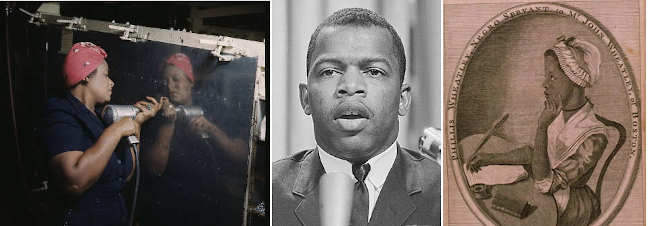
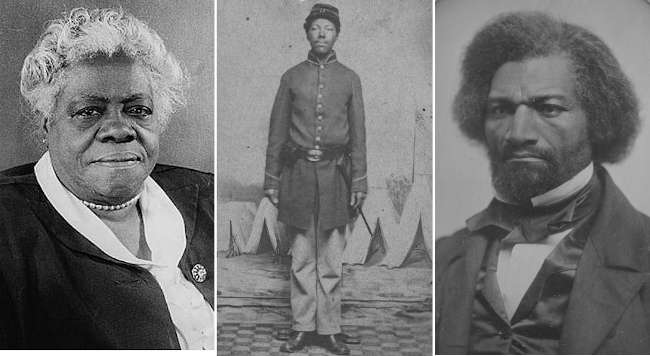
LAKE COUNTY, Calif. – February is Black History Month, a celebration acknowledging the achievements of Black Americans and how they have uniquely shaped the nation’s history.
Celebrating the contributions to our nation made by people of African descent goes back to 1915, half a century after the Thirteenth Amendment abolished slavery in the United States.
The effort began with the advocacy of Harvard-trained American historian Carter G. Woodson and the prominent minister Jesse E. Moorland., who sought to recognize the heritage and achievement of Black Americans.
The event was first celebrated during the second week of February 1926, selected because it coincides with the birthdays of both Abraham Lincoln (Feb. 12) and abolitionist/writer Frederick Douglass (Feb. 14). That 1926 event was sponsored by the Association for the Study of African American Life and History.
That first celebration inspired schools and communities nationwide to organize local celebrations, establish history clubs and host performances and lectures.
In 1975, President Gerald Ford issued a message on the observance of Black History Week urging all Americans to "recognize the important contribution made to our nation's life and culture by black citizens."
Since 1976, February has been officially designated as Black History Month.
That week would continue to be set aside for the event until 1976 when, as part of the nation’s bicentennial, it was expanded to a month. Since then, U.S. presidents have proclaimed February as National African American History Month.
Earlier this month, the Board of Supervisors and the Clearlake City Council presented proclamations in honor of Black History Month.
The city of Clearlake’s proclamation notes that, “while the history of Black Americans is also the story of countless nameless heroes brought to our shores who endured lives of bondage and oppression, the deprivation of their civil rights, and ravages of bigotry and racism, it is a history for which most of the chapters have yet to be written as Black Americans contribute to the American promise.”
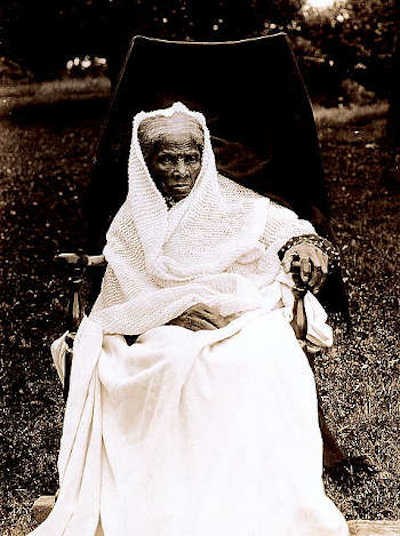
The proclamation also notes that, “for generations, African Americans have strengthened our Nation by urging reforms, overcoming obstacles, and breaking down barriers,” and cites the contributions of individuals including Martin Luther King Jr., Elijah Cummings, Harriet Tubman, Sojourner Truth, Rosa Parks, Cicely Tyson, Hank Aaron, Kamala Harris and Rev. Rafael Warnock.
Mendocino College also is celebrating Black History Month.
“As we continue to face a global pandemic, allow the celebration of Black History Month to serve as a reminder of the multiple contributions made by Black Americans and other ethnic communities,” says Mendocino College President Tim Karas. “We commemorate Black History Month by continuing the essential work of self-reflection and strengthening our resolve to stay engaged in equity work in our district and to work harder against racism (overt and structural) and toward social justice.”
On Feb. 24, a webinar titled “You Don’t Know Who We Be: A Conversation about the Pre-enslavement & Pre-Colonial History of Africans in America” will be hosted by BCC Speaker Series with Dr. Edward Bush, President of Cosumnes River College. Register for this webinar here.
The Mendocino College librarians have also put together a LibGuide for Black History Month and the Black Lives Matter movement specifically. View the page here.
More information about the celebration of Black Americans can be found here: https://www.africanamericanhistorymonth.gov/?loclr=ealn.
The following facts come from the U.S. Census Bureau’s surveys.
Did you know?
48.2 million
The Black population, either alone or in combination with one or more races, in the United States in 2019.
1,916
Total population of Lake County residents identifying as Black.
87.9%
The percentage of African Americans age 25 and older with a high school diploma or higher in 2019.
30.7%
The percentage of the employed Black population age 16 and older working in management, business, science and arts occupations in 2019.
124,004
The number of Black-owned employer businesses in the United States in 2017.
2.1 million
The number of Black military veterans in the United States nationwide in 2019.